
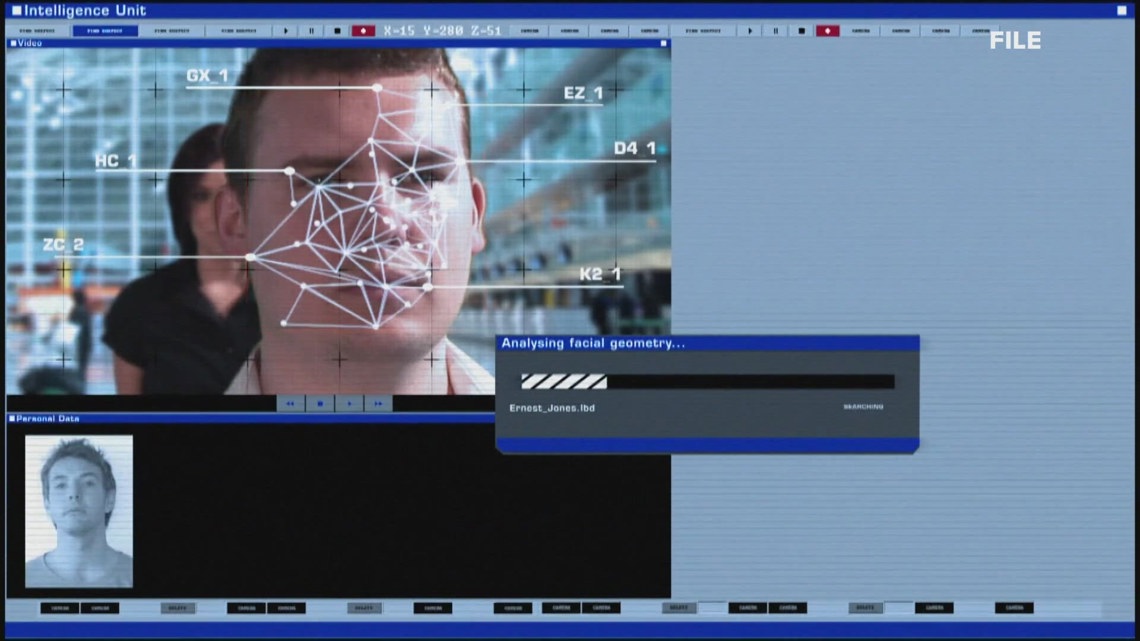
Sides seek to craft local law requiring businesses and retail establishments to notify visitors if they are collecting certain types of physical data about them.
BUFFALO, N.Y. — The Erie County Legislature on Wednesday failed to pass a local law which would require businesses and retail establishments to notify customers if they are collecting so-called Biometric information about them when they visit their establishments.
Instead, two versions of the proposed law were sent to the Health and Human Services Committee for further review and with the hope of hammering out a single bill to adopt.
“We’re going to come together and work out something we can all agree on.” said Legislator Lawrence Dupre, a Democrat representing District 1 and sponsor of the “Biometric Transparency and Privacy Act.”
“I think consumers should be made aware and as we start to have these committee discussions, I think we’re going to find that there’s a lot of technology that we probably need to be more aware of and have more public conversations about,” added Legislator Lindsay Lorigo, a republican representing District 10, whose bill is called “The Customer Biometric Privacy Act”.
Both legislators were inspired to act after a New York Post article reported about signs at a Wegmans in New York City advising customers their biometric data was being collected and stored while they shopped.
New York City has a law requiring businesses to inform customers when they are collecting this data by posting a sign at the door. Erie County does not currently have such a requirement.
Biometric data involves information obtained through the technological processing of an individual’s physical, biological, or behavioral characteristic that can be used to establish that individuals identity.
According to both bills, this includes but is not limited to, facial geometry, fingerprints, voiceprints, iris or retina scans, and hand or finger geometry.
Both bills seek to establish a law requiring the conspicuous posting of signs to advise customers and visitors that their biometric data is being collected. Further, both versions call for the prohibition of selling the collected data to third parties and fines for violators of the new law.
There are some differences in the bills.
For example, Dupre’s version provides an exemption for financial institutions and government buildings, while Lorigo’s does not.
“For one thing, it’s about making sure that as government institutions we’re holding ourselves to the same standards that we’re holding others to,” Lorigo said. “And government and financial institutions would already follow the state and federal law on this matter.”
“These are just small differences concerning some of the institutions and maybe the fines, but Lindsay and I have already started talking because we feel this is a bipartisan problem,” Dupre said. “We both don’t think it’s okay for a store to just do it without our notice. We’re not saying you shouldn’t do it, you know, that’s the store prerogative. So that’s why it goes to committee to kind of clean it up, to come back to a better a better idea of what we want to do moving forward.”
However, both lawmakers indicted that County Executive Mark Poloncarz might attempt to take the measure even further, by possibly proposing a local law to ban the practice all together.
“I have had those discussions, to start, with the County Executive,” Dupre confirmed. “But I don’t have any real particulars on that. So, for me, I kind of saved my judgment until I see something written down or have a more substantive conversation.”
“Personally, I am not on board with that,” said Lorigo, who said she hasn’t had any discussion about the matter with Poloncarz.
“I don’t think it’s really feasible and I think when you start putting when you start telling companies what they can and can’t do to prevent theft or for security purposes. I think that’s a sticky situation. I think letting customers know that the data is being collected is where we should stand on this… it’s a slippery slope then of what kind of technology we’re banning and what that looks like,” she said.