
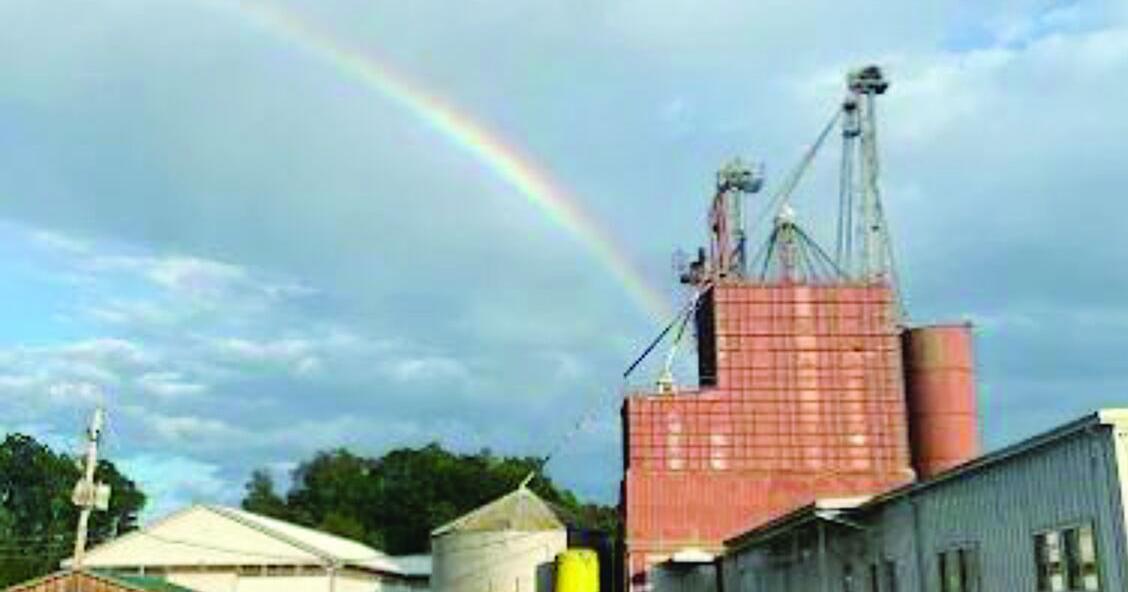
UNION CITY — When Don Niebauer first walked through the doors of Erie Crawford Cooperative in 1973, the organization was in the middle of a massive transformation. The original mill in Union City was being replaced, and the cooperative was moving its offices from Erie to a new facility that would become its home for the next five decades.
More than 50 years later, Niebauer is still there as comptroller, and the cooperative he helped build is celebrating an even bigger milestone this year: 85 years of service to the farming community.
Founded on June 11, 1941, through the merger of Erie Milk Producers and the Saegertown Dairy Cooperative Association, Erie Crawford Cooperative began its life as a milk marketing organization serving Erie and Crawford Counties. The Union City location, 7733 PA Route 97, officially opened on March 2, 1974, though according to Niebauer, they were “semi-opened” a few months before that as they worked to get everything up and running.

These photos from 1974 show railroad tracks, which are no longer in use, at the rear of Erie Crawford Cooperative, and delivery vehicles at the front.
Contributed photos
What happened over those eight and a half decades tells a story not just of one cooperative, but of American agriculture itself — a story of change, loss and the determination to adapt and survive.
“Reaching 85 years means a lot to me personally, because I’ve seen first-hand that what’s kept this cooperative strong is the continued support of our customers and our hometown approach,” Niebauer said. “For the cooperative, it’s proof that offering a wide range of services and exceptional customer service still matters. It’s the reason we’re still here today.”
The cooperative has reinvented itself multiple times to survive. When dairy markets declined in 1969, the organization renamed itself Erie Crawford Cooperative and began diversifying. What started as milk marketing evolved into feed and grain services, then expanded to include pet supplies, lawn and garden products, propane and corn drying services.
“The key has been our willingness to change and diversify while always keeping the needs of our farmers and customers at the center of what we do,” Niebauer explained. “As a small-town cooperative, we’ve adapted alongside our community and stayed competitive with big chain stores by offering the service, knowledge and flexibility they can’t.”
These photos from 1974 show railroad tracks, which are no longer in use, at the rear of Erie Crawford Cooperative, and delivery vehicles at the front.
Contributed photos
Mill Manager Walt Smith sees that adaptability as essential to the cooperative model’s continued relevance.
Describing the advantages a cooperative still offers in an era of corporate consolidation, Smith said, “In most cases, we can give better pricing and better quality of feed. Also, we learn what customers want or ask for to fill the needs for members and walk-in patrons alike.”
For Smith, “cooperative spirit” has a very practical meaning.
“Making it through the day with no breakdowns,” he said with a laugh, “while putting out quality products to please customers and their animals.”
But beneath the humor lies a serious commitment to listening. When the cooperative decides what products and services to offer, customer feedback drives those decisions.
“We try hard to listen to the growing needs and what is working best for our customers’ needs,” Smith added.
The challenges facing the agricultural community have changed dramatically over the decades. Smith has witnessed the transformation firsthand.
“In my time, it’s been dairy farming, then selling out, growing beef and now more are just crop farming,” he said.
The loss of dairy farms has been particularly hard.
“Challenges for us include the huge loss of dairy farms, and now the outrageous price of livestock,” Smith explained. “The DIY family — raising their own food — can’t pay high prices to supply food for their family.”
Niebauer has watched the same changes with mixed emotions.
“I’ve seen us change from milk marketing to feed, and from cash-only, mechanical systems to digital tools and social media, but our focus on customer service has always stayed the same,” Niebauer said. “From the very beginning, this cooperative was about helping farmers and adapting to what they needed, and that’s still how we operate today.”
What would the founders think if they could see the cooperative now?
“I think the founders would be surprised by how much farming has changed and by how many farms we’ve lost,” Niebauer reflected. “But, I also think they’d be proud that the cooperative is still here and still serving farmers. Even with fewer dairy farms, we’re continuing the mission they started by adapting and supporting agriculture in our community.”
That mission extends beyond selling products. Erie Crawford Cooperative is a sponsor of “Shop with a Hero” and donates to school activities throughout the region. The cooperative actively participates in local 4-H and FFA organizations at area fairs, supplying feed for animals during fair week and bidding at youth livestock auctions. Local fire departments also receive support from the cooperative.
“We have always tried to work with our customers who are struggling or having temporary setbacks,” Smith said, providing an example of when the cooperative makes a real difference for its members.
The cooperative’s deep roots in the community create relationships that go beyond typical business transactions.
“Personally I keep a great, hard-working staff, a fellowship of regular customers, and we’re always meeting new ones,” Smith said, describing what matters most to him about the cooperative.
Looking ahead to the cooperative’s 100th anniversary in 2041, Smith’s hopes are straightforward:
“As long as agriculture is still around, I would like the co-op to still be serving the great community that we have, and hope it continues to support us,” Smith said.
His optimism about the future rests on a simple belief: “We need farmers to survive,” Smith said. “We have nothing without them.”
It’s a philosophy that has sustained Erie Crawford Cooperative through 85 years of dramatic change, and if Niebauer and Smith have anything to say about it, will carry it through 85 more.