
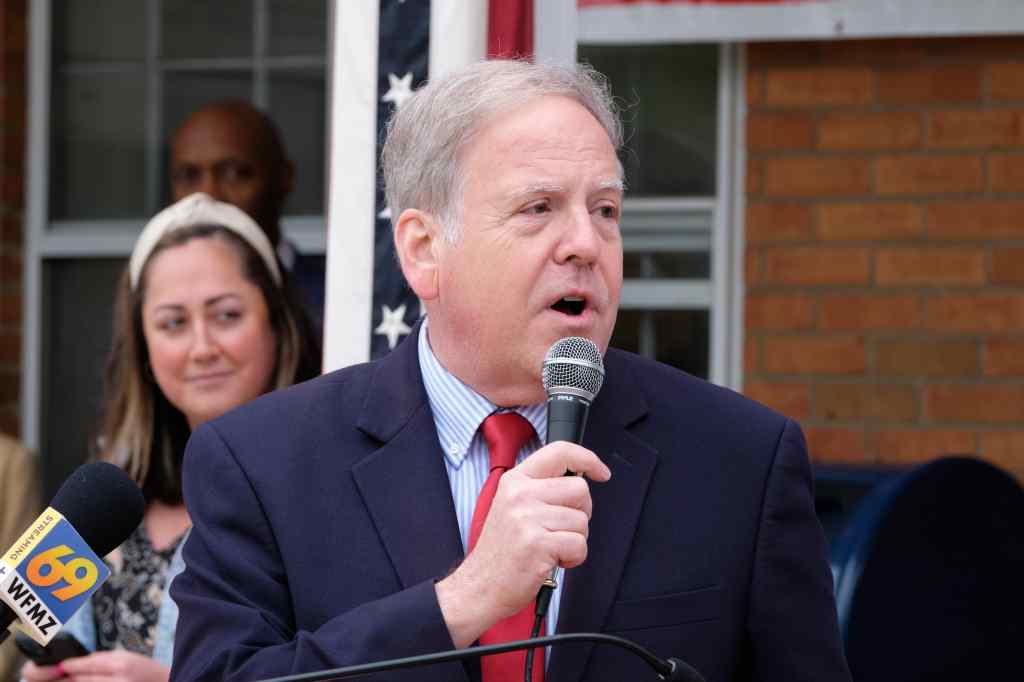
A Lehigh Valley state representative has introduced legislation clarifying exceptions to a rule that allows public officials to make changes to a meeting agenda within a 24-hour window.
The state Supreme Court late last year ruled that school boards, township councils and other public voting bodies may vote to add something to an agenda less than a day in advance if the business deals with a matter of public safety; if it was brought to the board within 24 hours of a meeting; if a resident or taxpayer brings an issue to the agency during the meeting; or if a majority of the agency votes to add it to the agenda.
Transparency advocates called the ruling an “invitation for abuse.”
Rep. Robert Freeman, D-136th, introduced legislation to clarify these extensions, saying the court ruling circumvents the 24-hour rule included in the state’s Sunshine Act governing open meetings, allowing “virtually any matter to be considered without giving the public 24-hour notice.”
“I believe this runs contrary to the intent of the 24-hour rule and the Sunshine Act, which is to give the public a reasonable opportunity to be informed about matters that will be discussed at meetings of their local municipality, school district, and commonwealth agencies,” Freeman said in a news release. “My legislation would clarify the Sunshine Act by explicitly defining the three exceptions and limiting the majority-vote procedure to only these specific exceptions.”
The 4-3 decision was issued in response to a lawsuit filed by state Sen. Jarrett Coleman against the Parkland School Board regarding an October 2021 board meeting. Coleman, a board member at the time, claimed the board violated the state’s Sunshine Act when members voted on a raise for teachers, which had not been on the agenda before the meeting.
The majority decision, written by Justice Christine Donohue, said a 2021 amendment to the open meetings law laid out the four scenarios in which an agency could vote on something that was not on the agenda a day in advance. She said the law is “unambiguous” and creates four “freestanding” exceptions, only one of which would need to be met to add an item to an agenda.
Coleman had contended that all four criteria must be met before a vote is held, and that agendas can only be amended for emergency or minor matters. The trial court disagreed, saying the board did not violate the Sunshine Act because a majority of the board voted in favor of holding a vote.
The Commonwealth Court reversed the decision, saying the law was up for interpretation, and that the majority vote rule would “swallow the entire rule that the agency shall post the agenda 24 hours in advance.”
Donohue, in siding with the district and the trial court’s opinion, said the four distinct exceptions are laid out in the law, and it is not one exception divided into four parts.