
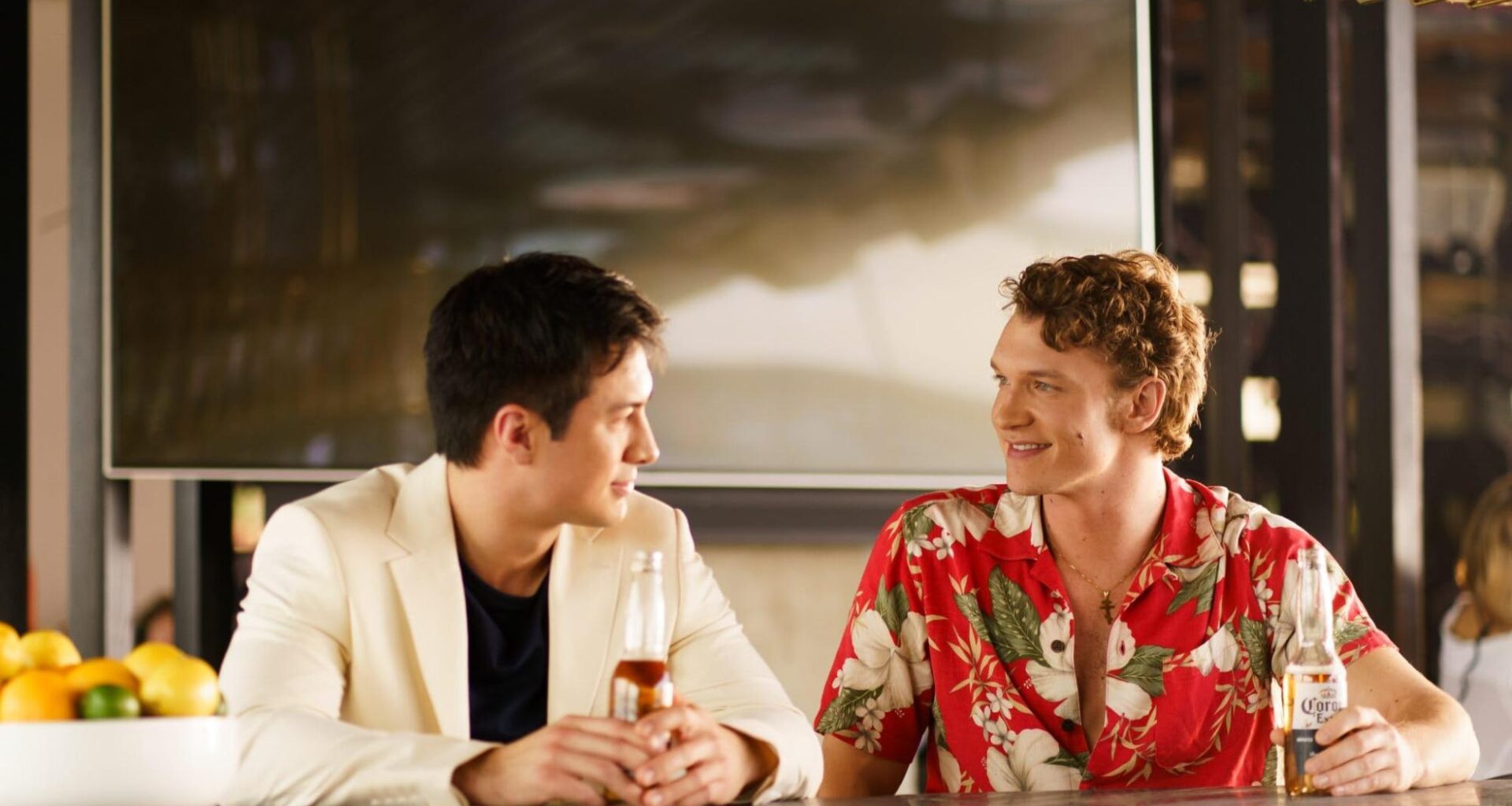
The new Canadian show “Heated Rivalry” has taken American culture by storm, highlighting the importance of LGBTQIA+ representation in film and media.
Released in late 2025, “Heated Rivalry” has made its mark on American, Canadian and even Russian media. The show, based on the Canadian book series by Rachel Reid, follows the fictional years-long romance between professional hockey players Shane Hollander and Ilya Rozanov. “Heated Rivalry’s” success hinges on many factors, including its dramatic romance, attractive actors and, perhaps most distinctively, its representation of a LGBTQIA+ happy ending.
John Musser, an associate professor in the department of gender studies and women studies, said — as a millennial — when he was growing up, media representation of LGBTQIA+ characters was rare. When there were queer characters on screen, they would frequently follow similar storylines.
“There was no cultural text that was as centering of gay characters as ‘Heated Rivalry,’” Musser said. “If there were popular cultural texts that did have gay characters, particularly gay men, they would follow certain narrative tropes.”
It’s common for LGBTQIA+ characters in the media to live tragic lives, especially when Musser was watching television while coming of age. He referenced the 2005 film “Brokeback Mountain” and the 1994 musical “Rent” as two popular performances with queer representation — but that also had gay characters whose deaths were implicitly tied to their sexualities. This trope can send a message to young gay men that they would follow that same path, according to Musser.
“That suggests something culturally, about our cultural attitudes towards queer sexuality or gay people’s lives,” Musser said. “What is the destiny presented to me as a young person? Well, in our media landscape, it would have seemed to be ‘you’re going to get AIDS and die,’ or ‘you’re going to get gay bashed and die.’”
“Heated Rivalry,” then, offers a new idea for LGBTQIA+ characters on screen by working to break stereotypes, according to Musser.
“Broadly in the context of how gay stories — particularly surrounding gay men — have been told, you get the sissy who doesn’t fit in. You get the very legibly gay person who’s struggling to fit in high school or something like that,” Musser said. “‘Heated Rivalry’ is showing us a very different framework for gay identity that we don’t hear a lot of.”
Sharon Li, a senior biology and creative writing major and vice president of the AQUARIAS, said “Heated Rivalry” is particularly noteworthy because of its widespread and diverse audience.
“‘Heated Rivalry’ is also popular with straight people who might have had a previous idea of what a gay relationship looked like,” Li said. “‘Heated Rivalry’ is able to expand their world view on what it could look like. I think that’s what makes it so significant.”
Yeshua Biu, a first-year neuroscience student, said contemporary queer media can often feel inauthentic by not “actually addressing” identity issues LGBTQIA+ community members might face. But, for Biu, “Heated Rivalry” is different.
“The show itself felt like a comfort,” Biu said. “The sixth episode, where Shane was able to come out to his mom, was definitely something that I wanted. And just seeing that, and being able to watch it — also kind of wish[ing] that I’ve had that experience — was something that’s just in a way comforting. But in one way, it’s also a little bit gut wrenching.”
Musser said “Heated Rivalry” is able to encapsulate many realities of being queer, tackling hard challenges like coming out and comfortability.
“[‘Heated Rivalry’] is forward thinking and also connected to some of the realities of gay life, particularly about the closet and the pain of secrecy and the challenges surrounding intimacy,” Musser said. “It resolves itself in a way that suggests that those challenges are not insurmountable.”
Gay and queer representation in the media is especially important for LGBTQIA+ individuals to feel more comfortable with themselves, according to Biu.
“Queer representation in the media can help others who are definitely having a hard time with accepting who they are,” Biu said. “To be frank, I’m still having a hard time with accepting who I am, and that’s why I think we need these queer representations in the media in different types and forms — so that people can be able to see it’s okay to be this way.”
Li hopes the popularity of the show proves to industries that there is a hunger for queer storylines, which could lead to more representation.
“I think that also opens up the avenue to the publishing industry, not just the film industry, saying, ‘there is a demand for gay romance,’” Li said.
The popularity of “Heated Rivalry” signifies more than a shift in representation of gay characters, Musser said — it also signifies a shift in American culture. “Heated Rivalry” is not only popular for its plot, and beloved characters, but also because of its explicit portrayal of intimate sex scenes.
“In the post-AIDS epidemic era, gay men’s sexuality has oftentimes been demonized or treated as something that’s like a public health hazard or threatening to communities,” Musser said. “So to see the public response to heated rivalry with great enthusiasm about this depiction of sexuality suggests that there’s a shift in cultural attitudes towards the actual sex that gay men are having.”
Though recent years have shown a rise in conservatism, the success of “Heated Rivalry” pushes back against this trend, according to Biu.
“I think it’s really important to just be able to put [‘Heated Rivalry’] out there,” Biu said. “It’s almost like an act of retaliation, in a way where it may not be planned that way, but as I’m seeing it now it feels like an act of retaliation, of ‘we exist.’ Masculine gay men exist.”
Li said “Heated Rivalry” is ensuring that the lives of queer people will not be erased.
“I think it’s a good sign that audiences are accepting the queer [show] because it shows a shift towards being more progressive [values],” Li said. “There’s so many conservative values and being able to see a queer romance between a white character and a POC character thrive is empowering. We’re still here. We’re gonna fight back. You can’t silence us.”