
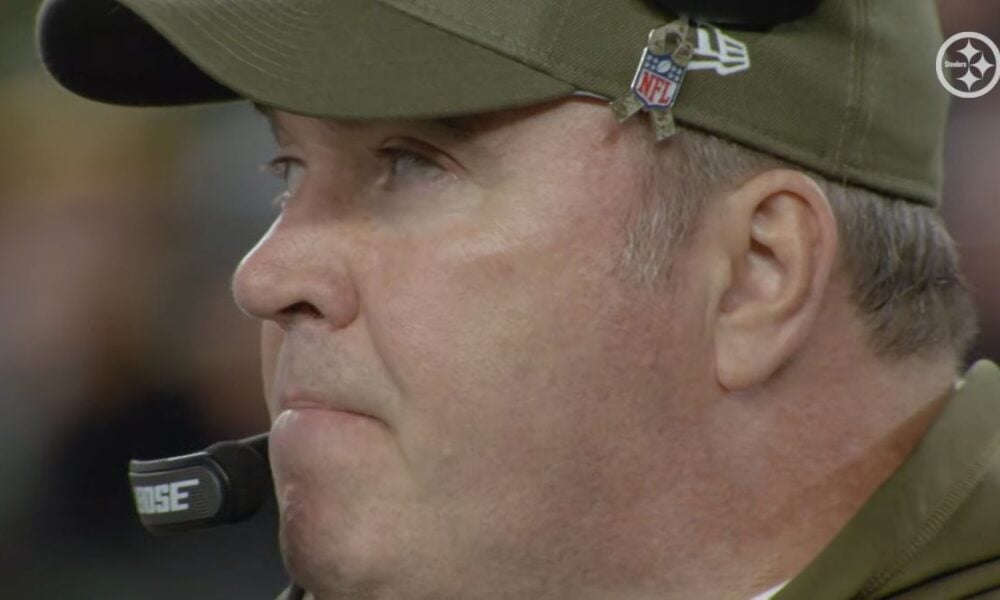
The Pittsburgh Steelers not only made their head coaching hire in Mike McCarthy, they made it fast. Mike Tomlin stepped down on Jan. 13. By January 24, a verbal agreement with McCarthy was reached. Even if it’s the right decision, and there’s plenty of reason to scrutinize that, the process that let to his answer is worth taking issue with.
There’s no official playbook for each coaching search. It’s rare for Pittsburgh to even hire a new head coach, but this one was comparatively quick. In days from start to finish, here’s how long each prior cycle took:
Chuck Noll’s hire: 43 days (Dec 16-Jan 27)
Bill Cowher’s hire: 27 days (Dec 26-Jan 21)
Mike Tomlin’s hire: 18 days (Jan 5-Jan 22)
Mike McCarthy’s hire: 12 days (Jan 13-Jan 24)
In full fairness, the search has steadily sped up. There’s valid reason for it. Technology makes the cycle move much quicker, especially with 2026’s hiring process beginning with virtual interviews. The NFL is faster moving in nearly every regard, and coaching searches are no exception. Still, the fact is this was a quick process, one that lasted less than two weeks.
Math aside, there was reason to wait. Monday would’ve opened the window to hold in-person interviews with Los Angeles Rams defensive coordinator Chris Shula and passing game coordinator Nate Scheelhaase. Two viable candidates who reportedly interviewed well in the first round. Instead, Pittsburgh opted against speaking with either of them and tabbed McCarthy over the weekend.
What was the urgency? What was the rush? Pittsburgh had zero competition for McCarthy. He was either getting the Steelers job or no head job at all. Only the Tennessee Titans showed real interest in him, and they instead landed on Robert Saleh. Insiders noted McCarthy had removed himself from other potential interviews (which is usually just a sign of a candidate saving face of a job he knows he won’t receive) to focus on Pittsburgh. His calculation sure seemed correct.
Was Pittsburgh’s?
Shula or Scheelhaase, or both, could’ve interviewed early this week – Monday and Tuesday. By Wednesday, the team could’ve made its decision. Maybe it still would’ve hired McCarthy. In that scenario, at least Pittsburgh would’ve had all the information at its disposal to make the best and most informed decision possible. That’s just sensible.
Yes, there’s a desire to get the head coach in place to begin building out the coaching staff. But opting against pausing literal days to make a final decision that will impact the team for years to come is shortsighted.
Speaking about McCarthy’s hire Sunday, Rooney attempted to explain.
“We wound up bringing in three guys for in-person interviews – Brian Flores, Mike McCarthy, and Anthony Weaver – and then we sat down and talked about whether we had our man, or if we wanted to bring in more people for in-person interviews,” Rooney said in a conversation with Steelers.com’s Bob Labriola. “We decided that Mike was the man for the job, and so we went ahead and offered him the job on Saturday.”
There’s the old joke of finding your keys in the last place you look. Once you find them, of course you stop. Maybe the team was simply sold and had no reason to continue searching for pure optics.
But this was a quick and narrow search. Three candidates brought in for in-person interviews. That’s it. Flores and Weaver are worthy candidates but they were also effectively mandated to satisfy the Rooney Rule, which requires two in-person meetings with minority candidates. One day after Weaver fulfilled it with Friday’s visit, McCarthy was offered the job.
The rest of the NFL had deeper in-person candidate pools. The Miami Dolphins and Baltimore Ravens had at least four each. Unlike McCarthy, there was competition for their selections of Jeff Hafley and Jesse Minter. The Titans and Raiders were keen on seeing Hafley. The Raiders also were set to make a serious push for Minter and was one reason why the Ravens wrapped up their process in a hurry. The Tennessee Titans brought in six. The New York Giants held seven despite clearly targeting John Harbaugh as the franchise’s top candidate.
Though difficult to confirm, the Atlanta Falcons may have been the only other team with three. And they wanted to secure Kevin Stefanski, who was in far greater demand than McCarthy.
Even Pittsburgh’s virtual pool of seven (Brian Flores and Mike McCarthy only met in-person, not virtual) was light compared to the rest of the league.
Quick aside. Hunting for details on every other search, no other outlet had a clear and concise tracker like we did. Why that’s apparently so elusive, I’m not sure.
If this was a one-off, perhaps it could be explained away. But Pittsburgh has a pattern of narrow hiring processes. In the Steelers’ 2024 offensive coordinator search, they interviewed only three candidates: Arthur Smith, Thomas Brown, and Jerrod Johnson. To fulfill the Rooney rule, one minority candidate had to be spoken with. The search quickly wrapped up with Smith being Matt Canada’s replacement (it’s fair to point out Smith was also in-demand, ready to fly to Tampa Bay for an interview had Pittsburgh not hired him).
For the team’s 2022 defensive coordinator search, again, the Steelers again had just three candidates: Teryl Austin, Patrick Graham, and Kris Richard. Austin was internally promoted.
Three coordinator interviews aren’t damning. But when it’s the same number as in-person head coach interviews, it becomes telling.
The true smoking gun of Pittsburgh’s one-track mind on McCarthy came last week. On Tuesday, Brian Flores had his in-person interview. On Wednesday at 5:32 PM/EST, the Steelers’ Twitter/X account posted that the team had completed its interview with McCarthy. Less than two hours later at 7:21 PM/EST, the Minnesota Vikings tweeted that Flores signed a contract extension to return as team’s defensive coordinator.
The deal still allowed Flores to take a head coach job if offered. Maybe there’s an innocent explanation. That Flores interviewed, flew home, and finally had the chance to sign the deal. But I have an awfully hard time believing that’s a coincidence. McCarthy interviews and Flores immediately makes sure his fallback plan is in place. Word probably got back to Flores and his agent that “Hey, McCarthy had a solid interview, and the Steelers are looking for someone who works well with quarterbacks. They’re not picking you.”
Which likely means defensive-minded Anthony Weaver had little chance of getting the job, either. As soon as Pittsburgh was eligible to hire McCarthy, it did.
All that matters is getting the hire right. If McCarthy can produce as much as Pittsburgh believes he can, the path in which the Steelers arrived at his hire won’t matter. No one will care. No one should care. But reacting to Pittsburgh’s brisk search and the reality of the landscape of a team with zero competition for its top target, this felt too rushed. Too hurried. Which only increases the chances for this move to ultimately look like a mistake.