
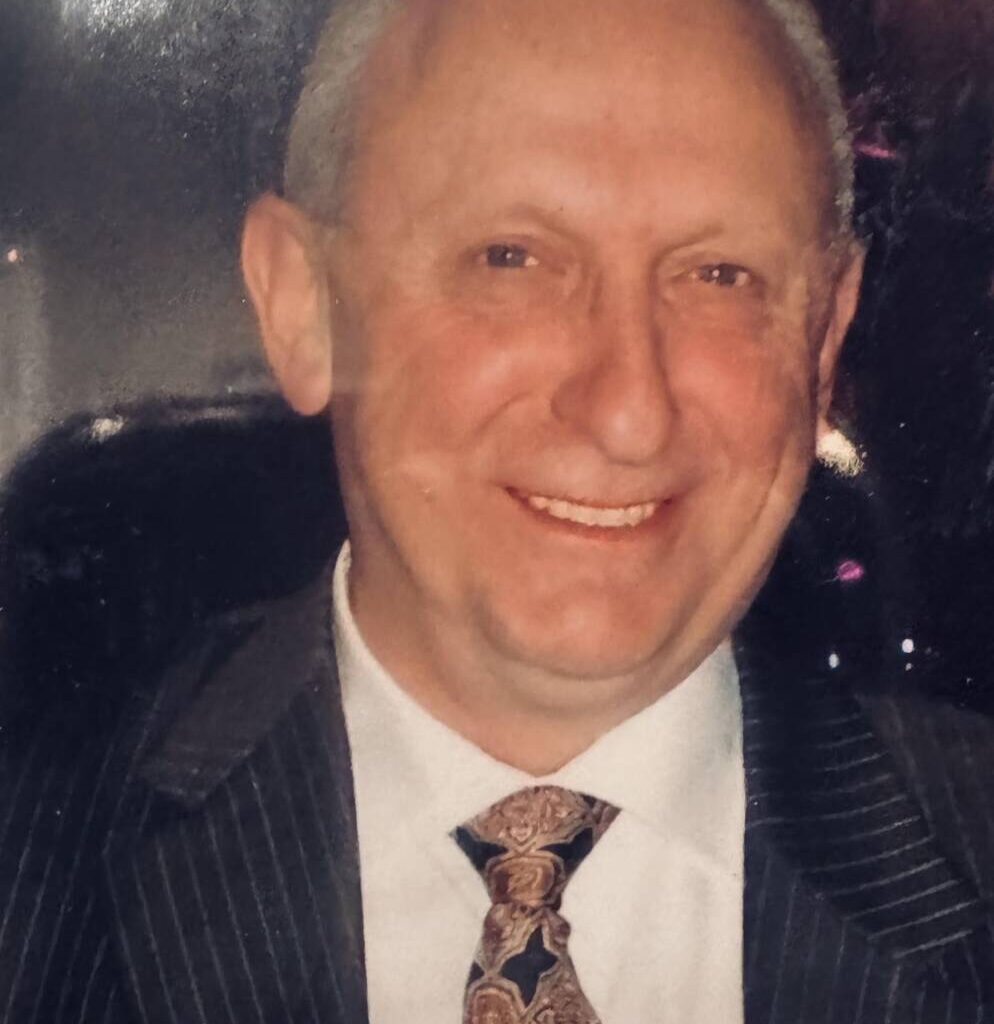
 Natan Nemirovsky (Courtesy of the Nemirovsky family)
Natan Nemirovsky, a Philadelphia psychiatrist who spent more than three decades in private practice and who helped bring his extended family from the former Soviet Union to the United States, died on Dec. 16 at 74. The cause was a rare eye cancer that had spread to his liver.
Known to family and friends as “Nolik,” Nemirovsky treated adults and children, earning a reputation for careful listening and sustained attention to his patients.
“He was never in a rush,” said his son-in-law, Jonathan Weinkle, a physician and author. “He would routinely take full-hour appointments with his patients and really get to know their stories. It was exactly the opposite of where medicine has gone.”
Nemirovsky was born on Nov. 4, 1951, in Kishinev, now Kishinev, Moldova. He was the youngest of four sons in a family shaped by medicine and strong ethical expectations. His mother, Fanya Donskaya, was a neurologist, and his father, Isaac Nemirovsky, was an ear, nose and throat physician who served during World War II.
As Jews in the Soviet Union, the family lived under restrictions that affected daily life and limited both professional opportunity and religious expression. His wife, Lia Nemirovsky, said Jewish observance was largely forced underground.
“We had to close the shades,” she said. “We couldn’t practice at all.”
Their daughter, Vita Nemirovsky, said her father carried that experience with him.
“In the Soviet Union, there wasn’t education or practice,” she said. “There was just Jewish identity.”
Nemirovsky met Lia in Kishinev when he was 19 and she was 20. They married soon afterward and began building a life together while he was still in medical school.
Family members said his refusal to compromise his principles played a central role in the decision to leave. His grandson, Eitan Weinkle, recalled a story Nemirovsky often told from his early medical career.
“He noticed there was something wrong where he worked and brought it to his supervisors,” Eitan Weinkle said. “He ended up losing his job. That was the moment that made him want to bring our family here.”
Lia Nemirovsky described that quality as fundamental to her husband’s character.
“He never went on compromise,” she said. “Not for money. He would never do anything against his nature.”
The family immigrated to the United States in 1979 and settled in Philadelphia. The transition was difficult. Nemirovsky worked a series of jobs — including as a taxi driver, pizza deliveryman and caretaker for Alzheimer’s patients — while studying to requalify as a physician.
“He would do anything to make the ends meet,” his wife said.
After completing the required medical and English exams for foreign-trained physicians, Nemirovsky entered a psychiatry residency program in Syracuse, New York, and later transferred to Hahnemann University Hospital in Philadelphia to complete his training.
He went on to work at area hospitals before opening a private practice in Northeast Philadelphia. His wife managed the practice, handling scheduling, billing and insurance.
“He loved what he was doing,” she said.
Over time, his practice became a long-term resource for many families, particularly immigrants who valued his cultural understanding and willingness to listen without rushing.
Patients often stayed with him for years, returning through changes in work, health and family life.
Patients and colleagues described him as direct and unhurried, someone who took responsibility seriously and followed through. Jonathan Weinkle said Nemirovsky’s approach reflected a commitment to listening rather than efficiency.
“He would wait until later to write up his charts so he could stay focused on the patient,” he said. “That takes dedication.”
Outside his practice, family members described Nemirovsky as curious, talkative and deeply engaged with people. He maintained close friendships from childhood, medical school and residency, and he valued long conversations. Relatives said those relationships remained important to him throughout his life.
He enjoyed long, meandering stories, and he was known for extended toasts at family events.
“He was always hilarious, a lot of jokes, and to the point,” his wife said.
As a grandfather, Nemirovsky emphasized time and shared experiences. He and his wife chose to give their grandsons trips, allowing each child to choose the destination. Eitan chose Italy, where they attended Friday night services at Rome’s synagogue. Akiva chose Spain and Portugal, a trip taken in 2023. Adi chose an Alaska cruise in 2025, even as Nemirovsky was undergoing treatment.
“He wanted to finish what he started,” his wife said.
Eitan Weinkle said his grandfather encouraged curiosity and patience.
“If he wanted to learn something, he would take his time,” he said. “He taught us not to rush — to pay attention.”
Family members said Nemirovsky remained mentally engaged and humorous through much of his illness.
“He was joking,” his wife said. “He was lifting other people’s spirits.”
Reflecting on his life, Lia Nemirovsky returned to the values that guided him. “He lived by his decency and his honesty.”
Ellen Braunstein is a freelance writer.