
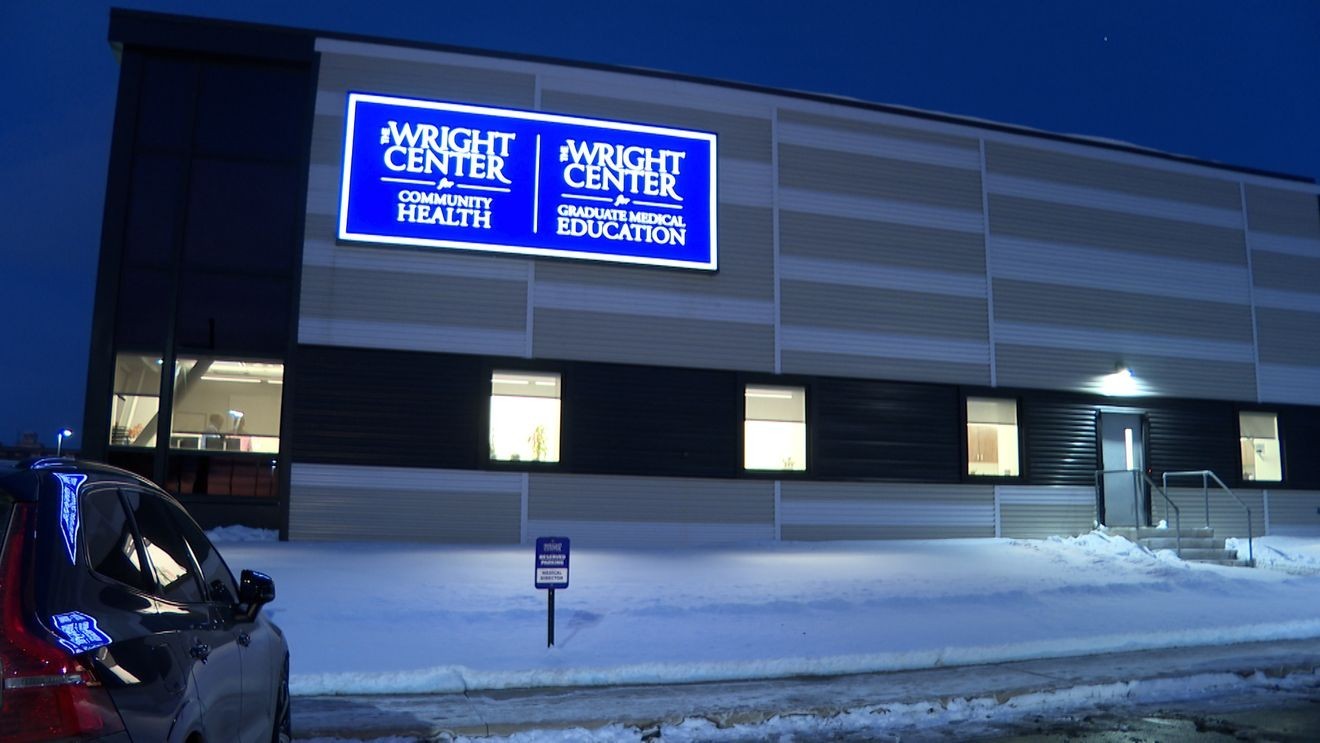
Across 13 locations around Northeastern Pennsylvania, the Wright Center for Community Health is a generalized facility servicing all types of treatment. Their annual community needs assessment found a service the area lacks: behavioral health specialists.
So, they submitted a grant application to train peer support specialists, most can’t afford it due to the time it takes and travel but after receiving a $300,000 grant from the Moses Taylor Foundation, 20 were able to be certified.
“What we wanted to do was get more people within Lackawanna County and our surrounding counties this certification,” said Scott Constantini, associate vice president of primary care and recovery services integration. “They’re all not going to be employed at the Wright Center, but what our goal was was to expand this footprint across Northeastern Pennsylvania. So even other agencies can hire these peers and utilize them within their agencies.”
Peer support specialists have lived experience either with mental health or battling an addiction and after getting certified, act as a bridge between the patient and the resources they need.
“A lot of times, patients with mental health illness are reluctant to go to their therapy appointment or go to their psychiatry appointment, out of pure fear of the unknown,” said director of behavioral health, case management, and social services Lou Strazzeri. “And having a peer support specialist with them, explaining to them that this is going to help you, puts them at ease and increases their appointment attendance. It also decreases hospitalizations.”
In fact, according to the American Hospital Association, studies have shown an average reduction of 43% in inpatient services, a 30% increase of outpatient visits, and a 56% reduction in readmission rates. In New York, it reduced the cost of care by an average of over $2,000 and in Colorado, it showed a return of investment of $2.28 for every dollar spent.
The idea is that by having someone the patient can relate to and trust, they are more likely to get better and if it works, the staff at the Wright Center want to do it.
“I think everybody out there watching wants the community to do better,” continued Strazzeri. “And I think peer support specialists are key, and helping our community members that do suffer from addiction and mental health to get on the right path and not be, you know, constantly battling an uphill battle, per se.”
The training paid is done for most and the Wright Center is currently hiring Peer support specialists so they, and other centers, can start helping those who need it the right way.