
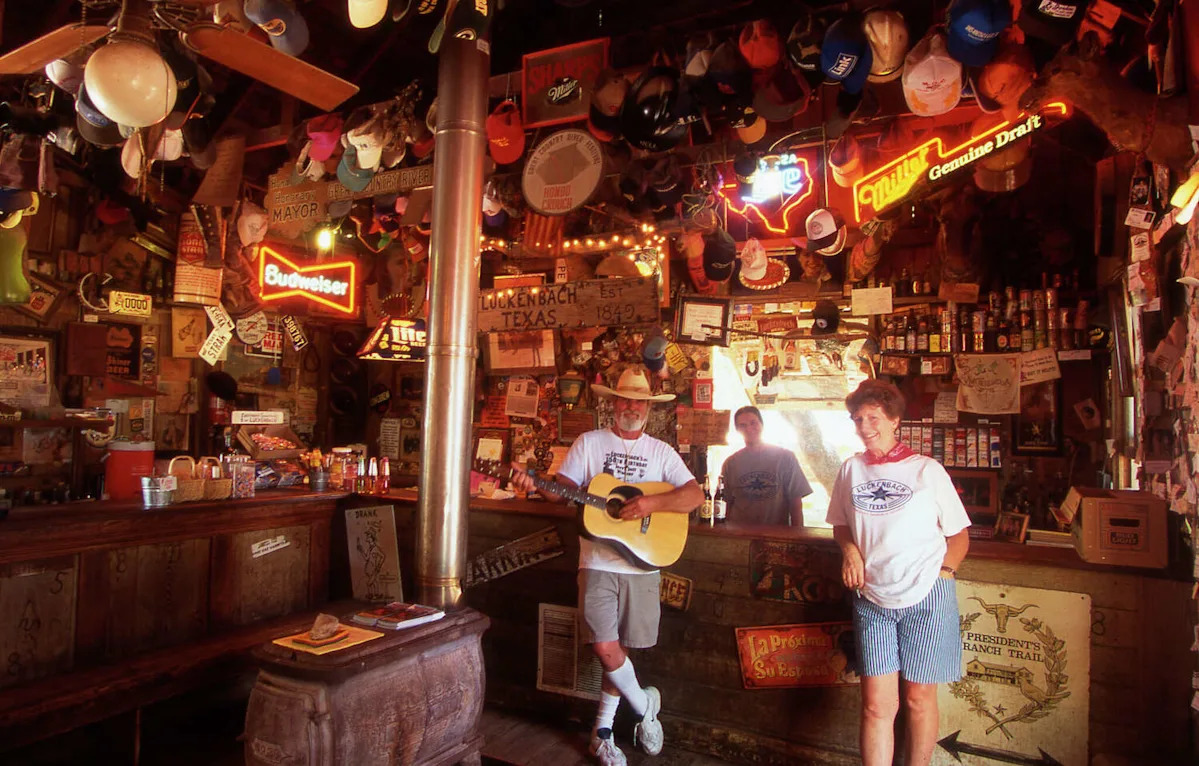
Texas dance halls and saloons have a special place in state history, and some of the musicians they’ve helped produce have had an impact on music.
Dance halls are the focal point of the nightlife and weekend entertainment scene in small Texas towns. A social gathering space where there’s beer, lots of dancing and good music. A lot of these places are more than 100 years old.
The Hill Country has some of the best dance halls:
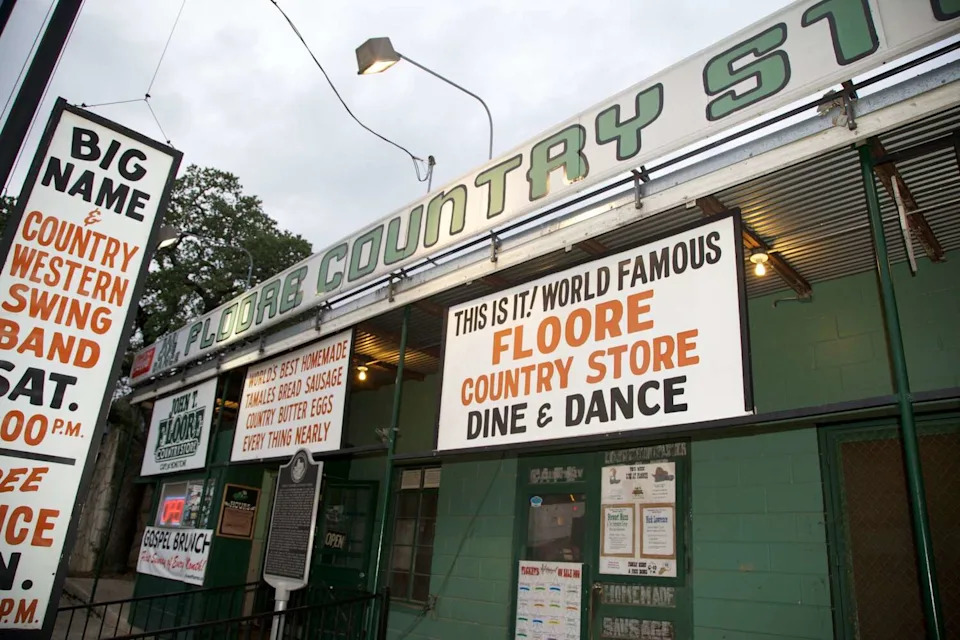
The outside of Floore’s Country Store. Owner John T. Floore opened the doors of the dance hall and café in 1942. (Express-News file photo)
John T. Floore’s Country Store
Considered by many to be the “birthplace” of Willie Nelson’s musical career, the John T. Floore’s Country Store in Helotes first opened in 1946, under the helm of John T. Floore, a former manager of the Majestic Theater in San Antonio. The dance hall is pretty sizeable, with a giant outdoor patio that can hold up to 2,000 people and an indoor space for 400. The country music venue has seen the likes of Ray Price, Bob Wills, Johnny Cash, Ernest Tubb, Merle Haggard, Lyle Lovett, Robert Earl Keen, and Tammy Wynette, according to the Texas State Historical Association. Nelson even wrote one of his best tunes, “Shotgun Willie,” about John T. Floore.
Bob Dylan, Elvis and Hank Williams have also performed here.
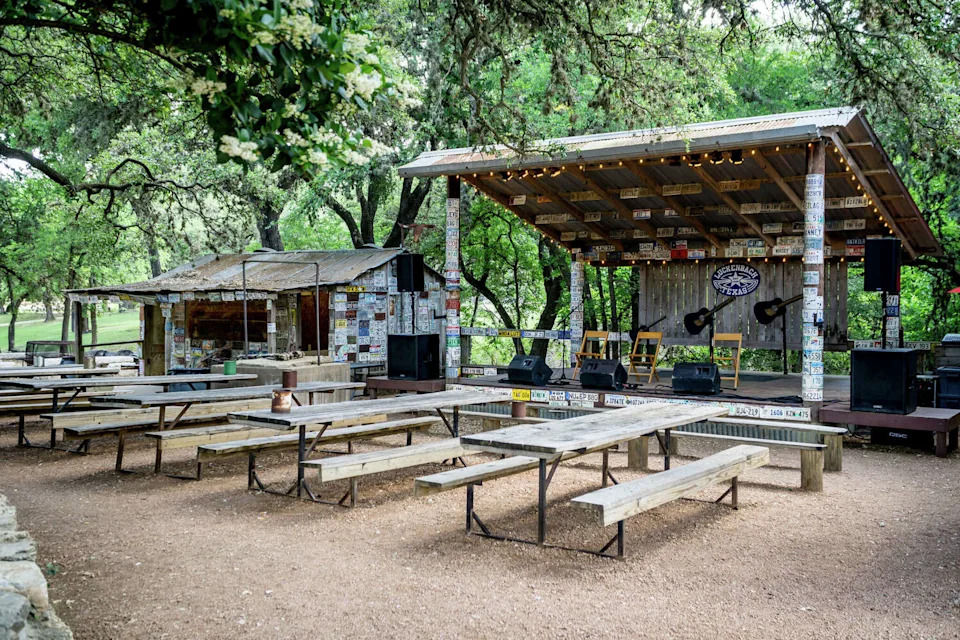
Outdoor music venue behind the old post office in Luckenbach Texas. Made famous by the song Luckenbach Texas by Waylon Jennings and Willie Nelson (Eric Overton/Getty Images)
Luckenbach Dance Hall
This historic town near Fredericksburg was made famous by the song “Luckenbach Texas” by Waylon Jennings and Willie Nelson in 1977. But before that, it was the stuff of small-town legend. Local tales suggest that a man named Jacob Brodbeck once flew an air-plane craft in Luckenbach even before the Wright Brothers.
The town itself originally opened as a trading post in 1849, serving settlers and Native Americans alike. According to the dance hall’s website, the “Post Office/ General Store/ Beer Joint” that would eventually become a a legendary hub of music talent and tourism when it opened in 1886.
The town’s larger-than-life reputation truly began in the 1970s when it was purchased by Hondo Crouch, Guich Koock, and Kathy Morgan. According to the story, Jerry Jeff Walker, a significant figure in the progressive country and outlaw country music movement, came to town in 1973 to record an album. Walker and The Lost Gonzo Band wrote and recorded the album there. It was “Viva Terlingua,” which went on to achieve great success. Today, music acts are booked nearly every day and night in this small town.
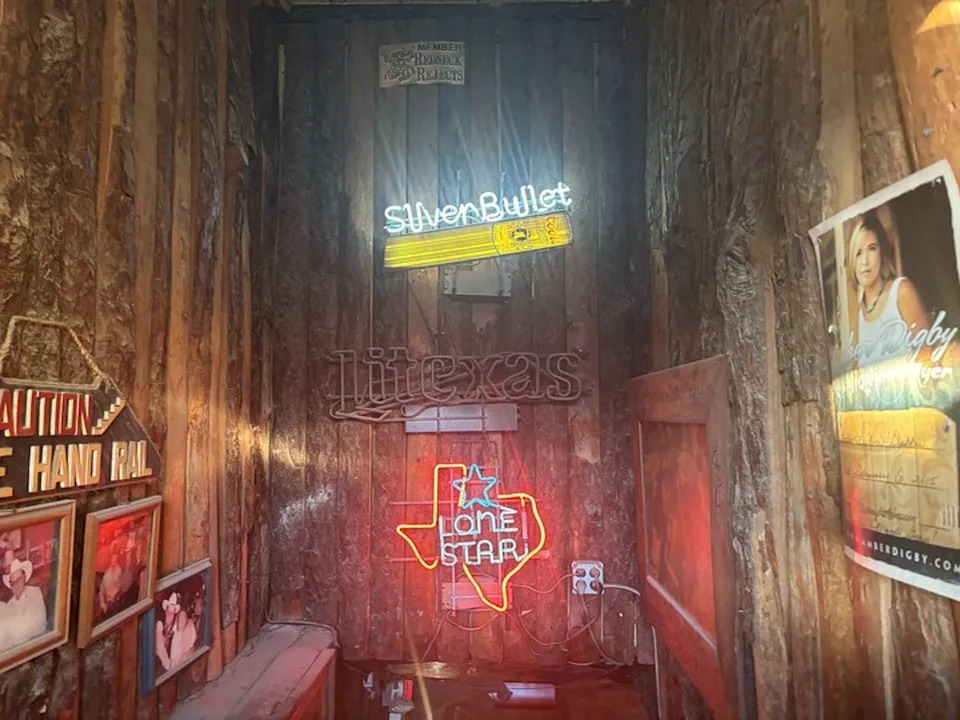
Entrance to Arkey Blue’s Silver Dollar in Bandera, Texas. Underground saloon beneath the Bandera General Store. (Mia Valdez/MySA)
Arkey Blue’s Silver Dollar
If you’ve ever watched the 1974 cult-classic film The Texas Chain Saw Massacre, you’ve had the pleasure of hearing owner-musician Arkey Blue’s song, “Daddy’s Sick Again.” Arkey Blue’s Silver Dollar in Bandera is the oldest continuously operating honky-tonk in Texas. It’s more than 50 years old, and in that time, it has seen the likes of Robert Earl Keen, Willie Nelson, Charlie Robison, Johnny Bush and Jay Hooker. Tucked underground next to the famous Bandera General Store, the establishment was first built in 1921 and opened as a social establishment called The Fox Hole. Blue bought the joint in 1968, and it’s still a popular saloon and dance hall today.
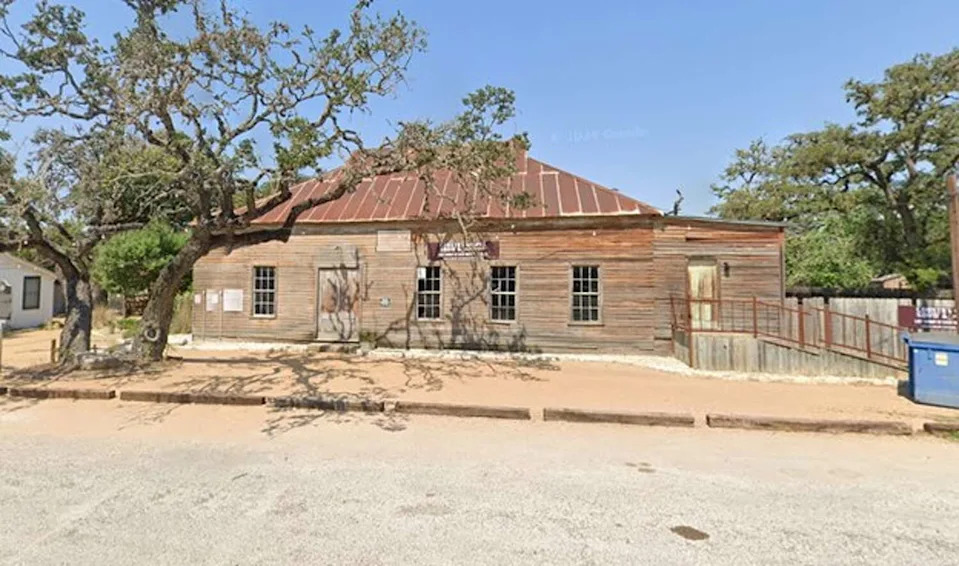
Sisterdale Dance Hall. (Google Maps)
Sisterdale Dance Hall and Opera House
The Sisterdale Dance Hall and Opera House is the oldest continuously operating opera house in Texas, according to the venue’s website, which says the dance hall was built around 1890 and was the “center of musical life for the community.”
Classical opera, folk, rock, Tejano, Americana and country music are all part of its history. The historical location has been featured in movies and in a Bud Light commercial featuring George Strait. Brooks and Dunn also filmed the music video for the song Red Dirt Road at the dance hall.
Today, the opera house is popular for weddings and parties.
This article originally published at These small-town Texas dance halls helped shaped big music.