
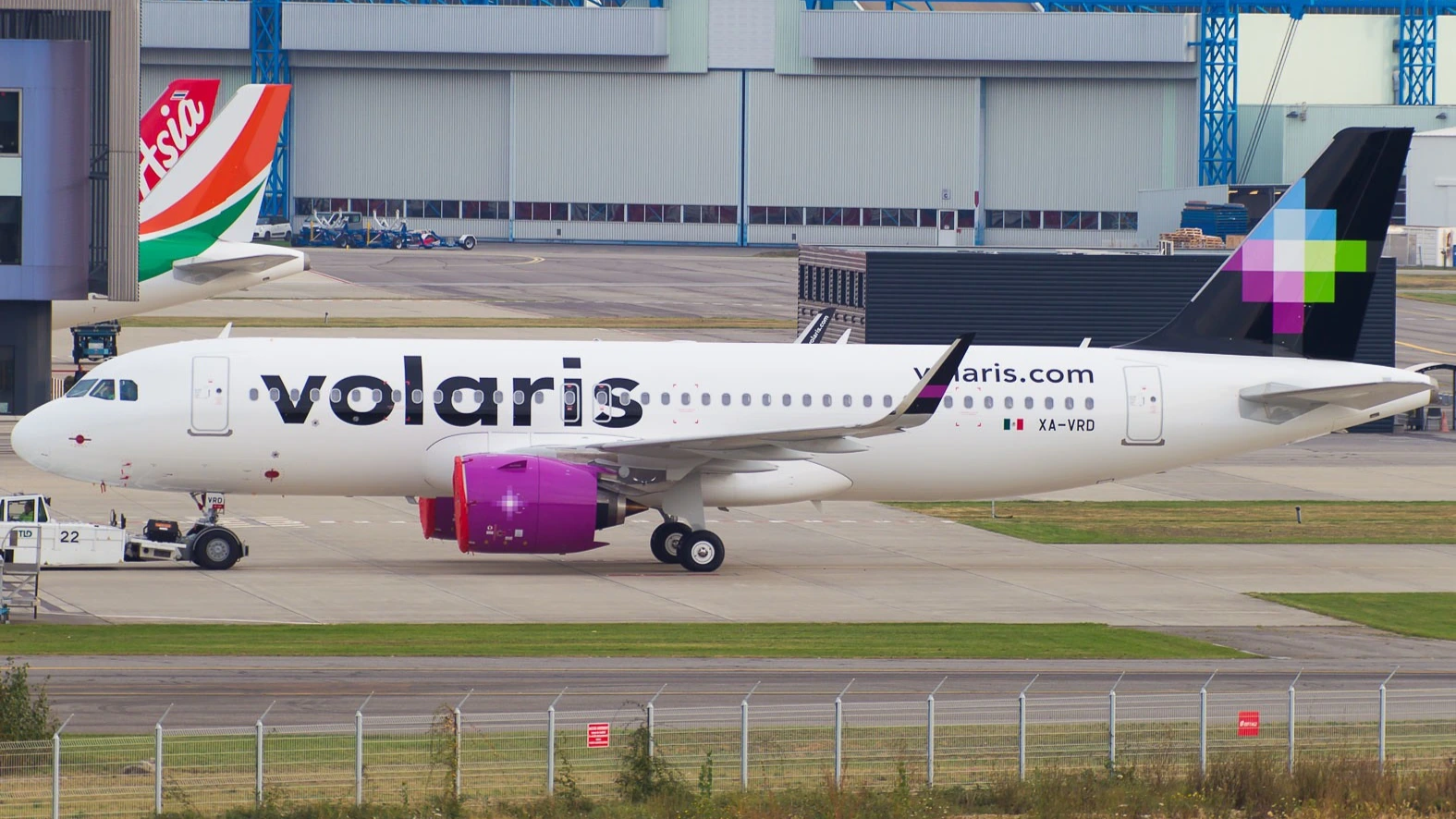
HOUSTON- Two commercial aircraft departing Houston George Bush Intercontinental Airport (IAH) narrowly avoided a mid-air collision after a pilot executed an incorrect turn immediately after takeoff. A last resort onboard safety system ultimately prevented a catastrophic outcome.
The serious near miss involved parallel runway operations, pilot error, delayed situational awareness, and a critical intervention by automated collision-avoidance technology.
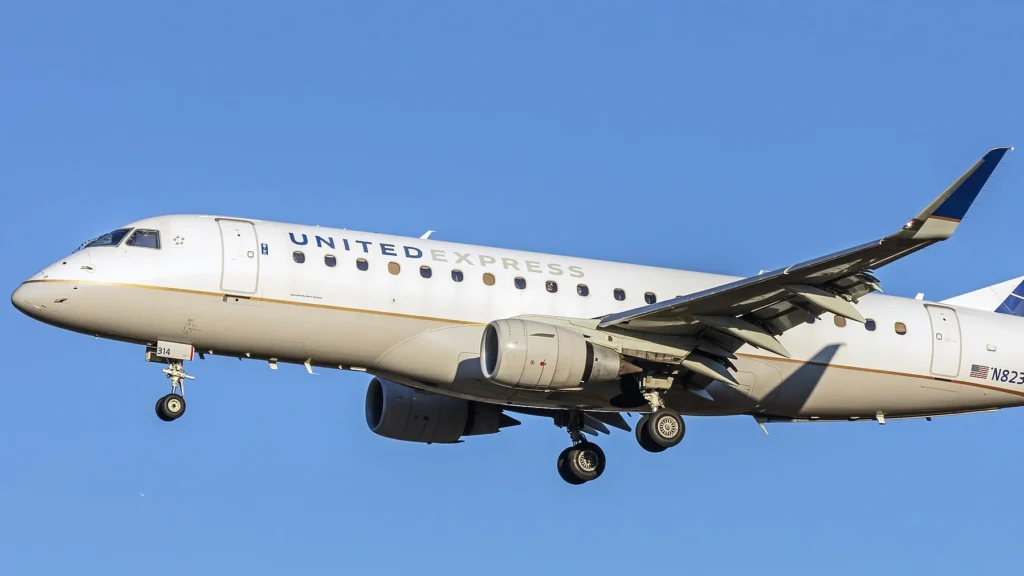 Photo: Acroterion | Wikimedia Commons
https://commons.wikimedia.org/wiki/File:United_Express-Mesa_Embraer_E175_N82314_BWI_MD1.jpg
Volaris and United Express Nearly Miss Collision
On December 18, an Airbus A320neo operating as Volaris El Salvador (Y4) flight N3-4321 departed Houston George Bush Intercontinental Airport (IAH) bound for San Salvador (SAL).
At nearly the same time, an Embraer E145 operated by CommuteAir as United Express (UA) flight UA-4814 departed for Jackson (JAN).
Air traffic control cleared the Volaris aircraft for takeoff from Runway 33L, and the United Express jet departed from the parallel Runway 33R approximately 20 seconds later.
Both runways align on a heading of roughly 330 degrees, and air traffic controllers allow parallel departures under these conditions as standard practice.
Air traffic control recordings revealed by VAS Aviation reported that ATC instructed the Volaris flight to execute a left turn to a heading of 110 degrees after takeoff.
The United Express flight was instructed to make a slight right turn to a heading of 340 degrees. These divergent post-departure headings were specifically designed to ensure immediate lateral separation.
Both aircraft began their takeoff rolls at roughly the same time, as the Volaris crew took additional moments before initiating departure.
This delay was operationally acceptable and posed no inherent risk, provided post-takeoff instructions were followed correctly.
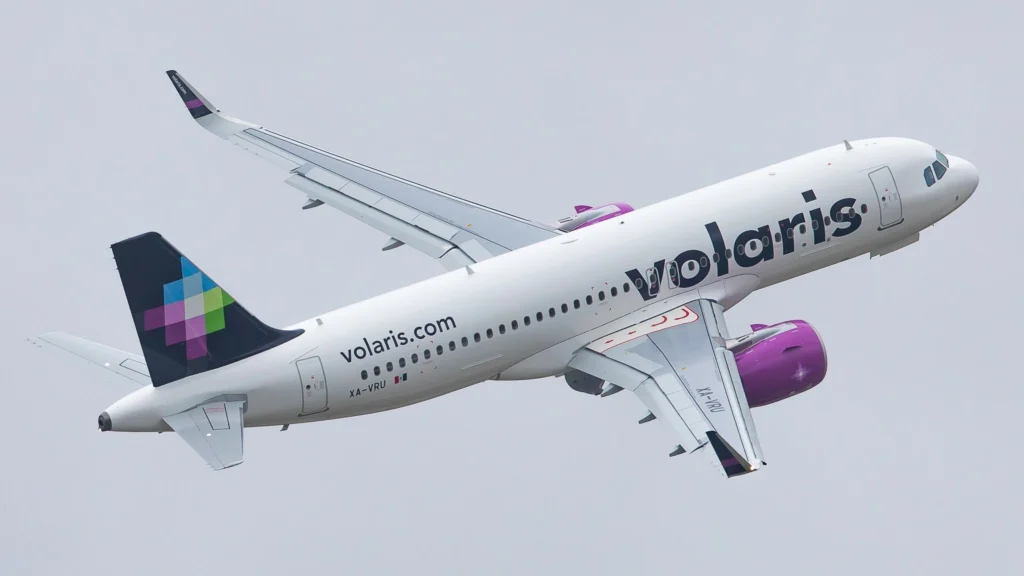 Photo: Clément Alloing
Pilot Error Creates Immediate Collision Risk
Despite correctly reading back the clearance, the Volaris flight crew mistakenly turned right instead of left after becoming airborne.
This error sent the Airbus A320neo directly toward the flight path of the United Express Embraer E145, placing the aircraft on a collision course.
The situation was particularly dangerous because the Volaris aircraft had to turn more than 180 degrees to the left, while the United Express aircraft needed only a minimal right turn of several degrees.
This geometry meant that a right turn by the Volaris aircraft would inevitably result in convergence.
After initiating the incorrect maneuver, the Volaris pilots contacted air traffic control and asked whether they should turn right to a heading of 110 degrees.
The controller reiterated the correct instruction, responding, “Jetsal 4321, yes, so left turn to 110,” seemingly unaware that the aircraft had already initiated the wrong turn.
By this point, radar systems were already displaying collision alerts as the aircraft closed to frighteningly close proximity, both horizontally and vertically.
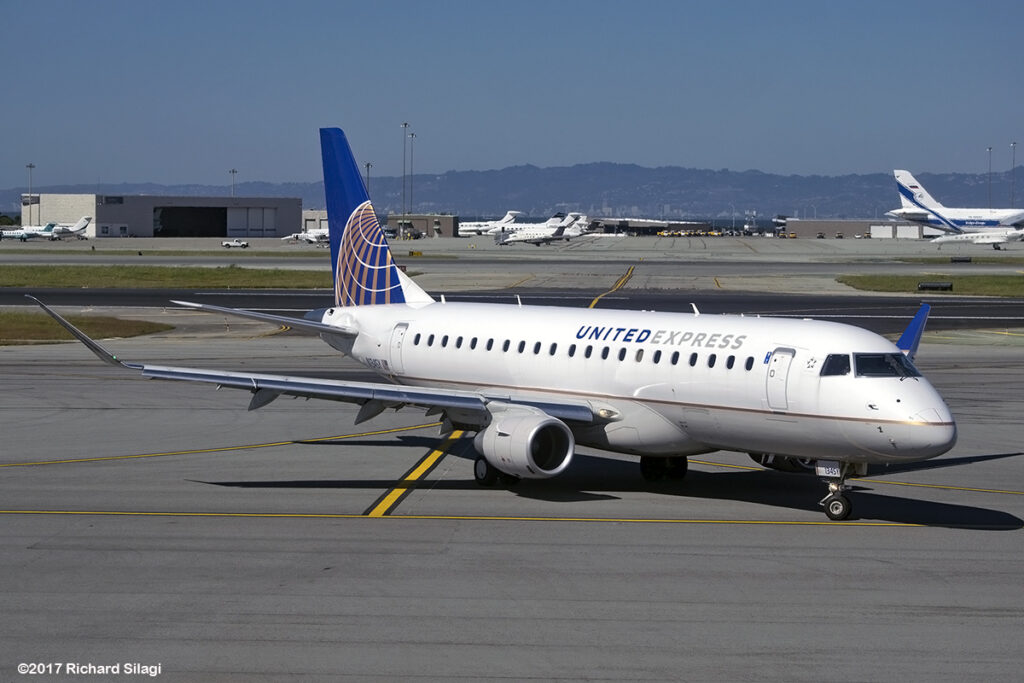 Photo: By Richard Silagi – Own work, CC BY-SA 4.0, https://commons.wikimedia.org/w/index.php?curid=76300183
Controller Workload and Delayed Recognition
Despite active collision alerts on the controller’s display, immediate corrective action was delayed. The controller was occupied issuing takeoff clearance and instructions to other aircraft, suggesting a high workload environment.
The first clear acknowledgment on frequency that a serious safety event was unfolding came from the United Express pilots, who announced they had received a Resolution Advisory.
The controller responded with “standby” and continued managing other traffic before addressing the developing emergency.
According to OMAAT, the incident underscores how controller workload, delayed prioritization, and non-standard phraseology can compound already critical situations during peak operations.
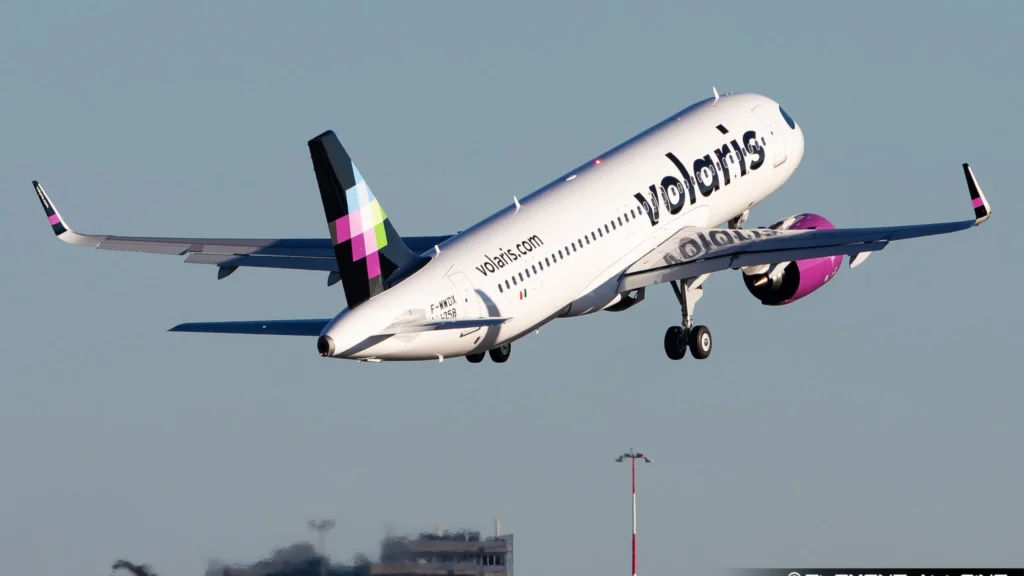 Photo: Clément Alloing
TCAS as the Final Line of Defense
The United Express aircraft ultimately avoided the collision when its Traffic Alert and Collision Avoidance System (TCAS) issued a Resolution Advisory.
TCAS operates independently of ground-based systems and intervenes when all other separation safeguards fail.
The system first raises crew awareness by issuing Traffic Advisories and then directs immediate evasive action by issuing Resolution Advisories.
In this case, a full Resolution Advisory directed the United Express pilots to perform a vertical maneuver to increase separation.
Such maneuvers can be abrupt and have historically caused injuries when passengers or crew are unrestrained. However, this incident caused no injuries, likely because it occurred shortly after takeoff while all occupants remained secured.
 George Bush International Airport; Photo- IAH Airport
Human Factors and Crew Concerns
The incident was the result of pilot error rather than miscommunication. Both the controller’s instruction and the Volaris crew’s readback correctly specified a left turn. The failure occurred during execution.
This points to a breakdown in crew resource management and situational awareness. Given that the Volaris aircraft departed from the left runway while another aircraft departed from the right, basic spatial awareness should have reinforced that a right turn was unsafe.
A contributing factor may have been the instruction to execute a turn exceeding 180 degrees, which can be cognitively counterintuitive and may lead crews to default to a right turn. While this does not excuse the error, more incremental turn instructions may have reduced the risk.
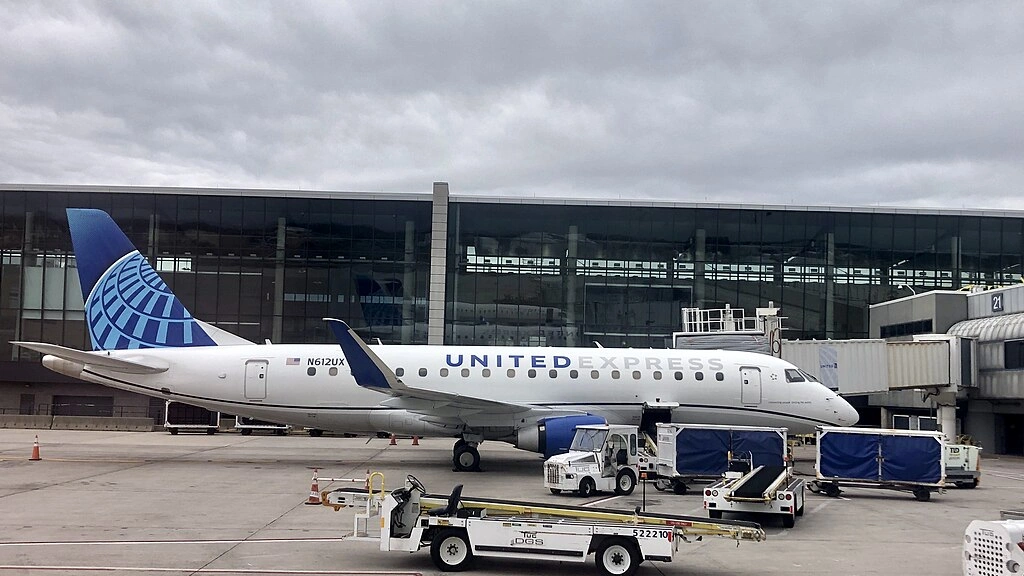 Photo: Airbus 777 – Flickr
Ongoing Review
The Federal Aviation Administration has not yet confirmed whether it will formally investigate the incident, though such events typically undergo internal safety review and analysis.
Parallel runway operations inherently carry increased risk, as demonstrated by a recent incident at Nice Airport, where a Nouvelair Airbus A320 nearly landed on top of an EasyJet Airbus A320 after lining up on the wrong parallel runway.
That case highlighted how visual cues, such as brighter runway lighting, can contribute to pilot confusion.
This Houston incident reinforces the importance of strict procedural compliance, effective crew cross-checking, controller prioritization, and the indispensable role of automated safety systems in preventing loss of life.
Stay tuned with us. Further, follow us on social media for the latest updates.
Join us on Telegram Group for the Latest Aviation Updates. Subsequently, follow us on Google News