
Food insecurity hits Hispanic and African American families in Houston the hardest. Learn what’s happening and why it matters.
Food insecurity remains a daily reality for thousands of families in Houston, particularly in African American and Hispanic communities in Harris County, where levels of limited access to healthy foods far exceed the state and national averages.
A recent study from the Kinder Institute for Urban Research at Rice University reveals that more than half of African American households and nearly half of Hispanic households in Harris County live with food insecurity. In contrast, about 24% of White households and 17% of Asian households face this situation. The figures reflect persistent inequality that is worsened by rising food costs, the lack of supermarkets in certain neighborhoods, and the economic pressure faced by working families.
Nationally, approximately 14% of households in the United States face food insecurity, while in Texas the figure rises to 17%, according to data from the Department of Agriculture. However, in Harris County the situation is considerably more severe: nearly two out of five households lack reliable access to sufficient and nutritious foods.
Food insecurity in Houston and its impact on specific neighborhoods
Areas such as Gulfton, the Third Ward and other neighborhoods in southwest and southeast Houston concentrate some of the highest levels of food insecurity in the city. In many of these neighborhoods, access to full-service supermarkets is limited, while convenience stores, fast-food restaurants, and low-cost outlets offering less healthy options predominate.
This lack of adequate food infrastructure is not by chance. Urban policy experts point out that decades of underinvestment, poor planning, and the absence of zoning regulations have contributed to creating true “food deserts,” where obtaining fresh fruits, vegetables, or quality proteins requires long drives or paying higher prices.
In Houston, a city known for its urban sprawl, dependence on cars and the shortage of efficient public transportation in certain areas magnify the problem for low-income families who do not own a vehicle.
The role of income and the rising cost of living
Although many affected families have two incomes, the sustained rise in the prices of food, rent, electricity, and other basic services has forced difficult choices. For some households, reducing the amount or quality of food becomes the only way to cover essential expenses.
This scenario becomes even more complex when considering the time available to prepare meals. In households where adults work long hours or hold multiple jobs, cooking healthy meals from scratch is not always a viable option. Consequently, processed or ready-to-eat foods become the most accessible alternative, though not necessarily the most nutritious.
Food insecurity: Support programs and the future of SNAP
Food assistance programs, such as the Supplemental Nutrition Assistance Program (SNAP), have been a lifeline for many families in Houston. However, recent disruptions and announcements of cuts to the program have generated concern among community organizations and public policy experts.
A survey by the University of Houston indicates that more than a third of the city’s African American residents depend on SNAP, even though this group accounts for just over one-fifth of Houston’s total population. This suggests that any reduction in benefits could have a disproportionate impact on already vulnerable communities.
While the benefits temporarily suspended at the end of 2025 were restored, federal-level cuts point to an uncertain outlook for 2026, just as food inflation continues to affect family budgets.
The role of community organizations
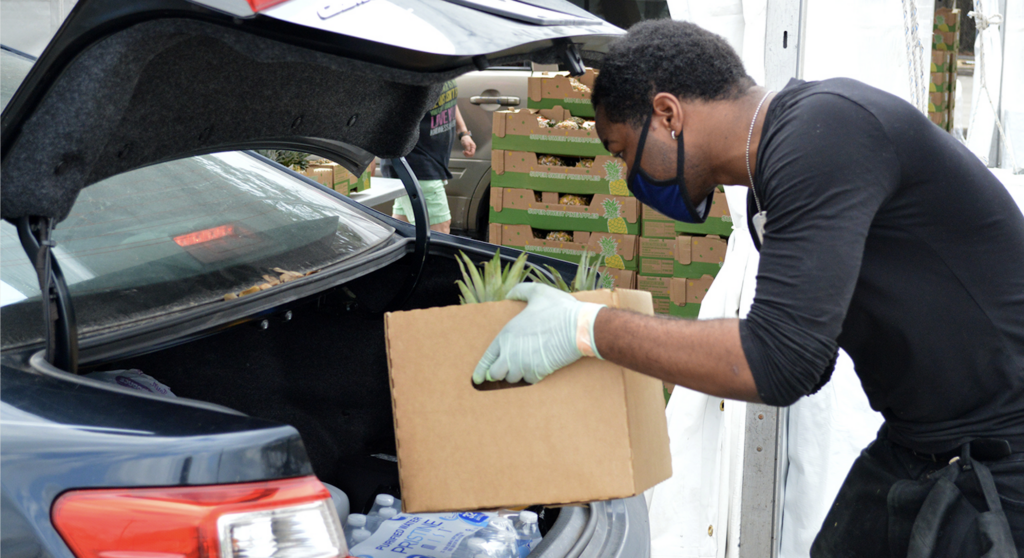
In this context, nonprofit organizations have intensified their efforts to meet the growing demand. In neighborhoods like Gulfton, food distribution events function as temporary markets that allow families to access fresh produce, meats, and organic foods without the usual cost of a traditional store.
These efforts not only alleviate weekly food expenses but also enable families to allocate scarce resources toward rent, utilities, and other urgent needs. For many people, these initiatives make a tangible difference between making it to the end of the month or not.
Beyond access: eating habits and nutrition education
Urban economics specialists warn that increasing the number of supermarkets, while necessary, is not an immediate solution. Consumption habits do not change overnight, especially when healthier options tend to be more expensive or require more time to prepare.
Moreover, fresh foods have a shorter shelf life, which represents an economic risk for families who cannot afford to waste food. Therefore, some experts suggest complementing access to food with nutrition education programs, year-round support for school meals, and the expansion of community pantries.
A structural challenge for Houston
Food insecurity in Houston is not solely a problem of food availability; it reflects broader structural inequalities related to income, housing, transportation, and urban planning. For African American and Hispanic communities, these barriers translate into a daily burden that affects health, well-being, and long-term opportunities.
As Houston continues to grow, the challenge for authorities, organizations, and community leaders will be to develop comprehensive strategies that not only address the immediate emergency but also strengthen systems that ensure equitable access to healthy foods in all neighborhoods.