
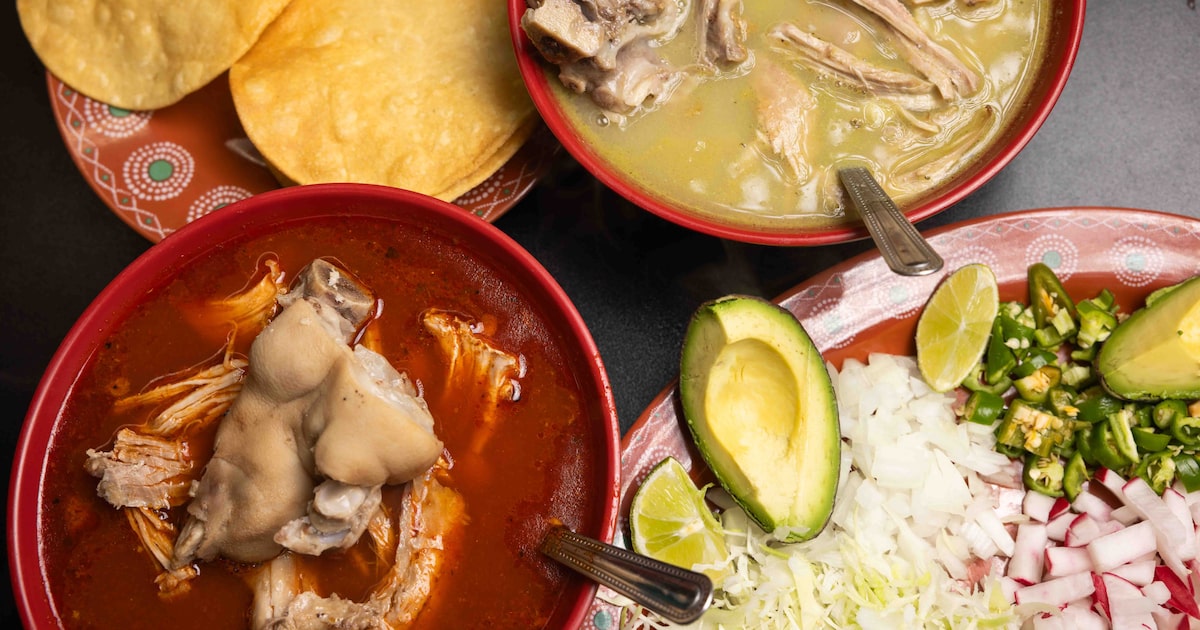
Pozole is a signature dish in Mexican cuisine, found at national celebrations, family parties and on dinner tables throughout the country. However, behind this soup of hominy, meat and seasonings lies a history that dates back to pre-Hispanic times, when its preparation and consumption were ritualistic and much darker than today.
The ancient Aztecs consumed pozole in religious ceremonies dedicated to the gods. The base was always hominy, considered sacred and a symbol of life. What set that centuries-old version of the recipe apart was the protein added: human flesh, the product of sacrifices made in temples.
In Florentine Codex: General History of the Things of New Spain, friar Bernardino de Sahagún recounted that Emperor Moctezuma ate pozole with the thigh meat of a young prisoner. De Sahagún was one of the first religious figures to arrive with the Spanish conquistadors in the early 1500s, and he saw the prisoner sacrificed during the celebrations in honor of Tonatiuh, sun god and patron of warriors, according to the Larousse Dictionary of Mexican Gastronomy.
Nowadays, people skip human flesh and use only animal meat such as pork, chicken or turkey.
Eat Drink D-FW
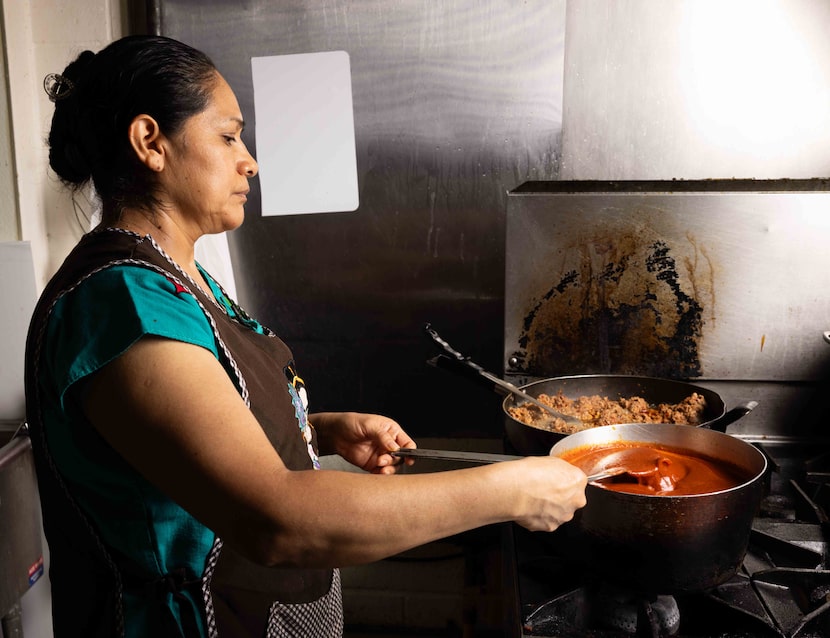
María Pastenes prepares pozole rojo at La Cocina del Bony Boy in Dallas on Thursday, Aug. 14, 2025. Pozole, one of the most traditional and omnipresent dishes in Mexico, started with the Aztecs.
Juan Figueroa / Staff Photographer
Although it is a dish found throughout Mexico, its origin is in the state of Guerrero, located on the west coast of the country. This is where cacahuazintle corn, the type of corn used to prepare this dish, originated. This preparation of corn is known as hominy is English.
“That corn is the most common kind in our homeland,” said Noel Cervantes, owner of La Cocina del Bony Boy, a restaurant located inside Plaza del Sol Bazar in Far North Dallas. “It is a large-grain white corn that is grown throughout the Tierra Caliente region.”
Since ancient times, Aztecs had cacahuazintle corn brought to what would later become the state of Guerrero.
Unlike the corn used to make tortillas, hominy is not cooked with lime to undergo the nixtamalization process. It is cooked with salt, seasonings and meat. After boiling it for a few hours, the pozole is ready to serve. People sometimes put lettuce, radishes, lemon and oregano on it. It is traditionally eaten with tostadas.
In Dallas, there are many restaurants offering pozole. Although there are different styles, you can find pozole in white, red and green varieties.
White pozole is made with corn, pork and salt, without any sauce. Red pozole is made with ancho and guajillo chilies. Green pozole contains chilies and green tomatoes, epazote and pumpkin seeds.
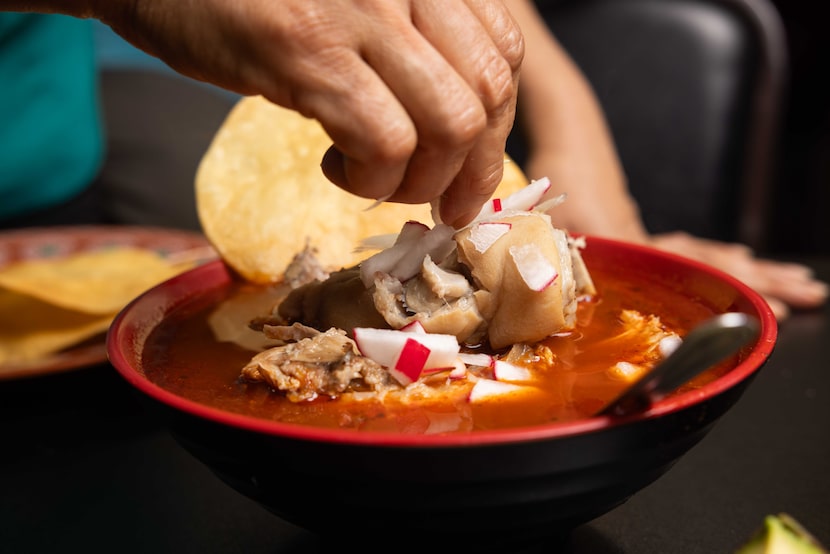
Radish is added to the pozole rojo at La Cocina del Bony Boy in Dallas on Thursday, Aug. 14, 2025. Pozole, one of the most traditional and omnipresent dishes in Mexico, started with the Aztecs.
Juan Figueroa / Staff Photographer
La Cocina del Bony Boy, located along Spring Valley Road near Coit Road in Dallas, offers Guerrero-style pozole. Its owners, Noel Cervantes and María Pastenes, are from Tlapehuala, Guerrero. The region is called Tierra Caliente, where pozole is the main dish at many social events.
“When it’s a saint’s feast day, pozole is served. When someone dies, pozole is served. On a birthday, pozole is made,” said Pastenes. “It’s the food that can never be missing at gatherings and family meals.”
The preparation varies regionally in Mexico. In some regions of Guerrero, such as Acapulco, or in Oaxaca, people add canned sardines to enhance its flavor. In others, raw eggs are added to the broth to cook while it boils. It can also be accompanied by pork rinds and avocado. In coastal states such as Nayarit or Colima, it is prepared with shrimp.
At La Cocina del Bony Boy, Thursdays are pozolero days. Although the restaurant offers other types of dishes, the most popular on that day is pozole. The restaurant serves a very specific clientele, as most of its customers are from Tlapehuala, Guerrero, many of whom live in the northern Dallas area. There are so many that they have named their neighborhood TlapeDallas.
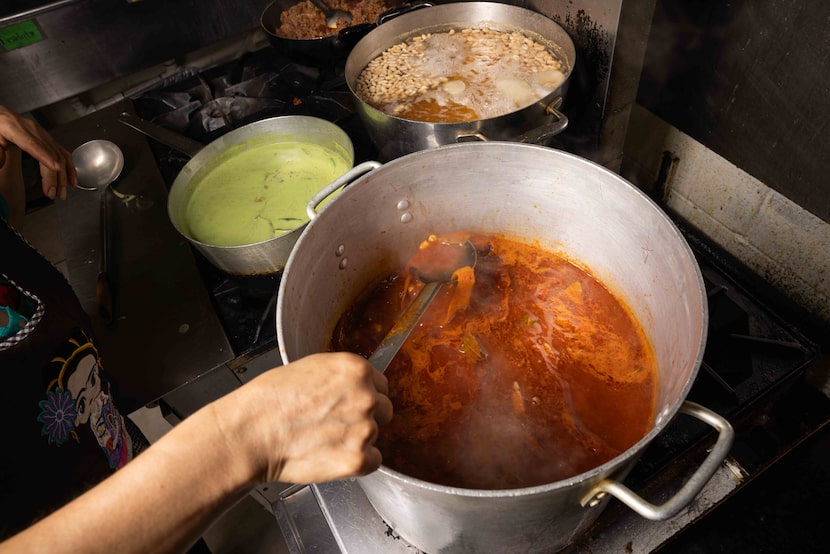
María Pastenes prepares pozole rojo at La Cocina del Bony Boy in Dallas on Thursday, Aug. 14, 2025. Pozole, one of the most traditional and omnipresent dishes in Mexico, started with the Aztecs.
Juan Figueroa / Staff Photographer
“A lot of people from my town live nearby, and they come here to eat often,” said Cervantes, who was a musician before opening his restaurant. “There are people who live in other states visiting family and come here to eat. People have come from California and stop by to eat here every time they visit. It’s very nice.”
La Cocina del Bony Boy is located at 8282 Spring Valley Road #250, inside Plaza del Sol Bazar, in Dallas.
D-FW Sabores logo
The Dallas Morning News
This story is part of D-FW Sabores, a series dedicated to finding authentic Mexican cuisine across North Texas, dish by dish, region by region.