
The mash-up of genetic, environmental and lifestyle factors that contribute to Alzheimer’s disease — the most common form of dementia — is muddled and complex.
It’s an especially hard picture to make sense of in South Texas, home to counties with some of the highest Alzheimer’s rates in the U.S. and a Hispanic population that has historically been left out of brain research and clinical trials.
Although research on Alzheimer’s is progressing and new medications are going to trial, researchers still don’t have a clear sense how much your risk of neurodegenerative diseases is predetermined by familial history and genes versus the food you eat, the number of concussions you’ve sustained and even the air you breathe — and what part each of these and more play in the heavy disease burden present in South Texas.
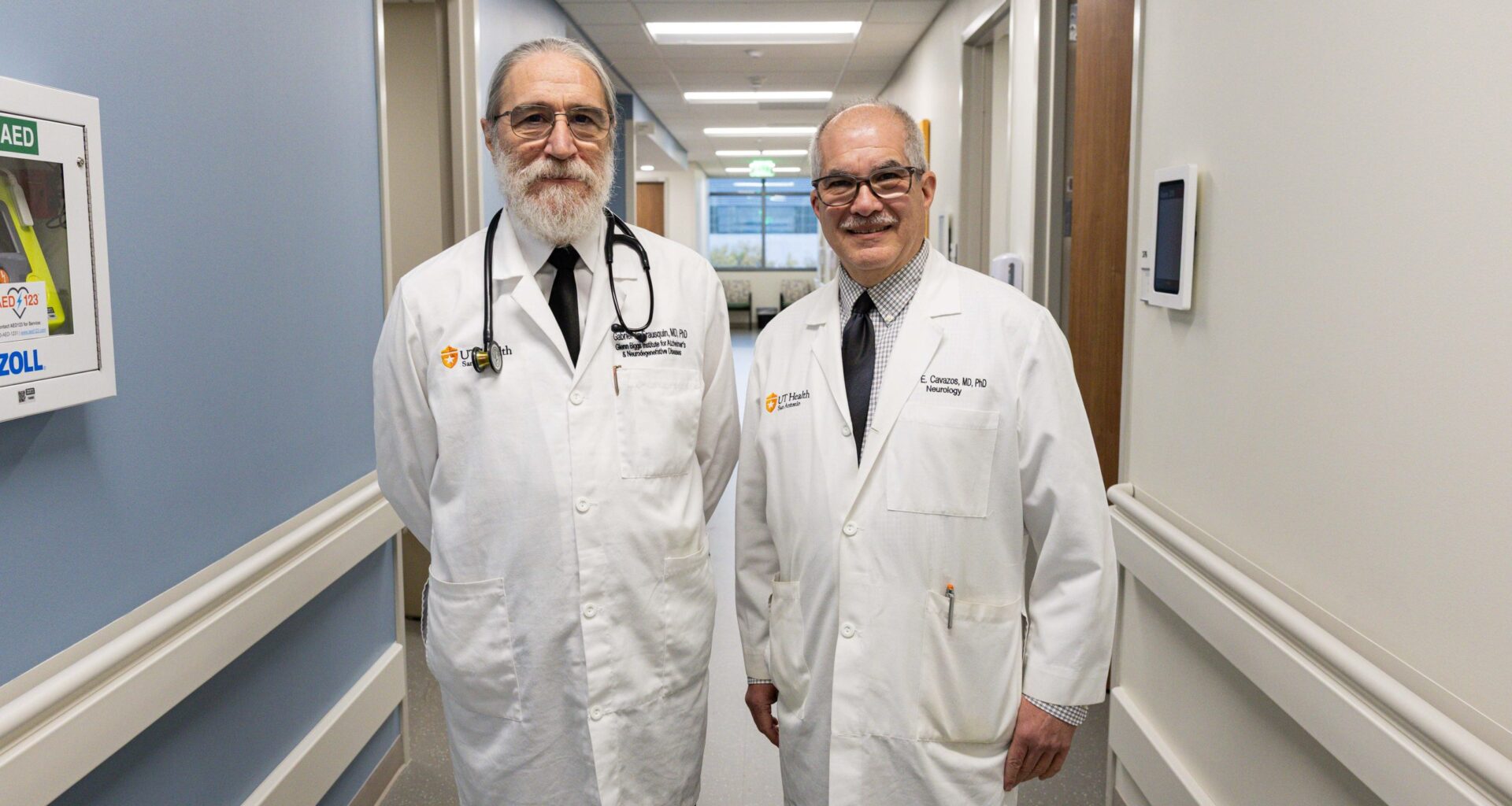
“The bottom line answer is: we do not know,” said Dr. José Cavazos, a clinical neurologist who researches genetics and Alzheimer’s at UT San Antonio. “That’s the reality.”
It’s also an increasingly important unknown given that the country’s Hispanic population — which faces disproportionately higher risk of Alzheimer’s and other forms of dementia — is one of the fastest growing demographic groups in the U.S.
At the same time, our overall population is aging.
Nearly one in four Americans will be 65 and older by 2060 and the number of people 85 and older will triple. Without research and drug breakthroughs, the number of Americans with Alzheimer’s is expected to rise from 7.2 million today to nearly 14 million in 2060.
Researchers with UT San Antonio’s Glenn Biggs Institute for Alzheimer’s and Neurodegenerative Diseases are seeking to answer some of the questions that orbit this entangled mess, and for the first time bringing new treatments and genetic research to an excluded demographic.
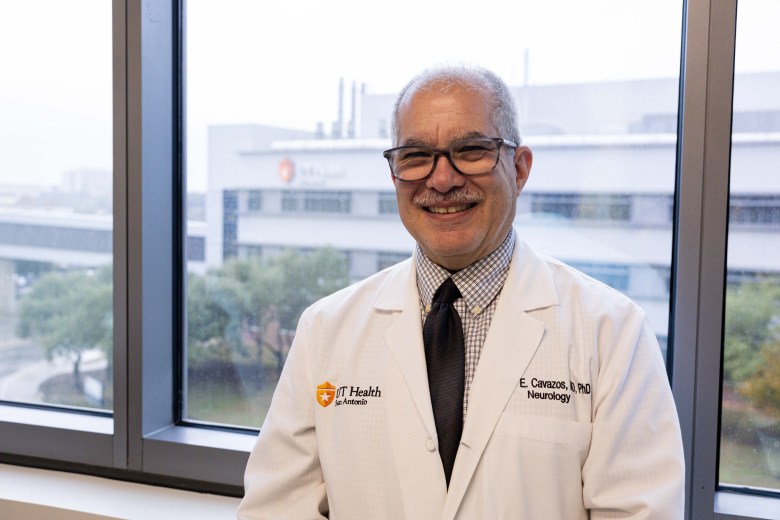 Clinical neurologist doctor José Cavazos researches genetics and Alzheimer’s at UT San Antonio’s Glenn Biggs Institute for Alzheimer’s and Neurodegenerative Diseases. Credit: Amber Esparza / San Antonio Report
A mosaic of risk
Counties along the Texas-Mexico border, including several in and around the Lower Rio Grande Valley, have some of the highest rates of Alzheimer’s among those 65 and older in the country. Similar rates can be found in other counties with significant Hispanic populations, like in South Florida and California.
Hispanic people are 1.5 times more likely to develop Alzheimer’s compared to non-Hispanic white people. Despite increased prevalence in the population, Hispanic Americans are heavily understudied when it comes to neurodegenerative diseases, accounting for 2% of participants in clinical trials, according to a 2019 systemic review of dementia studies.
“Many of the initial studies on genetics and many of these other approaches to try to understand brain function were focused primarily on white, relatively wealthy people,” said Dr. Gabriel de Erausquin, a genetics and neurology researcher who also directs the Biggs Institute’s Laboratory of Brain Development, Modulation and Repair. “It became quite evident … that the processes were not necessarily identical in other ethnic groups, and that the genetic variation that you see in white people is actually a tiny fraction of what we see in the overall population.”
It was “a self-defeating approach,” de Erausquin said, to rely on such limited sampling to get a broad picture of how thousands of genes interact and contribute to the disease.
Additionally, whenever researchers first set out to understand how our genes influence our dementia risk, they approached the question with the notion that Alzheimer’s and other neurodegenerative diseases could be traced back to one single gene, such as Huntington’s Disease, a debilitating, inherited disorder caused by a mutation in the huntingtin gene.
But today, “we understand genetic risk as a mosaic of multiple small variations that contribute — some bigger, some smaller — variable degrees of risk that create a picture that is somewhat individual for each patient,” de Erausquin said.
One of the more well-known and researched genes associated with increased Alzheimer’s risk is the APOE4 gene variant, which helps make a protein that carries cholesterol and other fats within the bloodstream. But there’s still much that isn’t understood about the protective effects of other genes and how it all comes together to create a mosaic of risk, as de Erausquin put it.
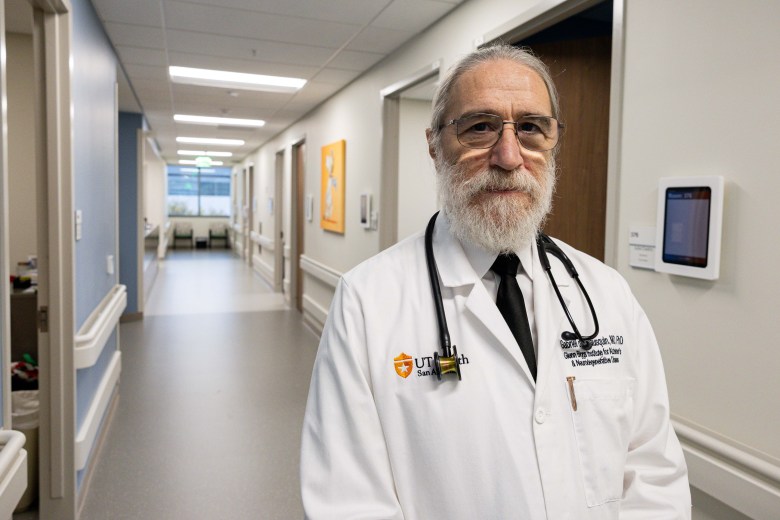 Dr. Gabriel de Erausquin is a genetics and neurology researcher and director for the Biggs Institute’s Laboratory of Brain Development, Modulation and Repair at UT San Antonio. Credit: Amber Esparza / San Antonio Report
“The picture gets more and more complicated the more we know about it,” he said.
‘It’s very complex’
During a tour of UT San Antonio’s new Center for Brain Health in November, Texas Sen. José Menéndez (D-San Antonio) probed researchers on what he could do to reduce his risk of Alzheimer’s, which he said runs in his family.
Eating a balanced diet with fresh fruits and vegetables, social engagement, controlling blood pressure, exercise, consistent sleep and good sleep hygiene, one researcher responded. “Any other questions?” a tour guide asked.
“Too many,” Menéndez said. “I don’t even know what sleep hygiene is.”
The degree to which our environments and lifestyles influence our chances of developing dementia are, like everything else so far, not too clear, since it’s difficult to isolate any of these variables and take away straightforward conclusions.
“It also has become an interpretation challenge,” de Erausquin said. “It’s very, very hard to synthesize the results of these very large studies, and it’s very complex to try to understand what they mean.”
Still, researchers have identified a number of factors that are associated with increased risk of Alzheimer’s disease and related dementias: smoking, alcohol consumption, poor sleep, a history of head injuries (especially traumatic brain injuries), elevated blood pressure, heart disease, obesity and type 2 diabetes.
Scientists are also drawing connections between the disease and less obvious factors, like gum disease, hearing loss, air pollution and even COVID-19 infections.
South Texas faces higher rates of obesity and type 2 diabetes, something all the researchers point to as likely playing a role in the elevated rates of Alzheimer’s, even if it’s not the only cause.
De Erausquin pointed out that gum disease is also experienced at higher rates in the region, as is exposure to pesticides, especially in the the heavily agricultural Rio Grande Valley region.
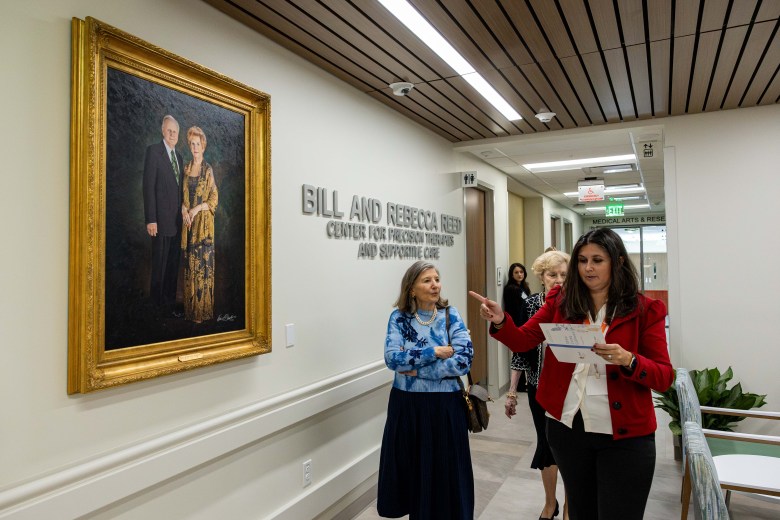 Visitors tour the second floor of the new UT Health San Antonio Center for Brain Health which houses the Bill and Rebecca Reed Center for Precision Therapies and Supportive Care after a celebration ceremony on Nov. 13, 2025. Credit: Amber Esparza / San Antonio Report
Moving forward
There are many reasons to be optimistic about the university’s ability to answer some of the most pressing unknowns in Alzheimer’s research. But there’s plenty of work ahead.
“We are addressing some of those questions, but … that is very ambitious and broad portfolio that would require millions upon millions of dollars to address,” de Erausquin said.
In November, Texas voters approved creating a Dementia Prevention and Research Institute of Texas along with $3 billion in funding for the institute to advance dementia research in the state, which researchers say will also help bring talent to the region. The measure passed by a wide margin.
DPRIT is currently held up in court after a group of voters brought a lawsuit against the Texas Secretary of State’s Office, claiming that voting machines used in November’s election are faulty, though they didn’t challenge the other 16 propositions that passed.
San Antonio is also home to the South Texas Alzheimer’s Disease Center, one of 37 Alzheimer’s research centers funded by the National Institute on Aging, and the one with the largest Hispanic population, Seshadri said.
Also in November, the university completed construction on its $100 million Center for Brain Health, which brings the university’s neurological specialists, therapies, diagnostics, support groups and research all under one roof.
During the center’s grand opening, Ann Biggs, a philanthropist and widow of Glenn Biggs, the San Antonio business leader and the institute’s namesake, expressed confidence in researchers uncovering missing links in Alzheimer’s. She even hinted at a potential Nobel Prize down the line.
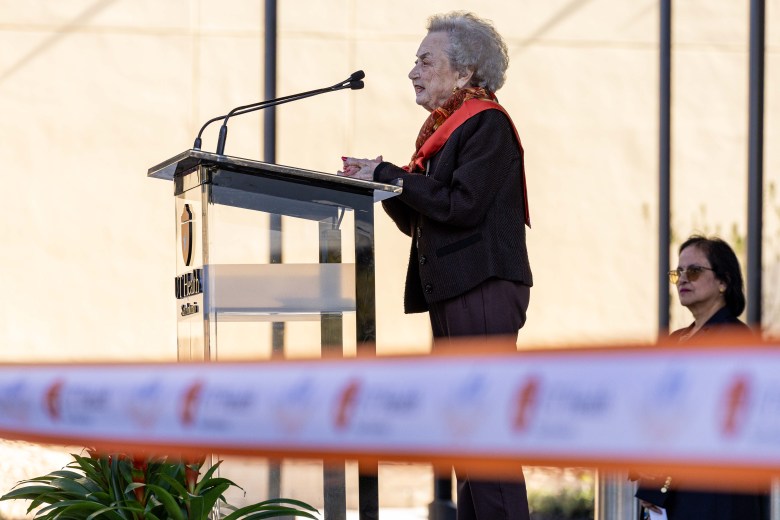 Ann Biggs, a philanthropist and widow of Glenn Biggs, speaks during the opening celebration and ribbon cutting ceremony for UT Health’s new Center for Brain Health on Nov. 13, 2025. Credit: Amber Esparza / San Antonio Report
Novel treatments for Alzheimer’s approved by the U.S. Food and Drug Administration— the drugs Lecanemab and Donanemab, both administered via IV infusions — will also be administered at the new center to more than 100 patients initially, allowing researchers to gauge how well the drugs combat the disease in the Hispanic population. By clearing specific plaque and protein buildup in the brain, the drugs are thought to slow the progression of Alzheimer’s if administered early enough in the disease’s progression.
“Now we are being studied,” Cavazos said. “We’re bringing a particular number of understudied populations to the national discussion.”
Dr. Sudha Seshadri, founding director of the Bigg’s Institute, said that important answers could be hidden in populations that we simply haven’t studied.
It’s possible that “the only reason we haven’t found [treatments] is because we haven’t looked in this group earlier,” she said. “Nature sets up solutions, and we have to uncover them.”