
Cybercab’s Austin Odyssey: Tesla’s Robotaxi Push Hits the Streets
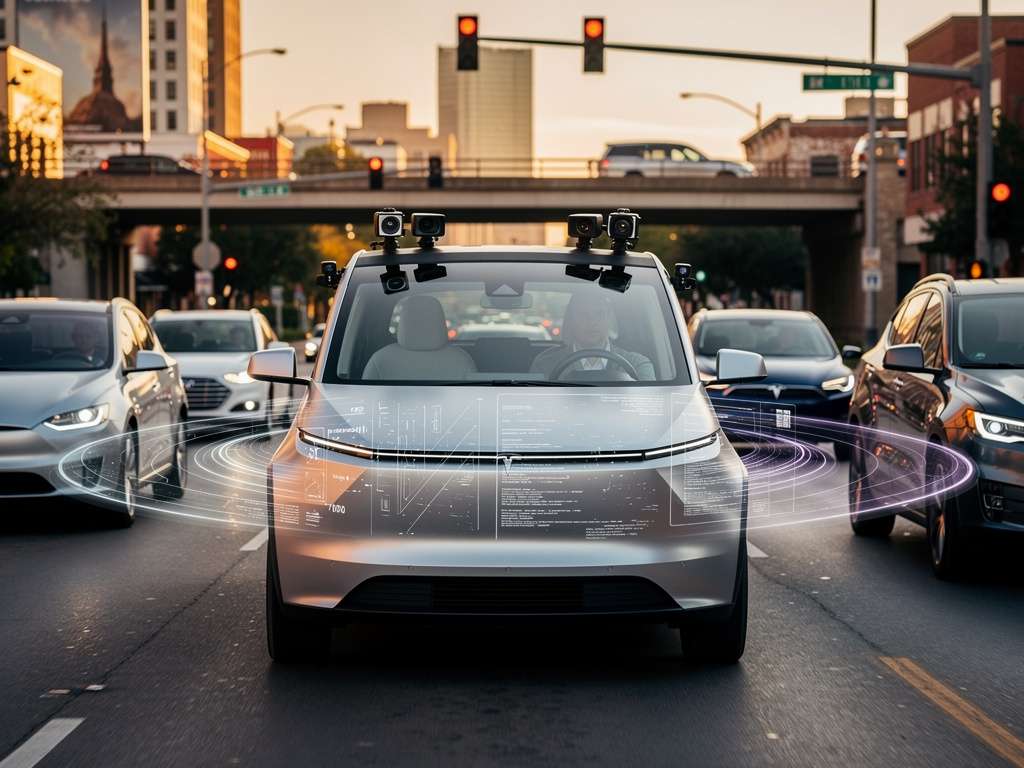
In the bustling heart of Austin, Texas, a futuristic vision is unfolding on everyday roads. Tesla’s Cybercab, the company’s ambitious foray into fully autonomous robotaxis, has been turning heads with recent sightings weaving through downtown traffic. These prototypes, sleek and mirrorless in design, represent a pivotal step in Tesla’s quest to revolutionize urban mobility. Drawing from recent observations shared on social media and industry reports, the Cybercab’s presence signals accelerating testing efforts ahead of a much-anticipated 2026 production launch.
The vehicles spotted aren’t the polished showpieces unveiled at Tesla’s “We, Robot” event; instead, they feature temporary side mirrors and, in some cases, steering wheels to comply with federal safety standards. This pragmatic adaptation underscores Tesla’s strategy to navigate regulatory hurdles while pushing the boundaries of self-driving technology. According to reports, these engineering mules are equipped with safety monitors, hinting at ongoing validation phases where human oversight ensures reliability in real-world scenarios.
Enthusiasts and analysts alike are buzzing about these developments, as they provide tangible evidence of Tesla’s progress in a competitive field dominated by players like Waymo. Posts on X (formerly Twitter) have captured moments where Cybercabs glide past lidar-equipped rivals, showcasing Tesla’s vision-only Full Self-Driving (FSD) system in action. This isn’t just spectacle—it’s a testament to the company’s confidence in scaling autonomous operations.
Prototypes in the Spotlight: From Giga Texas to Urban Trials
One notable sighting, detailed in a report from Digital Trends, describes multiple Cybercab prototypes navigating Austin’s congested streets. Shared by users like Matt Barge and Dennis Hegstad on X, these images depict the vehicles handling everyday traffic with apparent ease, a far cry from controlled test environments. The report highlights how such public appearances are ramping up, fueling speculation about an imminent expansion of unsupervised rides.
Complementing this, Not a Tesla App reported a prototype equipped with tiny side mirrors and likely a steering wheel, spotted in downtown Austin just over a week ago. This setup ensures compliance with Federal Motor Vehicle Safety Standards (FMVSS), which mandate mirrors for operator-controlled vehicles. The presence of a safety monitor in the front seat further indicates that Tesla is methodically building data for regulatory approval, a critical phase before ditching human intervention entirely.
Industry observers note that these tests are part of a broader push. Tesla has been using modified Model Ys as robotaxis in Austin, as confirmed in updates from the company’s own Robotaxi website. The site explains how the service operates, emphasizing accessibility features and the network’s potential for sustainable transport. Such disclosures align with Elon Musk’s vision of a fleet that could outpace traditional ride-hailing in efficiency and cost.
Regulatory Realities and Technological Gambles
Yet, Tesla’s ambitions aren’t without challenges. A piece in The New York Times points out that while Tesla’s stock surges on robotaxi optimism, the company lags behind competitors like Waymo in operational maturity. Waymo has a significant head start with driverless services already active in multiple cities, raising questions about Tesla’s timeline. In Austin, where testing is intensifying, Tesla must demonstrate that its camera-based FSD can match or exceed lidar-dependent systems in safety and reliability.
Recent advancements, however, suggest momentum. TechCrunch reported that Tesla began testing robotaxis in Austin without safety drivers as early as mid-December 2025, marking a bold leap toward true autonomy. This move positions Tesla to challenge Waymo directly, especially as public sightings increase. Posts on X from users like Tesla Dojo describe bronze prototypes cruising autonomously, passing Waymo vehicles and highlighting the debate over vision-only versus multi-sensor approaches.
Moreover, financial angles add intrigue. Yahoo Finance covered a Cybercab sighting in gold livery, complete with Texas plates, amid Musk’s drive for driverless operations. The article notes how these tests coincide with Tesla’s goal of mass production, potentially producing millions of units annually. This scale could disrupt ride-hailing economics, but it hinges on proving the technology in diverse urban settings like Austin’s variable traffic.
Market Implications: Wall Street’s Wager on Wheels
Wall Street’s enthusiasm is palpable, with Tesla shares hitting highs fueled by robotaxi hype. Yet, as The New York Times analysis suggests, optimism must be tempered by on-road realities. Tesla’s approach—relying solely on cameras and AI rather than lidar—remains a high-stakes bet. Recent X posts reflect public sentiment, with users expressing excitement over unsupervised testing and predictions of full deployment by early 2026. One post from a Tesla enthusiast speculated on the Cybercab’s potential to transform Austin’s transport scene, echoing broader industry chatter.
Further insights come from another Not a Tesla App update, which details the live Robotaxi service in Austin using Model Y vehicles. The website’s refresh confirms operational status and teases expansions, including no-driver rides soon. This aligns with Tesla’s Q2 reports, as shared in X posts, indicating rapid scaling with low costs—a key selling point for investors eyeing long-term profitability.
Competitive pressures are mounting. Digital Trends’ coverage contrasts Tesla’s progress with Waymo’s established presence, noting how Cybercab sightings are becoming commonplace in Austin. This visibility not only builds buzz but also invites scrutiny from regulators and safety advocates. Tesla must navigate these waters carefully, ensuring that each public test bolsters its case for widespread adoption.
Engineering Edges: Mirrors, Wheels, and the Path to Purity
Delving deeper into the prototypes, Tesla Oracle provides photos and video of Cybercabs with steering wheels and human drivers, emphasizing their role in regulatory testing. These temporary additions allow Tesla to gather crucial data while adhering to laws, a strategy seen previously at Giga Texas. The triangular mirrors, in particular, are a nod to FMVSS requirements, bridging the gap between concept and compliant vehicle.
X posts amplify this narrative, with sightings of development units equipped for testing. Users have noted the vehicles’ smooth integration into traffic, suggesting FSD’s maturation. One post highlighted a Cybercab passing a Waymo, symbolizing Tesla’s challenge to the status quo. Such anecdotes, while anecdotal, contribute to the growing body of evidence supporting Tesla’s vision-only paradigm.
Looking ahead, TipRanks reports that the Cybercab is already impacting Austin’s streets, even pre-production. Prototypes are reshaping perceptions of urban mobility, with their angular designs standing out amid conventional cars. This visual disruption is intentional, aligning with Musk’s flair for the dramatic while advancing practical autonomy.
Scaling Ambitions: From Austin to Nationwide Networks
Tesla’s Austin trials are a microcosm of larger plans. The company’s Robotaxi website outlines a network designed for sustainability, with fleets of autonomous vehicles reducing emissions and congestion. Recent updates confirm Model Y robotaxis are operational in the city, a precursor to Cybercab dominance. X sentiment reflects optimism, with posts predicting mass production starting in April 2026 and unsupervised rides by January.
Industry reports, such as those from Teslarati, argue that the Cybercab is already altering Austin’s road aesthetics. Even without full production, these prototypes signal a shift toward robotaxi ubiquity. This transformation could extend to other cities, as hinted in X posts about testing expansions.
Challenges persist, including public acceptance and infrastructure readiness. TechCrunch’s coverage of no-safety-driver tests underscores the risks, but also the rewards if successful. Tesla’s data-driven approach, amassing miles through FSD, positions it to refine algorithms rapidly.
Investor Horizons and Technological Horizons
For industry insiders, the financial stakes are immense. Yahoo Finance’s report ties Cybercab sightings to Musk’s broader goals, potentially unlocking new revenue streams. With production ramps on the horizon, Tesla could flood markets with affordable robotaxis, undercutting competitors.
X posts from analysts like those referencing ARK Invest predict Austin’s factory outputting more robotaxis than the city’s ride-hail fleet in days. This hyper-scaling vision excites investors, but requires flawless execution.
Ultimately, Austin’s streets are the proving ground. As prototypes accumulate miles, Tesla inches closer to a driverless future, blending innovation with regulatory savvy.
Broader Impacts on Urban Mobility
The ripple effects extend beyond Tesla. Digital Trends notes increased Cybercab visibility as progress toward 2026, influencing how cities plan for autonomy. Austin, with its tech-savvy populace, is an ideal testbed, fostering acceptance.
Regulatory bodies are watching closely. The New York Times highlights Tesla’s lag, but recent strides could close the gap. X discussions speculate on chain-of-thought AI enhancements by early 2026, boosting FSD capabilities.
In this evolving arena, Tesla’s Cybercab represents not just a vehicle, but a paradigm shift. Success in Austin could catalyze global adoption, redefining transportation for generations.