
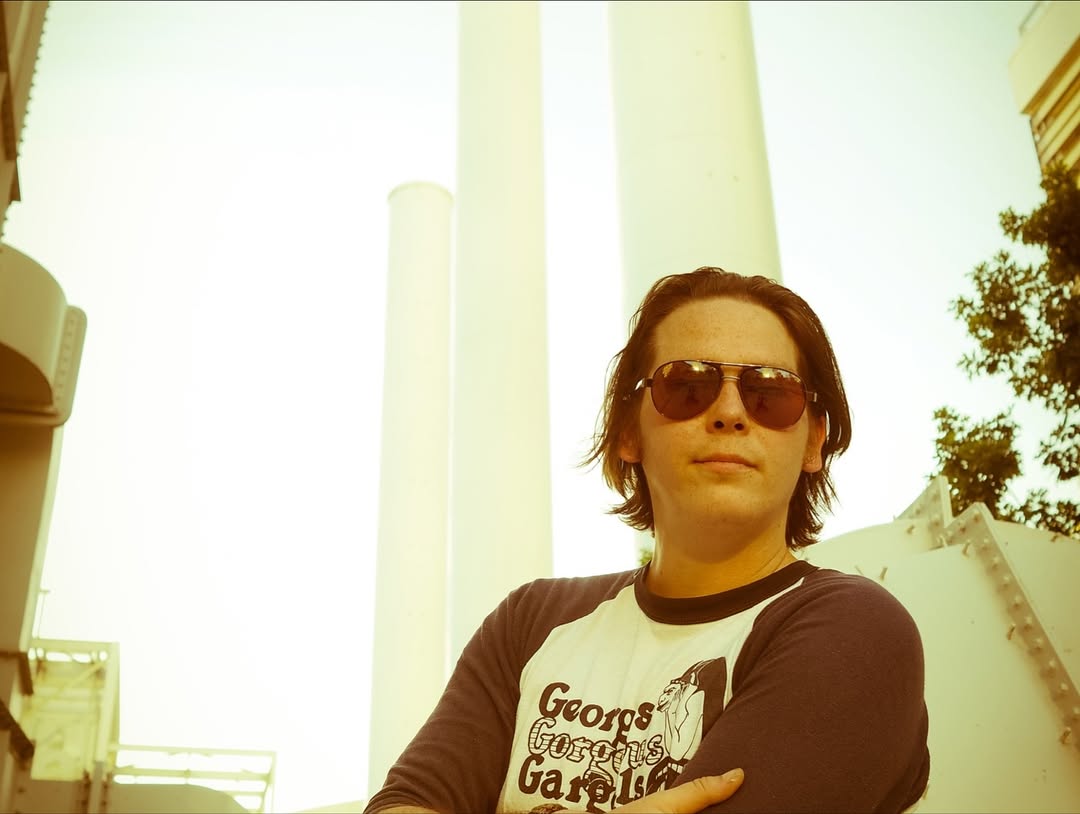
In the tight black booths of Empire Control Room and Garage, where Richard “Dick” Chalmers spent endless days editing videos and creating custom drink menus for the Red River stage, the late legend and other venue veterans started piecing together a different kind of project. The Dick Chalmers Music Venue Program was born of these conversations, a concerted effort to reach music venue workers that might be unaware of their SIMS eligibility and to open avenues for stages to support their mental health.
“It’s a two-part challenge, which is letting people know it exists and then normalizing and removing that barrier to actually take advantage of those services,” says Development and Operations Coordinator Jason Amato. Music venue employees have always been covered by SIMS’ mental health and substance abuse recovery services, but that hasn’t always seemed obvious. The organization wanted to reach more technical staff and knew they’d need a fundraising boost to support an increased client base.
The brainstorming began after SIMS’ 30th anniversary show this May, which Empire hosted. In what everyone describes as true Chalmers form, the jack-of-all-trades went above and beyond for the nonprofit organization, turning on his artistic direction skills for the celebratory mini-festival’s onstage video and lighting.
“He understood the culture of a community-based music venue, because that was his only game,” says Stephen Flynn, a longtime general manager at Empire, who left the venue this summer after working by Chalmers’ side for five years. “We used to say he was a part of the walls. He’d been there since the end of year one [and] had worn many hats.”
It seemed natural that the big brother of Red River, a mentor to many in the district and, according to Flynn, “everybody’s first call,” should be at the nexus of a fledgling program where, as Amato put it, “priority number one is making sure that this is for the community and by the community.”
Flynn joined the community roundtable, becoming an official member of the advisory board working alongside Chalmers, Amato, and SIMS Chief Advancement Officer Sarah Andrews, puzzling out how to get services to more staff and how to cover the subsequent increased cost. They understood, better than most, that music venues have tight margins, so creative fundraising ideas were a must.
“Knowing that many folks who work in these types of roles maybe aren’t insured or underinsured, we wanted to simultaneously build our ability to sustain the program, if the demand was very high,” says Andrews. The campaign they came up with invites venues to make monthly donations to the organization, throw SIMS benefit shows, or ask patrons for donations alongside tips. This month’s dry January partnership with Rambler brings sparkling mocktails to participating venues across town – a portion of each purchase benefits SIMS.
“When we lost Dick, I think we realized that he really had such a big impact on not only this program that we just created, but on this entire venue space in Austin,” says Andrews.
Naming the initiative after Chalmers just made sense. Losing him unexpectedly this November hit Red River hard, leaving a gap where his contagious community spirit, his stories of old Austin, and his patient enthusiasm for helping others once loomed large.
“It’s a program that is taking care of our community in a direct sense,” says Flynn. “If anything’s gonna carry on his legacy, I think that’s a pretty damn good way to do it.”
This article appears in January 2 • 2026.
A note to readers: Bold and uncensored, The Austin Chronicle has been Austin’s independent news source for over 40 years, expressing the community’s political and environmental concerns and supporting its active cultural scene. Now more than ever, we need your support to continue supplying Austin with independent, free press. If real news is important to you, please consider making a donation of $5, $10 or whatever you can afford, to help keep our journalism on stands.