
Austin City Council members Vanessa Fuentes, José Velásquez, and Mike Siegel held a town hall in mid-November, two weeks after the defeat of Proposition Q, the proposal to increase property taxes to pay for public safety, social services, and other city needs. The Council members told the crowd that they had heard the will of the voters. It was time to take a hard look at spending.
Robin Rather, an informed citizen who regularly attends meetings of this kind, took the mic to ask a question, hoping to better understand why city leaders can’t move money from some of the ambitious and expensive projects the city has approved over the last five years. The projects she had in mind included the “cap and stitch” plan to beautify I-35, which is expected to cost hundreds of millions of dollars. They included Project Connect, the plan to bring a metro rail system to Austin, at a cost of between $5.8 billion and $10.3 billion, though much of that figure may be covered by a federal grant. They also included the creation of a new convention center, which is well underway and projected to cost over a billion dollars.
Rather said she knew that these endeavors are capital improvement projects – infrastructure projects like a highway, a building, or a train station – and that the funding for such projects comes from its own pot of money. That money is prohibited, by law, from being used for the city’s ongoing expenses, things like paying its police officers or maintaining its parks. The costs for such ongoing services are paid through the city’s General Fund.
“It’s not that we think these projects come from the General Fund,” Rather said. “We know they don’t. But they come from somebody’s money somewhere, and they take time, attention, and somebody’s taxpayer money from the things that we all understand are super important: EMS, public safety, mental health, parks – all the important things that are way, way more on voters’ minds.”
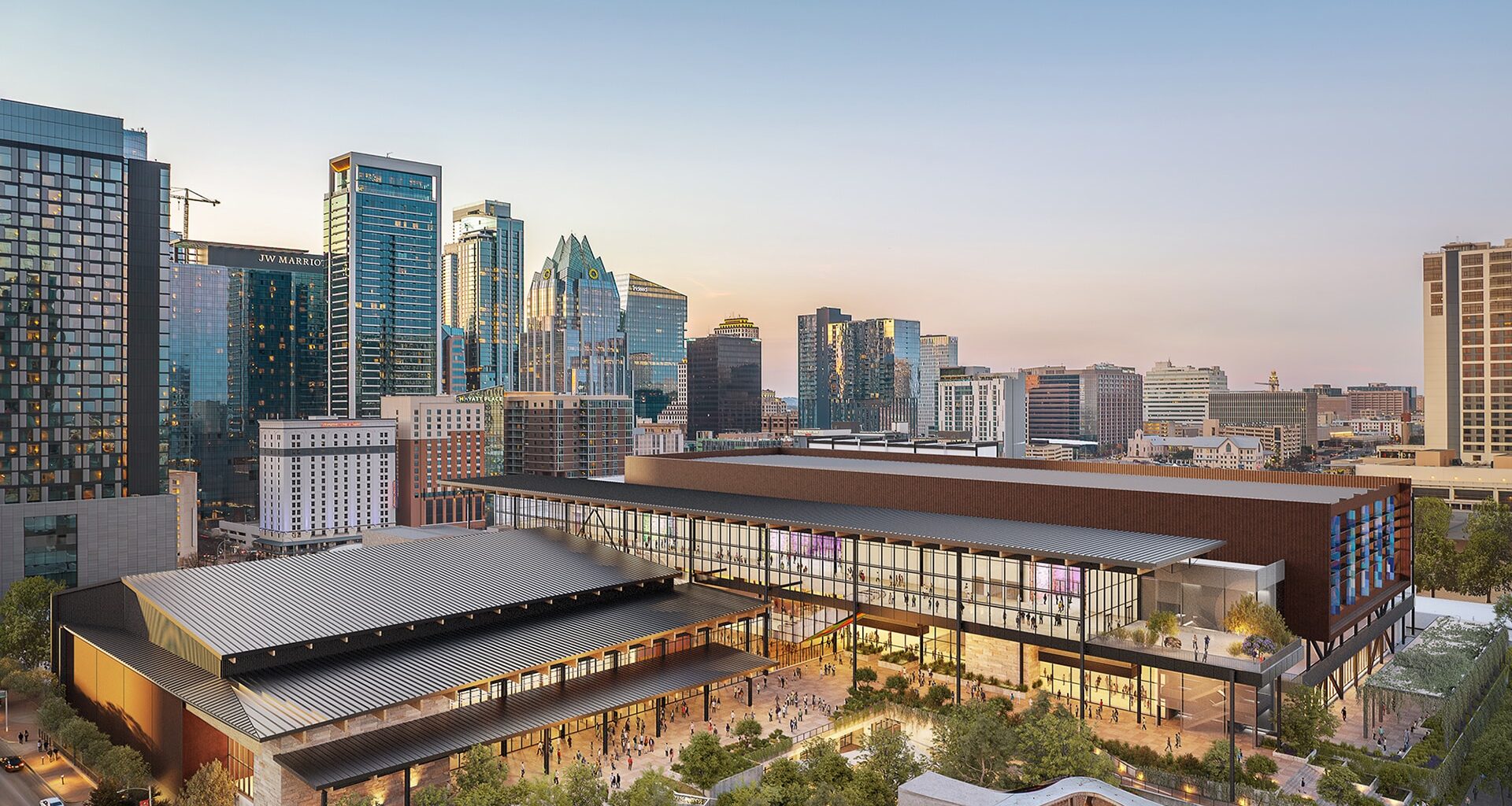
The money to build Austin’s new convention center is coming from revenue received by the recently demolished center and from the state’s Hotel Occupancy Tax, which must, by law, be used to promote tourism. In 2019, Council approved an increase in the Hotel Occupancy Tax to tear down the old convention center and build a new one. In 2023, it approved two contracts worth $1.6 billion for the design and construction of the new facility. In February of this year, the city posted renderings of what the new convention center will look like once it’s complete.
A 2021 analysis of the project predicted that the bigger and better space would increase the number of annual events held in Austin by 100, drawing an additional 300,000 visitors to the city. The analysis estimated that visitor spending would rise from around $470 million to about $754 million each year and that the facility would generate just over 1,600 new jobs.
In September, Mayor Kirk Watson wrote in a Statesman op-ed that redeveloping the convention center is long overdue. “We’re the country’s 13th largest city, and a top visitors’ destination, but our convention center ranks No. 61 in size,” Watson wrote. “Our staff routinely turn down major events because we don’t have the space.” Watson added that he considers there to be a mandate for a new convention center, that the city has already put in a decade of community engagement on the issue. “This question has been asked and answered over and over,” he said. “It’s time to move forward.”
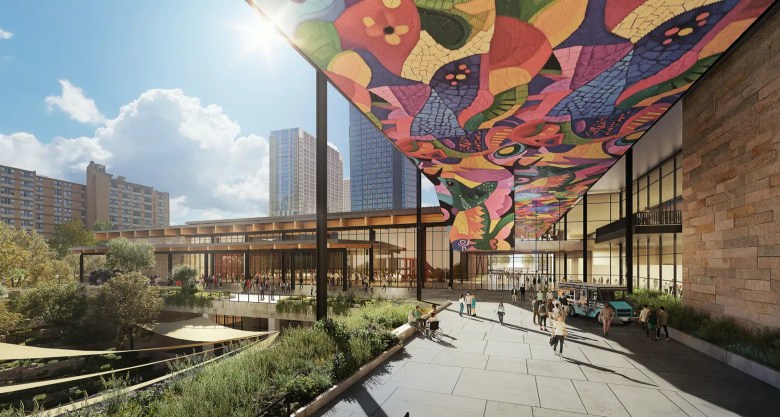 A rendering of the new convention center slated for completion in 2029 Credit: city of Austin
A group of citizens calling themselves the Austin United PAC disagrees emphatically. They say that Austinites have not had the opportunity to directly vote on whether to create a new convention center. They argue that the convention center industry has been declining since the 2008 recession, and that the downward trajectory has accelerated post-COVID, as conventioneers host events virtually. In press releases, they quote Heywood Sanders, a professor of public administration at UT-San Antonio, who has referred to the project as “jaw-droppingly stupid.”
The PAC submitted a petition this past fall to force the city to hold an election to let voters decide whether to go forward with the convention center. But the city clerk’s office determined in November that the petition was invalid, saying the organizers had not collected enough verifiable signatures. Austin United PAC filed a lawsuit over the rejection in December, arguing that the city tossed hundreds of valid signatures and is hiding how it evaluates the signatures’ validity.
Bill Bunch, executive director of the Save Our Springs Alliance, is the principal messenger for Austin United PAC. In remarks to the Chronicle, Bunch called the project an example of “City Hall corruption,” saying that construction and engineering firms have too much influence with city leaders and that “we build all kinds of stuff we don’t need to be building.” He repeated data from the convention center’s FAQ page which states that Austinites will be spending their Hotel Occupancy Tax revenue on the facility for the next 30 years. He insists there are better ways to use the money, including the creation of an arts district on the six blocks of Downtown real estate where the convention center will sit.
“The state statute does restrict how you can spend the hotel tax,” Bunch told us. “But there’s a lot of room under that statute to fund live music, arts, culture, parks – a range of things that would be a far better investment than the convention center.”
Council Member Marc Duchen told us he sympathizes with Bunch. He said Austinites were presented with just one, very expensive plan for the project and that he is troubled that it will absorb such a large amount of the city’s hotel tax revenue for so long.
But most city leaders continue to support the project. CM Ryan Alter told us that, while he wants to see an arts district, the south shore of Lady Bird Lake is the natural place for it, since the Long Center and Zach Theatre are already there. He also stressed the economic benefits that a new convention center would bring to the city. “It is going to generate millions and millions of dollars in sales tax, in hotel tax, and will create a lot of jobs, and in a time when, clearly, the public has said they don’t want us to raise their property taxes,” Alter said.
CM Chito Vela agreed and seconded Watson’s observation that, as a large, thriving city, Austin should at least be able to compete with San Antonio, Dallas, and Houston for convention dollars. “I guess, in an absolute sense, we don’t need a convention center, just like we don’t need a soccer stadium, or we don’t need a UT football stadium,” Vela said. “But it’s a good thing for the city. It helps promote the city. It makes the city an attractive place, and it gives us a place to hold major events.”
Bunch told us that Austin United PAC expects a ruling on the group’s lawsuit in February or March. He thinks it’s possible that Austinites could vote on the future of the convention center in the May election.
This article appears in January 2 • 2026.
A note to readers: Bold and uncensored, The Austin Chronicle has been Austin’s independent news source for over 40 years, expressing the community’s political and environmental concerns and supporting its active cultural scene. Now more than ever, we need your support to continue supplying Austin with independent, free press. If real news is important to you, please consider making a donation of $5, $10 or whatever you can afford, to help keep our journalism on stands.