
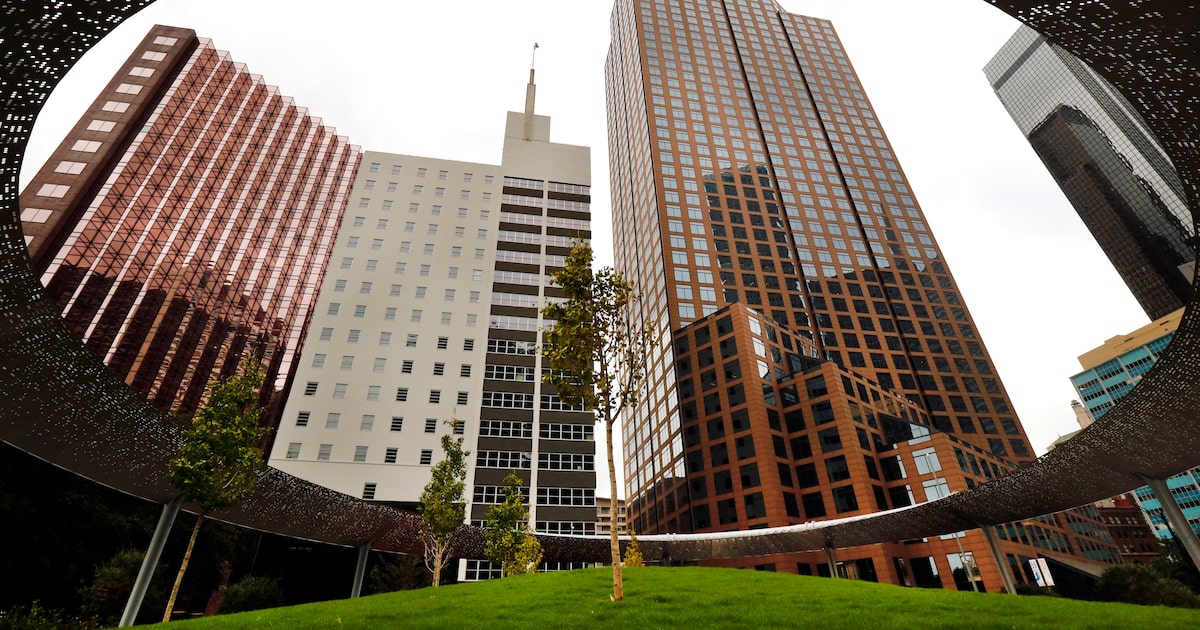
The uncertain future of downtown Dallas made The Wall Street Journal. It’s a story like so many other downtowns across the country: empty store fronts amid perceptions — and too often realities — of crime.
What I find fascinating is that we are battling against ourselves. This isn’t Dallas against Detroit or Houston. It’s Dallas against Frisco, downtown against Uptown. In fact, Uptown, a gentrification of historically Black and Hispanic neighborhoods just a stone’s throw away from downtown, is now a booming market for offices. And Plano, which was once its own suburban oasis, is becoming more urban by the minute.
The competition appears to produce an endless parade of losers. Because at some point, the reasons people flee one area are the same reasons they will flee the next area 20 years from now – perceived crime, older housing stock, job relocations. The cycle of cities is never ending, a lesson taught to us by the famed journalist and urbanist Jane Jacobs.
With all of this conversation around Dallas’ downtown strategy, I wanted to assess other national strategies to turn around downtowns to see if there were some best practices we can learn from.
Opinion
From the Urban Institute, there is an emphasis on how today’s version of downtown revitalization is not just about converting office towers to housing, it’s about strengthening arts, culture and entertainment districts; establishing education and innovation hubs; and developing what the author calls “convening districts” — places that are not full-time office space but where the office half of the hybrid work model can happen. I’d say we check all the boxes here — Dallas’ Arts District, UNT Dallas Law School, Dallas College renovations and the re-imagining of the Kay Bailey Hutchison Convention Center.
The Brookings Institution outlines 12 steps for downtown revitalization, which include outlining a clear vision, forging public-private partnerships, establishing business improvement districts and developing local-serving retail strategies.
The report ends with office space revitalization, which we could use more of. But still, Dallas has taken many of these steps over the years. Downtown Dallas Inc. is thriving. The Safe In the City initiative, a collaboration among business, nonprofit, city and civic leaders, is working to boost safety downtown, also recently supported by a $10 million commitment to Housing Forward to address homelessness.
So my assessment is that we actually have the pieces in place for a successful downtown revitalization. We are collaborating and bringing in businesses, nonprofits and educational hubs, while focusing on major opportunities for entertainment districts, such as the potential relocation of the Mavericks.
Yet, it still feels like a secret sauce seems to be missing. Ideally, all of the efforts would align, wrapped in a pretty bow, reflecting something positive about Dallas culture. But even as a Dallas native, I’m not sure we can all agree on one Dallas culture. Beyond saying that we prioritize living well, doing big things and treating others with respect — I’m not sure if we can say there is a single priority that we all get behind.
We are a mix of urban, suburban, exurban, walkable, car-centric, bilingual, capital-focused, historic preservationists, generous and selectively frugal. So many more ways we can describe our city, but never in one way. So, at this point, I’m not sure what priority, what culture, will revitalize downtown, beyond the sheer willpower of a few influential players. And to me, that feels like the most Dallas way of them all.
Maggie Parker is founder and managing partner of Innovan Neighborhoods.