
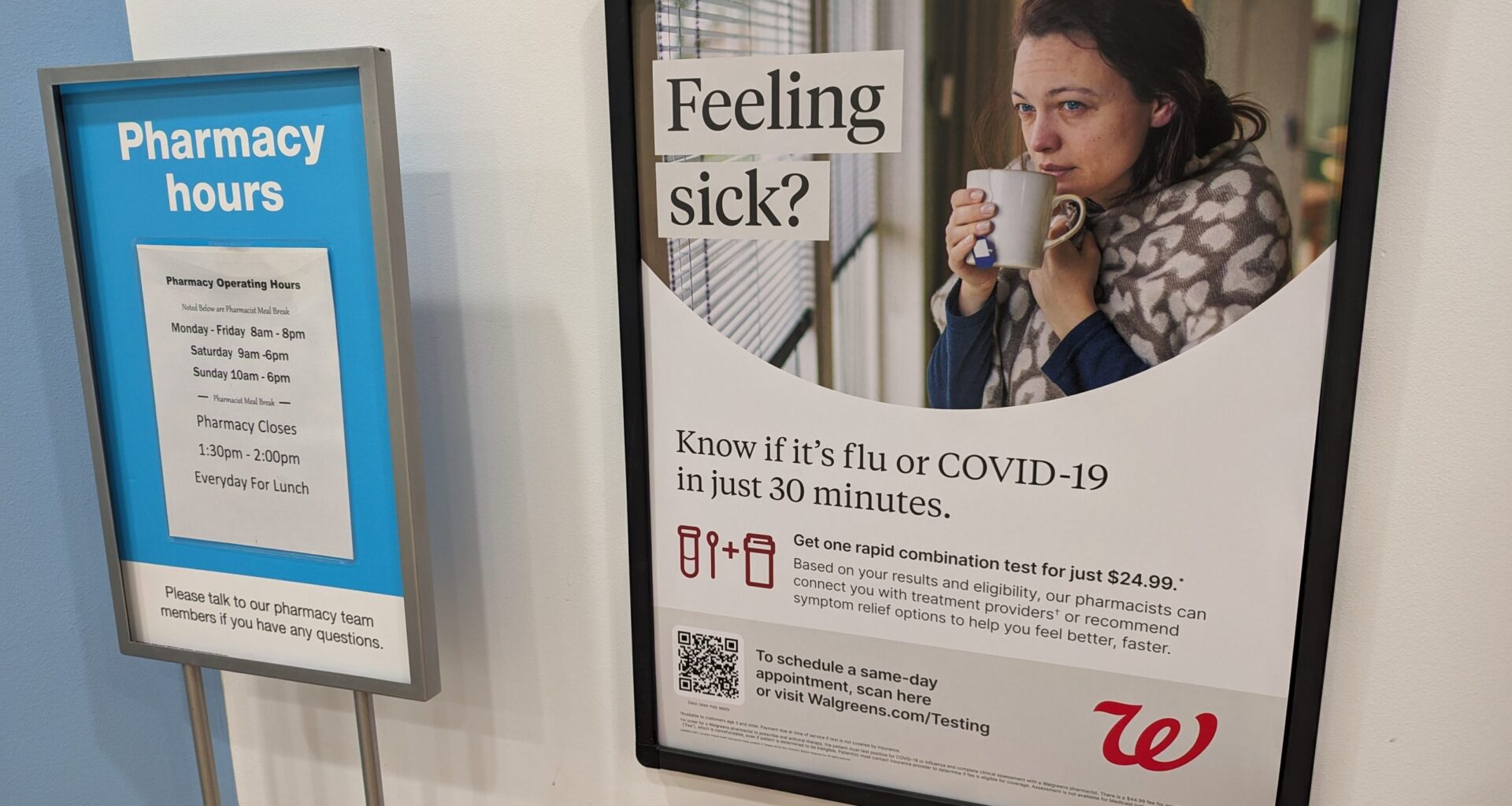
Flu and COVID-19 in El Paso peaked in mid-December as viruses continued to circulate while vaccination rates fell, El Paso city and county health authority Dr. Hector Ocaranza said.
Flu season typically peaks from December through February. In addition to influenza, other respiratory viruses tend to spread during this time, in part, because cold air helps the virus survive longer while people spend more time indoors in close contact.
“One common belief is that all respiratory infections are the same and will always be mild,” Ocaranza said, citing it as a misconception. “These illnesses can lead to serious complications, especially in infants, older adults, pregnant individuals and those with chronic conditions.”
Here are five facts to know about this flu season:
Flu and COVID-19 activity peaked leading up to Christmas
Clinics, hospitals and reporting sites that participate in the city’s epidemiological monitoring system showed that the total number of flu and COVID-19 cases reported to the city spiked mid-December. Ocaranza stressed that these numbers represent a partial snapshot that indicate trends, but are not the total number of flu and COVID-19 cases in the community,
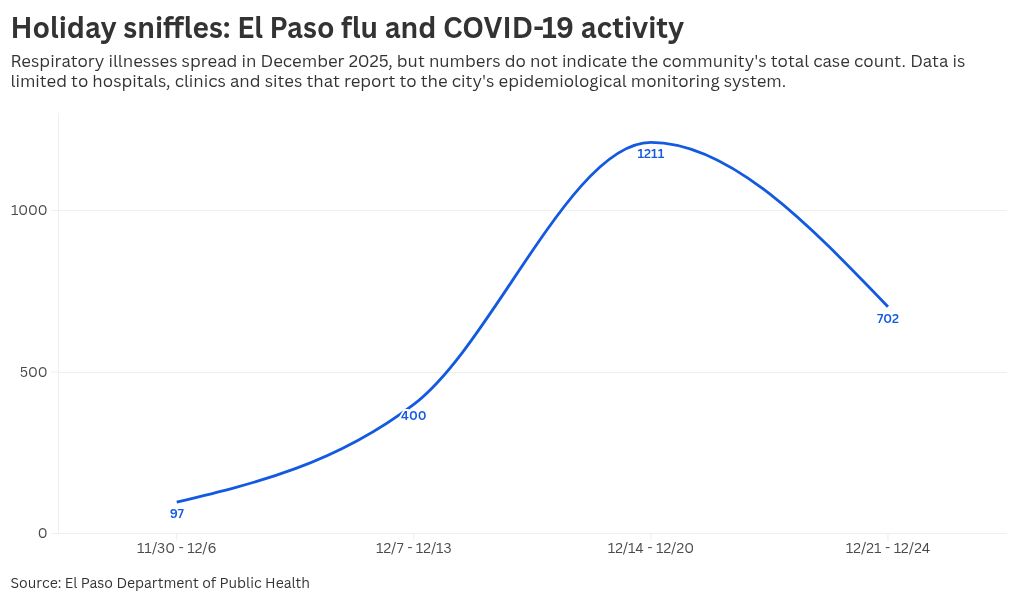
Ocaranza said El Paso does not have a total case count because reporting sources are limited and do not capture people who do not seek clinical care, test at home and do not report results or seek care outside the reporting network.
Fewer people are getting flu and COVID-19 shots from the city
The El Paso Public Health Department administered far fewer flu and COVID-19 vaccines this year compared with last year. The health department typically provides free immunizations at events and at its community clinics.
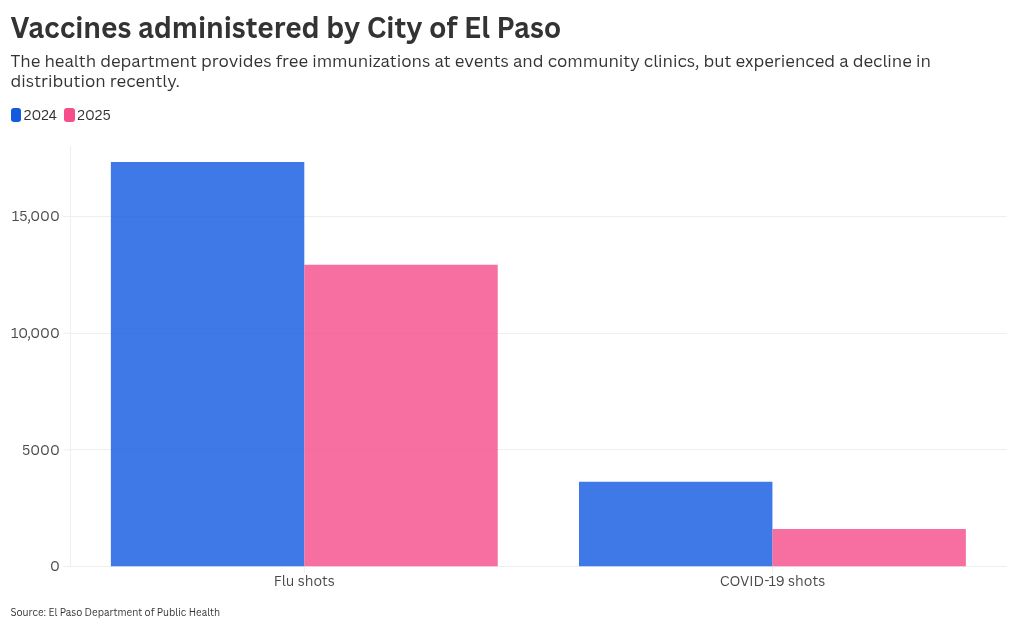
“This decline appears to be influenced by misinformation and conflicting messages circulating through media and social media platforms,” Ocaranza said. “Concerns about side effects or long-term complications often discourage people from getting vaccinated, even though vaccines have a long history of safety and effectiveness.”
“Ironically, vaccines have been so successful that many younger individuals have not experienced these diseases firsthand and may believe they no longer pose a risk,” he added. “This perception can lead to underestimating the importance of vaccination and choosing to risk infection with preventable diseases.”
Wastewater surveillance shows trends for RSV and other viruses
El Paso Water partners with the Texas Epidemic Public Health Institute to monitor pathogens detected in wastewater samples collected from El Paso’s four water treatment plants. As of Friday, the state’s online dashboard only showed trends up to Dec. 1.
The Centers for Disease Control and Prevention also has a wastewater surveillance program, but does not include El Paso’s wastewater data because El Paso Water did not renew its agreement to collect samples for the CDC.
Locally, there was a jump in influenza A activity starting shortly before Thanksgiving. Statewide, there was a high concentration of respiratory syncytial virus, or RSV.
While most people with RSV experience mild to moderate cold-like symptoms, babies are most at risk for severe symptoms and difficulty breathing because their airway passages are tinier and easier to clog up. The CDC recommends the RSV vaccine for people who are 32-36 weeks pregnant from September to January. The vaccine stimulates the body to create antibodies that cross the placenta to the fetus, giving newborns a layer of protection during their first RSV season.
Cold weather among misconceptions about respiratory illnesses
There are many misconceptions surrounding respiratory illnesses and immune health, Ocaranza said.
One widespread belief is that cold weather itself causes illness, or getting wet and not drying properly leads to infection, he said. But viruses, not temperature or weather exposure, cause respiratory illnesses.
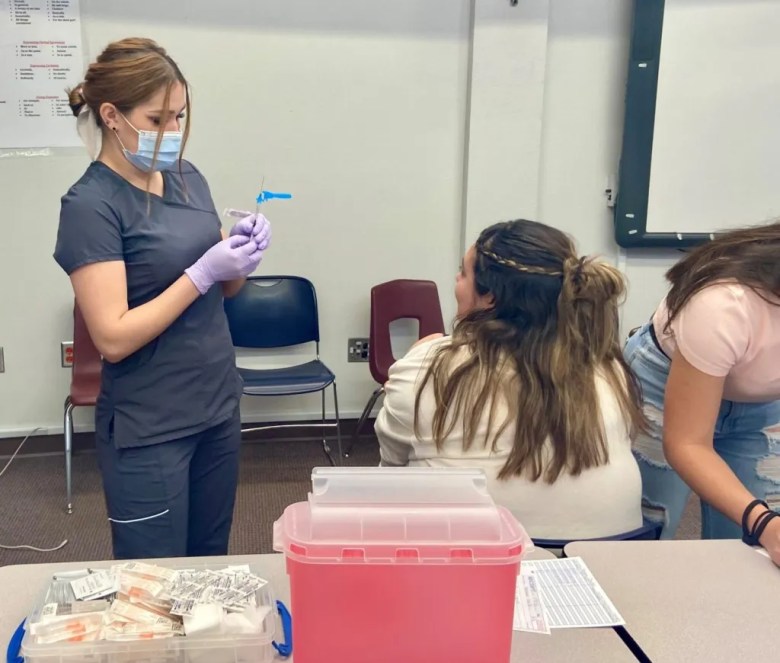 Immunize El Paso arranges mobile vaccine clinics at schools throughout El Paso, including this one at Americas High School. (Courtesy of Immunize El Paso)
Some people believe receiving multiple vaccines at the same time overwhelms the immune system and it is better to build immunity by getting sick, Ocaranza said. In reality, vaccines are designed to safely train the immune system and reduce the risk of severe illness, hospitalization and death.
Some people also avoid vaccines, specifically the flu vaccine, because they believe it causes illness, he added. With the exception of the nasal spray vaccine, which uses a weakened live virus, flu vaccines do not contain live virus and cannot cause influenza, he said. Mild side effects that may occur, such as body aches or a low-grade fever, are a sign that the immune system is responding.
The safety of Tylenol and homeopathic remedies
U.S. Health and Human Services Secretary Robert F. Kennedy Jr. caused a scare last year over acetaminophen, also sold under the brand name Tylenol. Kennedy – who has no medical or scientific credentials – suggested the medication causes autism and ADHD, despite contradictory studies.
Acetaminophen has been extensively studied and is safe when taken as directed, at recommended doses, Ocaranza said. The medication does not cure viral infections, but can help manage symptoms such as body aches and fever. There is no scientific evidence linking acetaminophen to autism and anyone with concerns should speak with their health care provider, he said.
“While folk or traditional remedies are commonly shared, it is important to discuss them with a health care provider,” he said. “Even natural remedies can interact with medications or worsen existing health conditions.”
Ocaranza said the most effective, evidence-based prevention strategies during flu season remain consistent: Maintaining a balanced diet, getting adequate sleep, practicing good hand hygiene, avoiding close contact with sick individuals and staying up to date on recommended vaccines.
Related
LISTEN: EL PASO MATTERS PODCAST