
The biggest white-collar cases in Texas in 2025 were dominated by healthcare fraud prosecutions, many of them stemming from the pandemic years when the government was shoveling money out the door as quickly as possible to prevent small businesses from going under, to make Covid-19 testing as widely and quickly available as possible and to otherwise help Americans adversely affected by the nationwide economic disruption.
Of course, people with allegedly nefarious motives found ways to allegedly take advantage of this federal largesse, and numerous investigations into alleged abuses of government healthcare programs made their way to the courts in 2025 — and, white-collar trial lawyers on both sides of the aisle say, will continue to do so in 2026.
Overall, federal white-collar prosecutions declined during the first year of President Donald Trump’s second term, as the administration redirected law-enforcement resources to other priorities, notably immigration crackdowns, border protection and drug interdiction, according to the Transactional Records Access Clearinghouse, a nonprofit, nonpartisan research arm of the S. I. Newhouse School of Public Communications at Syracuse University. In the federal fiscal year that ended Sept. 30, white-collar cases were down 10 percent compared with the prior fiscal year, TRAC reported.
What follows is a list, based on research by The Texas Lawbook, of the 10 largest white-collar case developments in Texas in 2025. The cases are ranked by the dollar amounts involved, usually as asserted by the government. The cases are at various stages of litigation; most remain pending.
Business Briefing
1. Dozens in Texas snared in massive, nationwide healthcare fraud takedown
On June 30, the U.S. Department of Justice announced what it called the largest healthcare fraud crackdown in history, which resulted in criminal charges against 324 defendants, including 96 doctors, nurse practitioners, pharmacists and other licensed medical professionals, in 50 federal districts. The Justice Department said the various healthcare schemes targeted in the crackdown could have cost American taxpayers more than $14.6 billion, collectively.
Here’s a DOJ news release about the takedown.
Those caught up in the sweep included four people in the Northern District of Texas and nearly 50 in the Southern District. The DOJ estimates the loss to the public in the Northern District cases was $210 million and $360 million in the Southern District was $360 million, for a total impact of $570 million from the Texas cases.
All four Northern District cases are being prosecuted by Assistant U.S. Attorney Renee M. Hunter. Those indicted in the district are:
– Demitrious Gilmore of Lubbock, charged with conspiracy to commit healthcare fraud in connection with what the government said was the submission of false and fraudulent workers’ compensation claims for benefits and services that were ineligible for reimbursement, not medically necessary or never provided. Gilmore pleaded guilty in September and is scheduled for sentencing on Feb. 27.
– Gary Martin, owner of Aim Diagnostic Laboratory in McKinney, charged with conspiracy to solicit or receive kickbacks in connection with the submission of over $73 million in false and fraudulent Medicare claims for over-the-counter Covid tests. Martin pleaded guilty in October and is scheduled for sentencing on March 3.
– Olatunbosun Osukoya of Plano, owner of Cambridge Diagnostics, charged with conspiracy to commit health care fraud in connection with the submission of what prosecutors called fraudulent claims to Medicare; to TRICARE, the government health insurance program for military members; and to other insurers for electroencephalogram testing. Osukoya pleaded guilty in December. Sentencing is pending.
– Khadeer Khan Mohammed, owner of American Premier Labs in Richardson, charged with fraud in connection with what prosecutors called a scheme to submit fraudulent Medicare claims for genetic testing that was never requested, ordered or performed. Court records do not indicate the status of the case against Mohammed, a citizen of India.
2. Plano pharmacist gets 17 years, $405M forfeiture for defrauding Department of Labor
In February, pharmacist Dehshid “David” Nourian of Plano, was sentenced to 17 years and six months in prison for his role in a scheme to defraud the U.S. Department of Labor through the submission of bogus claims for prescription compound creams. The next month, Nourian was ordered to forfeit $405 million in assets related to his fraud and money-laundering actions.
According to court documents and evidence presented in a 2023 jury trial, Nourian and others conspired to pay doctors millions of dollars in bribes and kickbacks to prescribe costly, unnecessary compound creams to injured federal workers through three pharmacies Nourian and others owned in Fort Worth and Arlington.
He has a pending appeal.
3. Sports and entertainment mogul indicted, then pardoned, in UT bid-rigging case
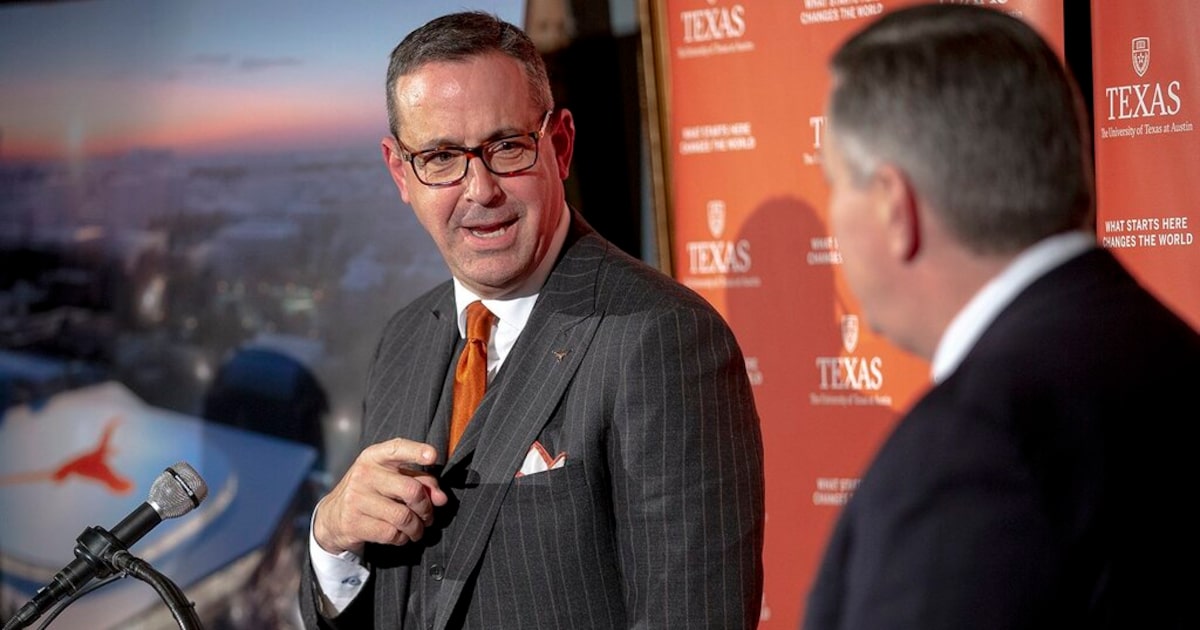
In July, a federal grand jury in Austin indicted Timothy Leiweke, accusing him of bid-rigging to secure the construction contract for Moody Center, the new $388 million sports and entertainment arena at the University of Texas at Austin.
In December, President Donald Trump pardoned Leiweke, a former top executive for several professional sports teams.
The indictment said Leiweke, the co-founder of Oak View Group, a global sports-and-entertainment construction and management firm, struck a deal with a rival construction company that agreed not to bid on the Moody Center project, leaving OVG as the sole bidder. In exchange, the indictment said, OVG promised to steer lucrative subcontracts to the rival firm.
Leiweke said of his pardon: “I do not have the words to adequately convey my profound gratitude to President Trump. This has been a long and difficult journey for my wife, my daughter, and me. The president has given us a new lease on life with which we will be grateful and good stewards.”
Leiweke is a former president of the National Basketball Association’s Denver Nuggets, a former CEO of the company that owns the Los Angeles Kings of the National Hockey League and a former president and CEO of the company that owns the Toronto’s Major League Baseball and National Hockey League franchises.
4. Former TV news anchor gets 10 years in pandemic loan scam
In November, Stephanie Hockridge, a former local TV news anchor in Phoenix, was sentenced to 10 years in prison after being convicted by a federal jury of conspiracy in connection with what the government called a $300 million pandemic-era fraud.
The next month, her husband, Nathan Reis, received the same sentence after pleading guilty in Fort Worth. Hockridge’s trial was in June.
Hockridge and Reis were indicted together in November 2024. The indictment said the couple, together with others, submitted what they knew were thousands of phony applications for forgivable, federally backed loans under the Paycheck Protection Program, established in March 2020 to help struggling businesses stay afloat during the Covid-19 pandemic.
According to a December 2022 congressional report, Blueacorn, a company Hockridge and Reis ran, took in nearly $300 million in profits while spending “less than one percent of the fees it received for its PPP work … on its fraud prevention program.”
5. SEC charges 3 ex-CEOs, disbarred lawyer, alleging penny stock ‘pump and dump’ scam
On July 1, the Securities and Exchange Commission charged William A. Justice, Brian D. Shibley and Randell R. Torno, each a former chief executive officer of a penny-stock public company, and Keith Rosenbaum, a disbarred California attorney, for their roles in an alleged $112 million pump-and-dump scheme orchestrated by Dallas resident Philip Verges.
The SEC’s complaint, filed in the Northern District of Texas, contended that the CEOs, at Verges’s direction, signed or allowed their signatures to appear on disclosure statements they reasonably should have known to contain false and misleading information regarding the penny stock. It further alleges that Rosenbaum wrote at least 90 attorney opinion letters in support of the stock issuances while suspended or, ultimately, disbarred by the State Bar of California.
Verges and others were previously charged by the SEC in September 2023.
The CEOs, without admitting or denying the allegations, consented to the entry of final judgments permanently enjoining them from violating federal securities statutes. Rosenbaum, without admitting or denying guilt, consented to a settlement permanently enjoining him from future violations of antifraud laws.
6. Pharr pharmacist gets 5 years in kickback conspiracy
In May, John Ageudo Rodriguez, the owner of Pharr Family Pharmacy, was sentenced to five years in federal prison for his role in a conspiracy to pay kickbacks to pharmaceutical marketers who induced physicians to refer prescriptions for costly compound drugs to Rodriguez’s pharmacy.
Four months earlier, Rodriguez pleaded guilty. That followed guilty pleas by numerous marketers involved in the kickback scheme.
From 2014 to 2016, government investigators said, Pharr Family Pharmacy billed federal healthcare programs more than $110 million for compound drugs.
7. Four more charged in Houston hospice fraud case
In October, four people were indicted in the Southern District of Texas in a case alleging Medicare and Medicaid fraud involving hospice services for patients who were not terminally ill.
The arrests of Lydia Obere and Cheryl Brooks of Houston, Hattie Banks of Humble and Ena Cowart of Missouri City followed previous arrests of Evelyn Shaw of Houston and Dera Ogudo and Victoria Martinez of Richmond.
According to a 43-count federal indictment, all seven conspired to fraudulently bill Medicare and Medicaid for more than $110 million for hospice services provided to patients who were not terminally ill.
The indictment alleges that Ogudo and Martinez, who operated United Palliative & Hospice Company in Richmond, misled elderly patients and their families about services billed to Medicare and Medicaid. According to court documents, marketers for the company told patients and their families that the patients qualified for hospice care even though many were not terminally ill, as required by federal law. Ogudo, the government contends, paid kickbacks to group-home owners and others who helped enroll patients, and to Shaw, a hospital discharge coordinator, for referrals. Ogudo is further accused of bribing a physician to falsely certify patients as terminally ill.
The case is pending.
8. 2 Lubbock men indicted in alleged $100M Ponzi scheme
In July, Joshua Allen and Michael Cox of Lubbock were indicted by a federal grand jury in the Western District of Texas, which accused them of participating in a Ponzi scheme that robbed hundreds of victims of more than $100 million.
The two men, who ran four investment companies, were allegedly in cahoots with Brooklynn Chandler Willy, a financial adviser in San Antonio, who was arrested in 2024, accused of obstructing a federal fraud investigation.
According to the indictment, Allen and Cox, together with Willy and others, misled investors in business ventures about the security of their investments and concealed high commissions they took for themselves. Investigators said much of the money invested by clients went to pay earlier investors, thereby concealing the fraudulent scheme.
The criminal case against Allen, Cox and Willy is pending.
9. Ringleader gets 46 months in massive international scam of the elderly
In April, one of the orchestrators of an international fraud scheme victimizing the elderly was sentenced in the Southern District of Texas to 46 months in prison.
Hardik Jayantilal Patel pleaded guilty in December 2023 to conspiracy to commit mail fraud. He was the last of seven defendants to be sentenced in related cases in the Southern District. Patel, an Indian national, was illegally residing in Lexington, Ky., according to court records. Upon completion of his sentence, Patel is expected to face removal proceedings.
In 2019, prosecutors said, Patel led a team of co-conspirators who laundered the proceeds of a telemarketing scam originating from call centers in India. Callers pretending to be agents of the U.S. government told victims, most of them elderly, that they were under investigation and that, to clear their names, they had to send cash by mail.
The fraud, involving dozens of participants, is estimated to have cost victims at least $98.3 million.
10. SEC charges 3 from Dallas area, alleging huge Ponzi scheme
In April, the U.S. Securities and Exchange Commission accused Kenneth Alexander II, Robert Welsh and Caedrynn Conner of operating a Ponzi scheme that raised at least $91 million from more than 200 investors.
According to the SEC’s complaint, from May 2021 to February 2024, Alexander and Welsh operated the Vanguard Holdings Group Irrevocable Trust, falsely representing that investors would receive 12 guaranteed monthly payments of 3 percent to 6 percent, with the principal investment to be returned after 14 months. The complaint says Alexander and Welsh held VHG out as a highly profitable global bond trading business with billions in assets and told investors the monthly returns were generated from international bond trading and related activities. The complaint further alleges that Conner funneled more than $46 million in investors’ money to VHG through a related investment program that he operated.
In reality, the SEC alleges, VHG had no material sources of revenue, and the monthly returns were actually Ponzi payments, siphoned from the money raised from new investors.
The SEC’s complaint charges Alexander, Welsh and Conner with violating the antifraud and registration provisions of federal securities laws. The case is pending.
The Texas Lawbook is an online news publication focused on business law in Texas. To see the lists of the lawyers in each case, visit TexasLawbook.net.
 How Stephen Myers has led Match Group through a string of high-stakes legal wins
He now manages a team of eight lawyers who handle litigation for the company’s 30 brands, including Match.com, Tinder, Hinge, OkCupid and Plenty of Fish.
 In AI gold rush, capital markets learn to live off data
There were 344 IPOs in 2025, the third-highest number of the millennium.