
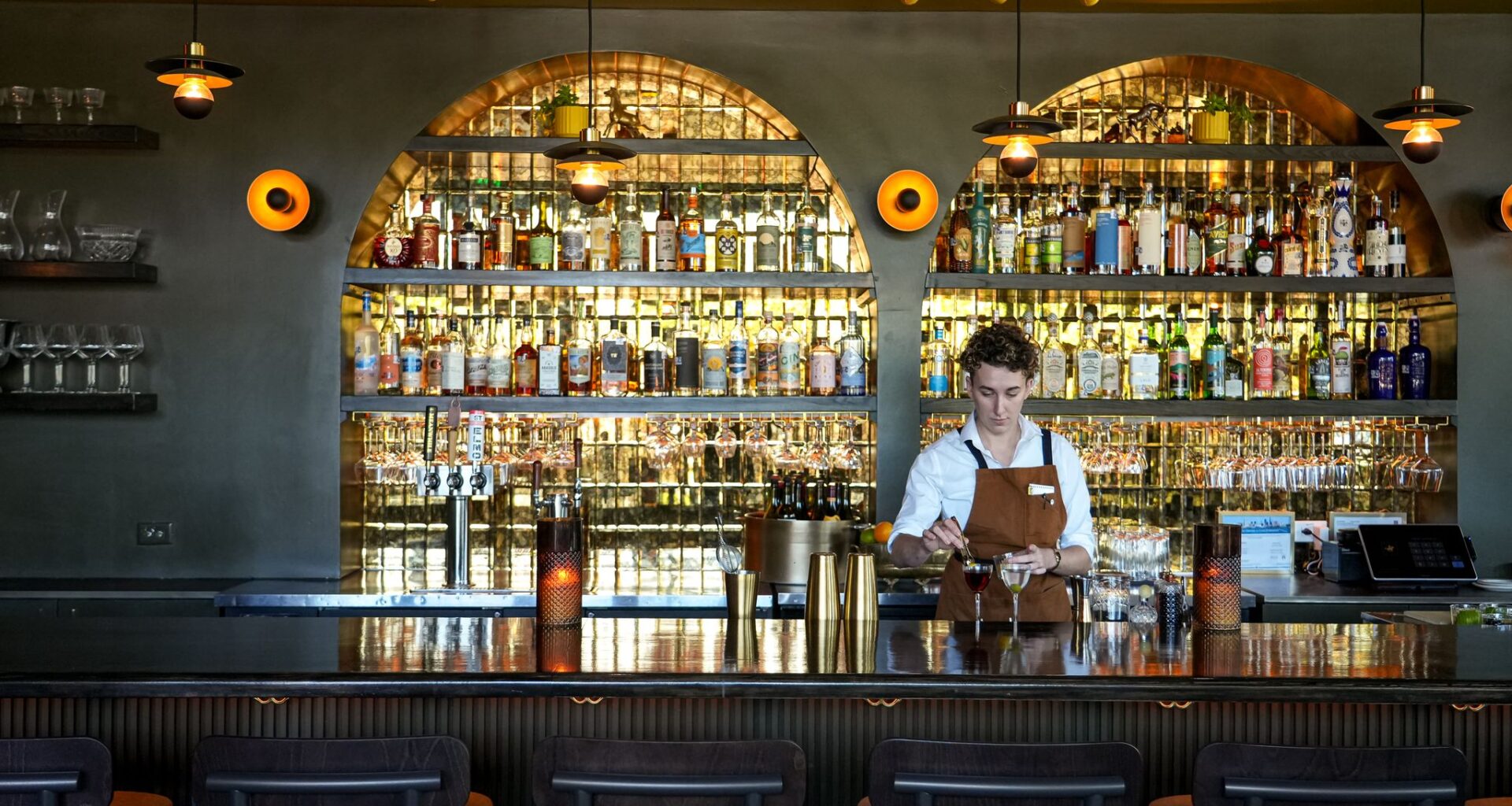
Austin bars and restaurants are used to a post-holiday slowdown, but January brings a particular challenge: a growing number of customers opting out of alcohol altogether.
“Dry January,” a post-holiday teetotal wellness challenge, has gone global since 2013 when a British advocacy group launched the movement, with a growing share of Americans participating. Its rise mirrors broader shifts in drinking habits, as affordability, health awareness and generational changes push alcohol consumption — and sales — steadily downward.
The change has posed an existential threat to Austin-area bars and restaurants that have historically depended on alcohol sales to make ends meet — and that have seen a dip in consumption in the post-holiday months long before Dry January became a trademarked term in 2014.
An American-Statesman analysis of mixed beverage gross receipts shows that January has been the slowest month for alcohol sales in 15 of the last 18 years. Two of the years where January didn’t come in last place were 2020 and 2021 when pandemic shutdowns and restrictions reshaped consumer behavior. (In 2020, the lowest sales month was April, the month after closures began; In 2021, it was February, the analysis found.) The other year was 2009, when sales bottomed out in November amid the Great Recession.
“January is one of the slowest months of the year not only because of Dry January, but I think people also make New Year’s resolutions to save money and not go out as much,” said Christina Torres, co-owner of Techo Mezcaleria & Agave Bar in East Austin.
Business models can determine how sharply that slowdown is felt. “Since we don’t serve food at Techo, the volume of guests coming through the door is way less,” Torres said, noting that her other businesses with food options, including Mi Madre’s and School House Pub, tend to fare better during the month.
Torres said an all-day Sunday happy hour at Techo has helped with the slump so far this month, whatever is driving it.
Rather than fighting the trend, many businesses are leaning into it.
In recent years, bars across the city have started offering mocktails and non-alcoholic beer and wine so teetotalers aren’t limited to soda water and lime. Those drinks can sometimes cost as much as their alcoholic counterparts but Torres says the goal is to keep customers engaged and coming through the door during slower months.
“Post-2020 I think people are more aware of their health and so we have been adding more non-alcoholic cocktails every year to our menus,” Torres said. “I think it’s really important to make non-alcoholic cocktails that are just as interesting as our regular cocktail menu.”
While January is often a quieter month for bars and restaurants, Torres emphasized the toll that slowdown can take on workers. Servers and bartenders, she said, are still showing up for shifts but taking home less. For her, success in January looks like covering costs, keeping staff employed and creating interesting drink options.