

Federal anti-fraud changes could disrupt child care for over 140,000 Texas children and threaten the survival of thousands of centers that rely on government subsidies, advocates warn.
Policymakers are scrambling to comply with new documentation rules prompted by viral allegations of funding abuse in other states. But the shifting federal landscape and past problems with payment disruptions have left many educators and advocates across Texas concerned about potential delays.
The Office of Child Care, part of the U.S. Department of Health and Human Services, disburses federal child care funds to Texas and other states through the Child Care and Development Fund. The Texas Workforce Commission manages and distributes those funds for child care services for low-income families.
Health and Human Services announced on Monday that it is rolling back provisions allowing states to pay providers before attendance was verified and care was delivered. States must now submit additional information to obtain child care funding as part of a federal crackdown amid viral fraud allegations at Minnesota child care centers.
The Education Lab
Related

On Wednesday, the Texas Workforce Commission told The Dallas Morning News in a statement that it is working to submit funding requests under the new guidance to ensure Texas receives child care funding.
The workforce commission shared the U.S. health department announcement with local workforce agency boards on Tuesday, asking them to update their child care providers. The commission said it will not ask workforce agencies or child care providers to supply additional documentation at this time.
Tarrant County officials told child care providers it will likely take longer for the Texas Workforce Commission to receive funds from the federal government.
“Because of this, payments to all CCS providers could be delayed,” according to a Monday notice to providers from Child Care Management Services program director Rita Morris. “We don’t yet know exactly how long the delays might be.”
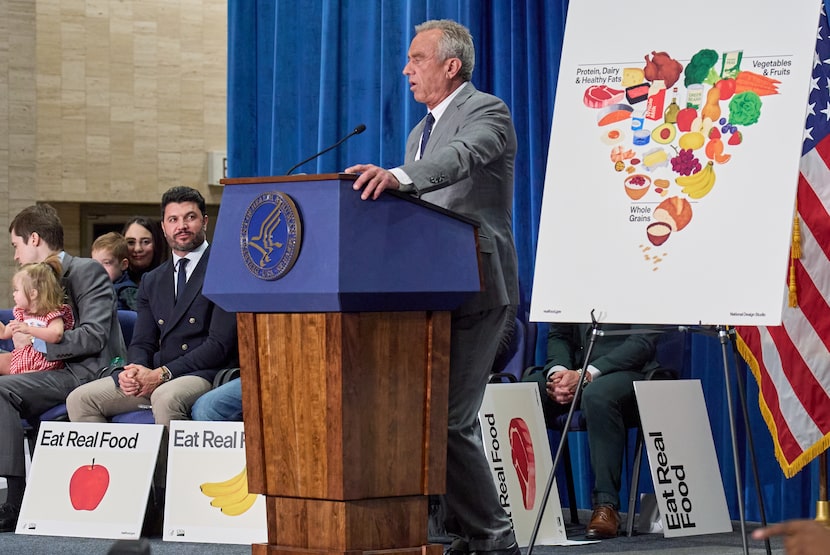
Health and Human Services Secretary Robert F. Kennedy Jr. speaks during an announcement, at Health and Human Services Headquarters, Thursday, Jan. 8, 2026, in Washington. (AP Photo/Jacquelyn Martin)
Jacquelyn Martin / AP
The agency is working with TWC to get child care funds for the next payment cycle, which is Jan. 12 to Jan. 25, according to the notice.
Texas officials say they are working to ensure state compliance and maintain funding for providers.
However, child care providers and early education advocates said educators statewide are anxious because any holdup in payments to states could create funding delays for them.
“This is a blow that providers can’t afford,” said Audrey Rowland, founder of Green Space Learning in Fort Worth. “Even short delays will make a difference in keeping doors open and staff paid.”
‘De facto freeze’
Recent federal changes stem from fraud allegations at some Minnesota child care centers that resurfaced on social media late last year.
Minnesota initially found weaknesses in anti-fraud oversight in 2019, according to a report at the time from the Minnesota Office of the Legislative Auditor at the time. Large-scale child care fraud was not found, but the discovery spurred state reforms and closer federal scrutiny.
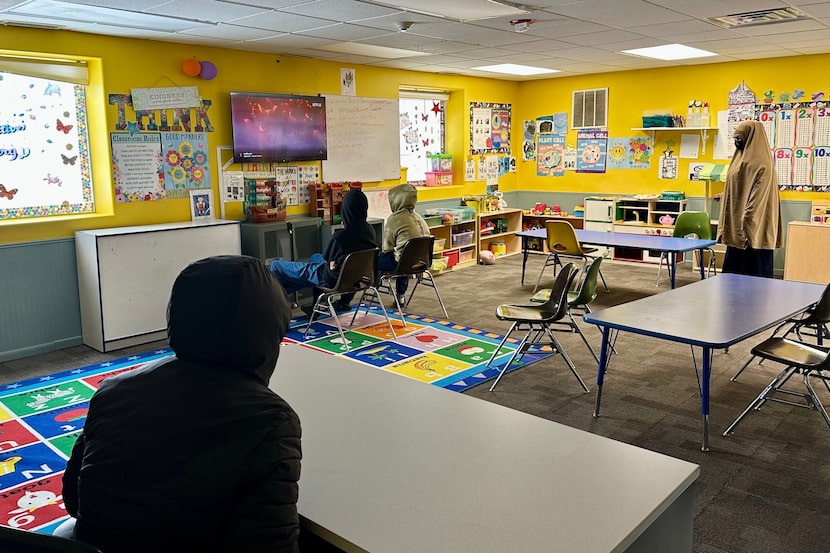
Children watch television at ABC Learning Center in Minneapolis, Minn., on Wednesday, Dec. 31, 2025. (AP Photo/Mark Vancleave)
Mark Vancleave / AP
Federal scrutiny, alongside the renewed attention and political amplification from last year, led the federal government to tighten rules nationwide, according to Elliot Haspel, a national family policy expert and senior fellow at the Capita think tank.
That means Texas and 44 other “states are under a lighter, de facto freeze and have to provide new justifications for spending” for the federal government to use to determine whether to release funds, Haspel wrote on Substack.
Meanwhile, the federal government on Tuesday froze access to its child care and family assistance funds for California, Colorado, Illinois, Minnesota and New York, citing “serious concerns” over “widespread fraud and misuse” of tax dollars in state-administered programs.
All of these efforts fall under what the Trump administration calls its “Defend the Spend” effort, which requires federal grant recipients and agencies to provide detailed, public justifications for funding requests to increase transparency and curb waste.
On Tuesday, Gov. Greg Abbott directed Texas state agencies to step up investigations and anti-fraud efforts in state child care programs, emphasizing “waste, fraud, and abuse of taxpayer dollars will not be tolerated” and citing Texas’s already low improper payment rate compared with states like Minnesota.

Texas Gov. Greg Abbott speaks during a ribbon cutting ceremony for the grand opening of Texas Instruments’ new semiconductor wafer plant. Wednesday, Dec. 17, 2025, in Sherman.
Chitose Suzuki / Staff Photographer
Last month, Health and Human Services spokesperson Andrew Nixon told CNN that centers suspected of fraud must provide attendance records, inspection logs, internal state reports, and documentation of any complaints received.
For child care centers not suspected of fraud, including those outside Minnesota, federal officials are still requiring additional, though less extensive, “administrative data” as part of the broader push for transparency, Nixon told CNN.
‘The final straw’
Child care advocates all stressed that any amount of fraud is unacceptable. They also stressed that the latest federal changes could affect thousands of Texas children cared for through subsidies.
About 7,000 centers across Texas rely on federal child care funding, said Kim Kofron, the senior director of education for Children at Risk, a Texas-based nonprofit.
Kofron said that with so much still unknown about what the new federal requirements will mean, anxiety is running high among child care providers.
“There’s a lot of nervousness around what is potentially going to happen,” she said, noting centers with fewer financial reserves could especially struggle and face closure over delayed payments.
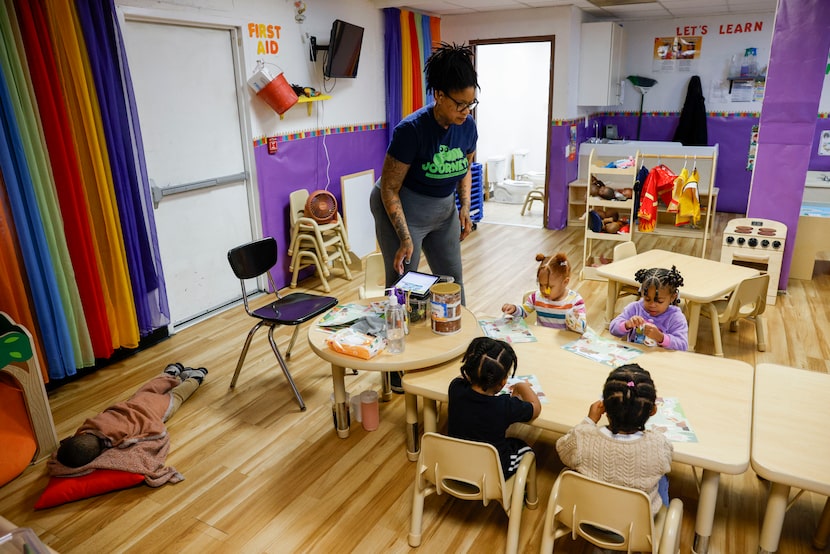
Carla Wright (center), toddler program teacher, watches over her students as they work on a sticker sheet and as one student takes a nap at Journeys Child Development Center in Grand Prairie, Texas, on Tuesday, Jan. 28, 2025.
Liz Rymarev / Staff Photographer
Rowland, who also serves as president of the Texas Association for the Education of Young Children, said her center, Green Space Learning in Fort Worth, is already bracing for what she hopes will be “more of a threat or short-term delay than a long-range delay.”
But after already enduring payment disruptions last year when the Texas Workforce Commission changed systems, Rowland fears the strain may be too much for many to bear.
“There really isn’t any more credit or grace available to center and child care home operators,” Rowland said. “I’m afraid even the fear of this will be the final straw for so many.”
If those operators are forced to close, advocates warn that families across Texas could suddenly have nowhere to turn for affordable child care. Parents may be left scrambling for limited spots, and children risk losing critical support and stability.
Inadequate access to child care already costs Texas an estimated $11.4 billion each year in lost productivity and revenue for parents, businesses, and taxpayers, according to the University of Texas at Austin.
If more centers close, advocates warn, those losses will only increase as more parents scramble for limited care.
“We’re worried about the children,” Kofron said. “We’re worried about our child care providers, but we also worry about just our economy as a whole, making sure that we don’t lose our child care infrastructure that is so vital to our everyday life.”
This reporting is part of the Future of North Texas, a community-funded journalism initiative supported by the Commit Partnership, Communities Foundation of Texas, The Dallas Foundation, the Dallas Mavericks, the Dallas Regional Chamber, Deedie Rose, Lisa and Charles Siegel, the McCune-Losinger Family Fund, The Meadows Foundation, the Perot Foundation, the United Way of Metropolitan Dallas and the University of Texas at Dallas. The News retains full editorial control of this coverage.