
Distant view of two facilities at the McDonald Observatory on Mount Locke, above the city of Fort Davis in the Davis Mountains of West Texas.
Carol M. Highsmith/Buyenlarge via Getty Images
Texas may not be especially known for its mountains, like it is for canyons like Big Bend or Palo Duro, or the Rio Grande or the High Plains. But some might say a lack of fame makes the state’s mountains all the more special — or perhaps, cozy.

Geography and travel site WorldAtlas has compiled a list of the eight coziest mountain towns in Texas, spanning from West Texas to the Texas Hill Country.
Article continues below this ad
“Hidden within these elevations are small communities that redefine what Texas living is all about,” the WorldAtlas article says. “These aren’t ski resorts or bustling tourist hubs; they’re quiet, working towns where ranching, stargazing, and hiking are part of everyday life.”
If you’re looking to escape today’s fast-paced world and enjoy some slow living, these towns offer the perfect sense of serenity.
More:Austin metro named one of Texas’ best winter escapes for warm-weather lovers
Where are Texas’ coziest mountain towns?
Alpine — population: 6,039
Article continues below this ad
Sitting around 4,475 feet and tucked between the Davis and Glass Mountains, Alpine provides access to the wider Big Bend region while also maintaining its small-town vibes. Those who hike the 1.8-mile Hancock Hill Trail will be rewarded with the opportunity to sign a notebook at “the Desk” — an actual desk resting at the peak with a 360-degree view of Alpine and the surrounding areas, a tradition which reportedly grew from a college prank several decades ago. Visitors can also learn about Native American history, frontier ranching and early settlement in the region at the Museum of the Big Bend.
Click here to find more things to do in Alpine.
Article continues below this ad
Fredericksburg — population: 11,766
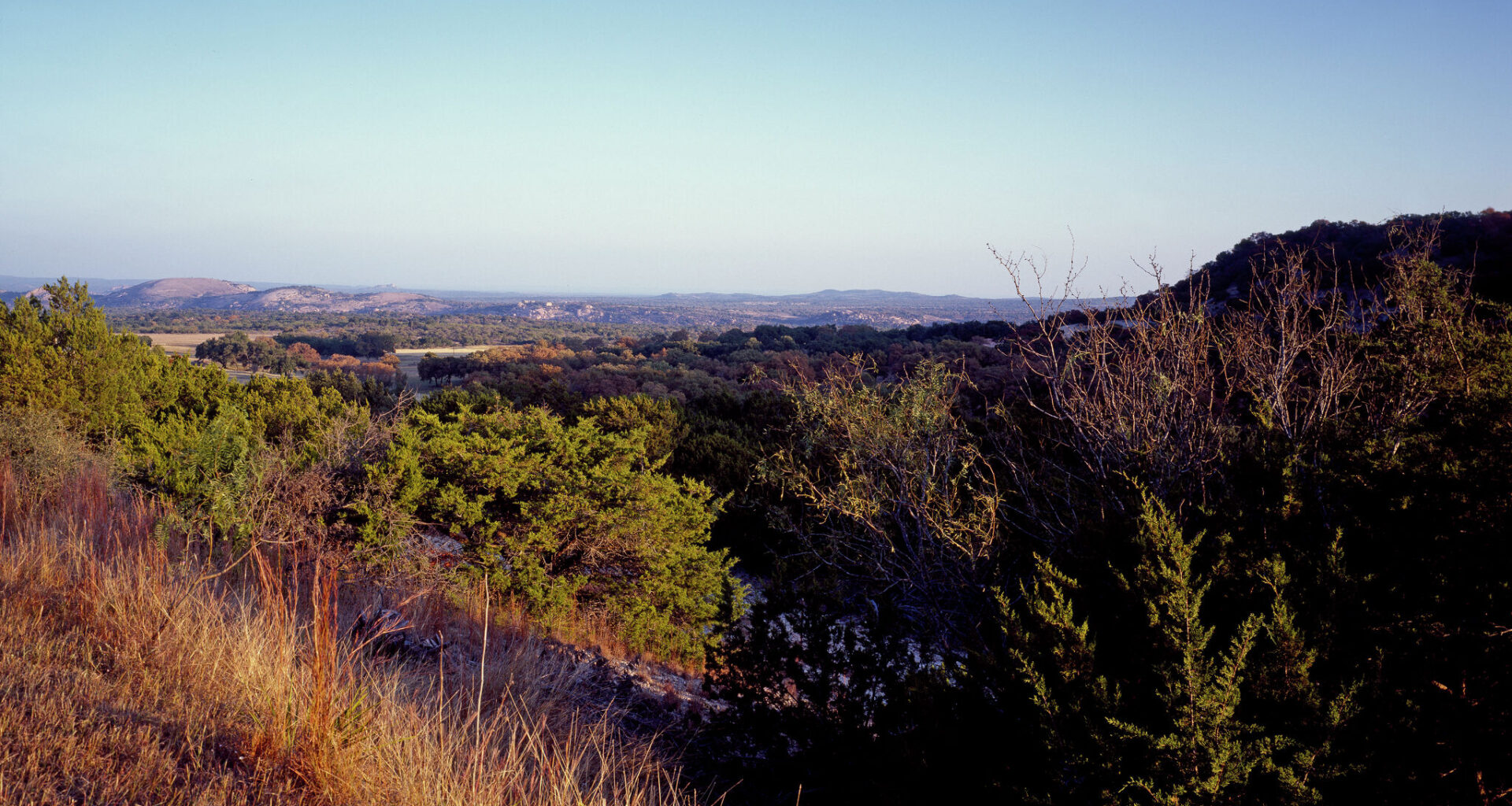
The Enchanted Rock State Natural Area, near Fredericksburg in Texas Hill County is one of Texans’ favorite hiking areas.
Carol M. Highsmith/Buyenlarge via Getty Images
Perhaps the most popular site among those visiting Fredericksburg is the Enchanted Rock State Natural Area, around 18 miles north of the town. Located in the heart of the Texas Hill Country, the large pink granite dome offers views of the region. It can be accessed either by hiking a 1.3-mile round trip on the Summit Trail or by rock climbing. At dusk, a colony of bats can be spotted emerging from an old railway tunnel now called Old Tunnel State Park. Visitors can also go bicycling and horseback riding. Within city limits is the National Museum of the Pacific War, which was built around the childhood home of Admiral Chester William Nimitz, credited for leading the U.S. Pacific Fleet to victory over Japan during World War II.
Click here to find more things to do in Fredericksburg.
Article continues below this ad
Boerne — population: 22,712
Visitors can enjoy an array of activities all in one place, at Boerne City Lake Park, also located in the Texas Hill Country. The recreation area welcomes swimming, fishing and non-motorized boating. There are also family-friendly picnic areas with grills, a boat ramp, a fishing pier, a playground and a Frisbee golf course. Boerne is also home to the Cibolo Center for Conservation, which offers hands-on environmental education and research as well as trails throughout its two campuses totaling over 160 acres. Eleven miles northeast of the city, visitors can also tour Cave Without a Name — a living tavern with six major rooms, which sometimes hosts concerts.
Click here to find more things to do in Boerne.
Article continues below this ad
Wimberley — population: 2,889
The tiny town of Wimberley is also nestled in the Texas Hill Country near Cave Without a Name, but it’s best known for its natural swimming areas. Jacob’s Well Natural Area offers many activities, including hiking along both primitive and accessible trails, geocaching, audio tours, birdwatching and wildlife-watching, and a children’s play area. Blue Hole Regional Park spans 126 acres with more walking trails, picnic areas and natural swimming spots — and recently received a 2025 Traveler’s Choice Award from Tripadvisor. A smaller area called Old Baldy Park is recognizable for its 218 limestone steps up a rock face with breathtaking views of the Wimberley Valley.
Click here to find more things to do in Wimberley.
Article continues below this ad
Dripping Springs — population: 10,165
Just over 14 miles north of Wimberley, Dripping Springs is also called the “Gateway to the Hill Country.” The city is known for its various wineries, breweries and distilleries, along with natural springs and parks featuring wooded ridges and limestone outcrops. The Milton Reimers Ranch Park offers a challenging terrain with mountain biking trails, rock climbing zones and river access for fishing along the Pedernales River. In downtown Dripping Springs, Historic Mercer Street is home to restored storefronts of the area’s first businesses. Mercer Street and Old Fitzhugh Road are lined with architecture built between 1870 and 1940, which remains functional for active businesses. From a barbershop-turned-craft beer taproom to quaint boutiques to live music, the town offers entertainment for those from all walks of life.
In 2015, the Texas Legislature officially designated Dripping Springs as the “Wedding Capital of Texas.” With over 35 scenic venues within 15 miles, the area offers a variety of backdrops to enhance every type of matrimonial celebration.
Article continues below this ad
Click here to find more things to do in Dripping Springs.
Fort Davis — population: 986
Further south and in West Texas, the census-designated place (CDP) of Fort Davis is a quiet, grounded community with views of the vast, open landscape. The area’s most popular attraction is the Fort Davis Historical Site, a restored frontier post active between 1854 and 1891. Visitors can walk through the officers’ quarters, enlisted men’s barracks, hospital and more. The site is home to two dozen roofed buildings and over 100 ruins and foundations, and five buildings have been restored to their 1880s appearance. Another key stop in the McDonald Observatory, which has daytime and evening tours. Its Hobby-Eberly Telescope (HET) is one of the world’s largest. The remote location in the Davis Mountains offers some of the darkest skies in the continental U.S. For those looking to engage with nature, the Chihuahuan Desert Nature Center and Botanical Gardens is home to over 500 acres of desert terrain, brushland and canyon springs — plus around three miles of trails through native flora and geology.
Article continues below this ad
Click here to find more things to do in Fort Davis.
Marfa — population: 1,641
Just over 20 miles southwest of Fort Davis, another small town is known for its art scene. Marfa is home to the Chinati Foundation, a major contemporary art museum built on former military base Fort D.A. Russell. Spanning around 340 acres, the museum includes over 30 former barracks and hangars with large-scale art installations and minimalist works created in the 1980s by late American artist Donald Judd. Also in Marfa, the Judd Foundation preserves the artists’ living and working spaces, which include a large ranch. Along with the town’s numerous art spaces, galleries and artist studios are the Marfa Lights — mysterious dancing orbs of lights that have been observed for over a century. According to local sources, the lights appear on the horizon southeast of Marfa, in a nearly uninhabited and hard-to-reach area. The intriguing display of sometimes red, blue or white lights has inspired an official Marfa Lights Viewing Area nine miles east of town.
Article continues below this ad
Click here to find more things to do in Marfa.
Comfort — population: 1,917
Back in the heart of the Texas Hill County, the census-designated place (CDP) of Comfort is true to its name. The quiet town on Cypress Creek “features gentle limestone ridges and creek-lined lowland that bring relief from the plains.” The James Kiehl River Bend Park spans 25 acres of grassland, woodland and riverfront habitats along the Guadalupe River. Just outside of town, Flat Rock Ranch is another popular attraction. The 1,300-acre ranch is home to over 34 miles of mountain-bike single-track trails. Within city limits, the Treue der Union Monument (which translates to “Loyalty to the Union”) honors 68 men and boys of mostly German descent who were opposed to slavery during the American Civil War. While refusing to fight for the Confederacy and trying to reach safety in Mexico, the group was ambushed by Confederate soldiers on horseback in the 1862 Battle of the Nueces, also called the Nueces massacre. The massacre, along with executions and another fight two months later, took the lives of around 40.
Article continues below this ad
Click here to find more things to do in Comfort.