
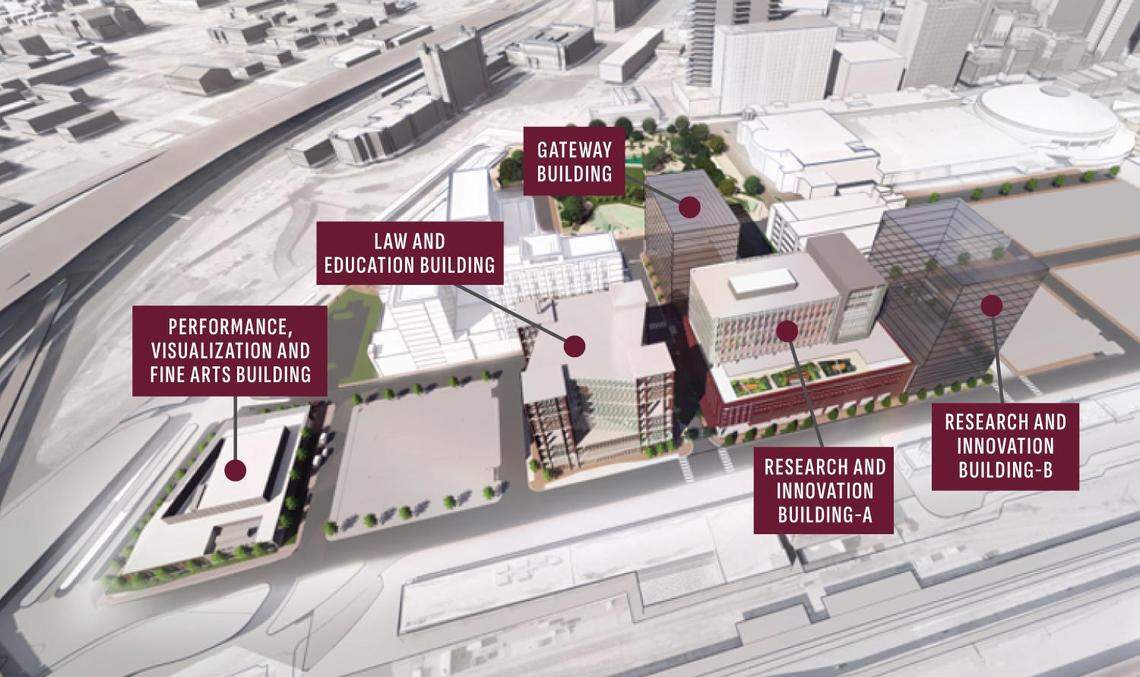
Texas A&M’s plans for its upcoming Fort Worth campus are becoming clearer as the university prepares to open the first building this summer.
The satellite campus was announced in November 2021, and the university’s board of regents gave approval to move forward with construction of two buildings in May 2022. Since then, the project has grown to five buildings in total, including a law and education building, two research and innovation buildings, a performance, visualization and fine arts building, and what the university is describing as a “gateway” building.
Construction timeline and updates
The law and education building will be the first to open. Faculty and staff will begin moving in this summer and students will start classes during the fall 2026 semester, said Kim McCuistion, director of Texas A&M Fort Worth.
“The city of Fort Worth offers really strong demand for highly educated talent,” McCuistion said. “We’ve seen that in the past here in Fort Worth that it really aligns with the culture of the Texas A&M University system. And this particular campus here in downtown is going to be bringing resources from across the entirety of the Texas A&M system, which is 12 universities and eight state agencies.”
Texas A&M Fort Worth leaders plan to slowly grow the campus over time. This fall, only the law and education building will be open and teaching courses while others remain in either the planning or pre-construction phase. The timeline for the other four builds vary and are yet to be set in stone.
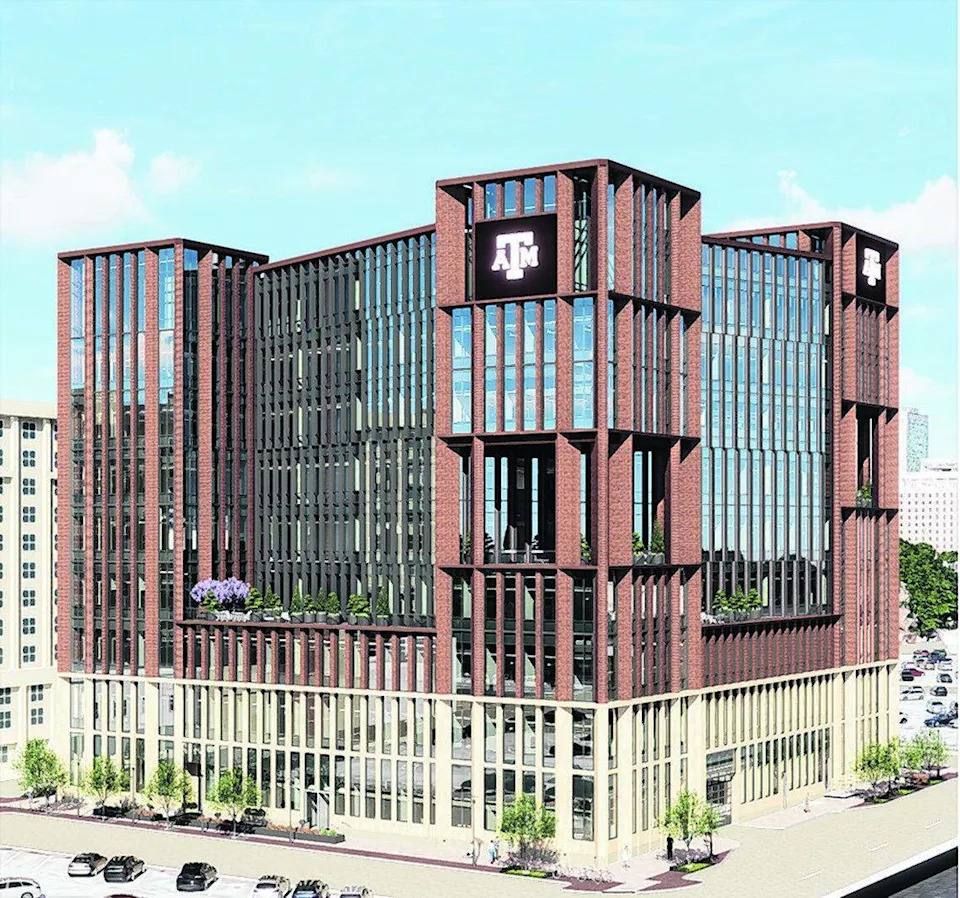
An artist’s rendering of Texas A&M-Fort Worth’s future Law and Education Building in downtown. The eight-story building will be one of five on the new campus.
The university broke ground on the $200 million, eight-story law and education building in July 2023. A&M is currently doing design work on the first research building, which will be the next to break ground.
“This campus will very much be an urban environment,” McCuistion said. “The first building is going to help establish the campus’ academic and innovation-focused presence here in downtown and really begin to set the foundation for our future continued growth.”
⭐ Our editors also recommend:
◽️ Sign up for Star-Telegram news alerts.
The gateway building will serve as a “doorway” to the new campus. It is expected to be the third building completed in the downtown campus, at the site of the existing Texas A&M School of Law, after the first research and innovation building is complete.
The performance, visualization and fine arts building was the latest to be added to campus renderings. It was added to the campus master plan in March 2025 and will house an extension of A&M’s Visual Production Institute, a high-tech center that will teach students to use cutting edge filmmaking and graphics technology. Fort Worth as a whole has made a strong push to be recognized as a hub for film production.
Ground is yet to break on any planned building other than the law and education center. The first research and innovation building is projected to cost up to $260 million, and the university had already begun some pre-construction activities, McCuistion said.
More clarity on program and degree offerings
Texas A&M Fort Worth will not offer its own degrees, but instead students will be able to earn degrees from the main Texas A&M system, A&M Corpus Christi and Tarleton State University.
Classes at the downtown campus will be primarily focused on research, workforce development and community engagement, McCusition said.
Six state agencies will also have a presence on campus: the Texas Division of Emergency Management, Texas A&M Engineering Extension Service, Texas A&M Transportation Institute, Texas A&M Engineering Experiment Station, Texas A&M AgriLife Research and Texas A&M AgriLife Extension.
Texas A&M University Corpus-Christi’s Center for Advanced Aviation Technologies will also be on campus.
McCuistion said the university is still working through what some of those exact offerings will look like.
“It’s not a traditional undergraduate campus, but really focused on high impact career-connected education,” McCuistion said. “So being very mindful about what the educational needs and what the talent needs here are within the region. Some of those programs will be focused on law and legal education, but in addition to that, there will be graduate and professional degree programs, applied research, innovation driven programs, and workforce aligned offerings.”