
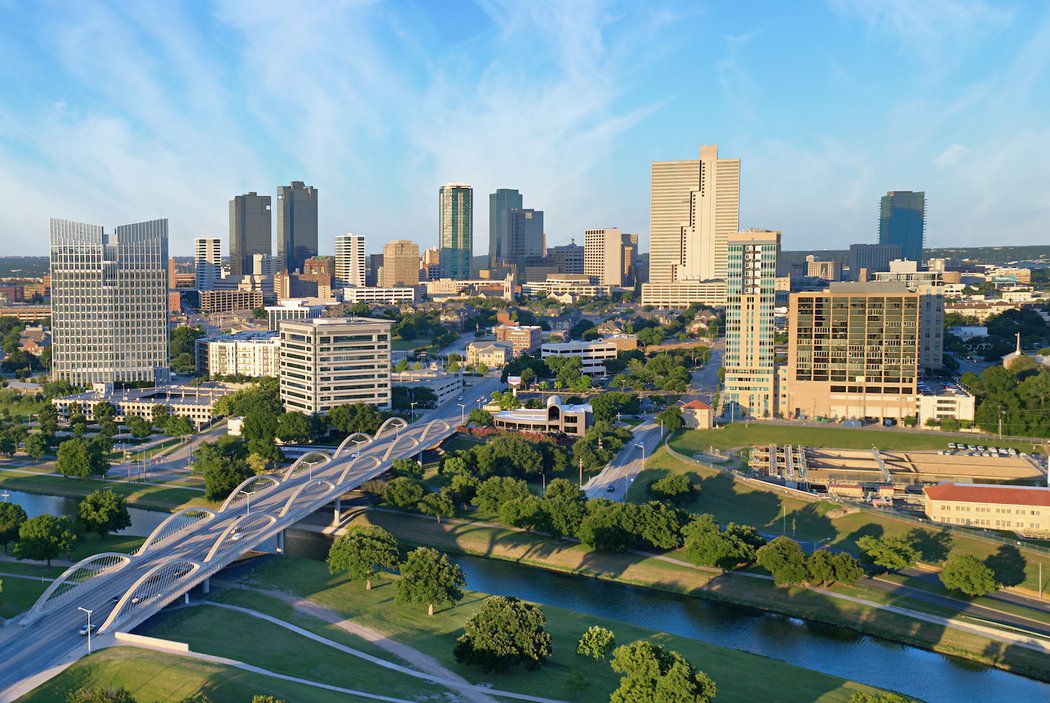
At over a million people, Fort Worth is one of the fastest-growing cities in the country and that growth is both a point of pride and a pressure point. Every week, more families and businesses choose Fort Worth because they believe this is a place where they can build something lasting. But the same forces attracting people here are also contributing to rising costs — from home prices to rent to infrastructure demands.
For many residents, “affordability” shows up as a simple question: Can I continue to live comfortably in the community I love? That question is getting harder as population growth outpaces new housing, tightening availability across many neighborhoods. The median home price in Fort Worth is now about $321,000 — still below the national average, but up more than 120% over the past decade — while typical rent is around $1,360 per month and rising faster than incomes for many households. A significant share of Fort Worth renters spend more than 30% of their income on housing, crossing the standard threshold for being cost-burdened and feeling that squeeze month after month.
As a City Councilmember, I’ve learned that to really answer the question is dependent on something much less visible but incredibly important: how efficiently the city itself functions.
Most people don’t connect development services — the city’s permitting, inspections, and building support functions — to the price of a home or the rent on an apartment. But these connections are real, and they hit residents directly.
When permitting is slow or unpredictable, when inspections are delayed, or when infrastructure coordination lags behind development, the cost of building rises. Those increased costs eventually show up in the price of a home, the rent on a unit, or the operating expenses of a business.
The Texas A&M Real Estate Center estimates that for every $1,000 increase in the price of a home about 22,000 Texans are prevented from affording it. Those are real costs affecting real people.
That’s why I have made it a priority to streamline our Development Services Department and champion investments in staff, technology, and systems needed to keep pace with Fort Worth’s growth. A department that once struggled with backlogs is now faster, more predictable, and more transparent. Experts are beginning to take note of these improvements, with Fort Worth ranked No. 1 in Texas for permitting efficiency and zoning speed in 2024, and No. 1 nationally for permitting efficiency in 2025 — recognition of the city’s faster, more reliable development timelines.
This isn’t an inside-baseball process story. It goes directly to your pocketbook. Every day we save in permitting time, every unnecessary step we cut, and every process we modernize reduces the costs carried by builders, small businesses, and ultimately residents. Faster, more efficient development isn’t just about helping developers — it’s about helping families who want attainable housing, seniors who live on fixed incomes, and young professionals trying to stay in the city where they work.
Fort Worth’s extraordinary growth means we must add new homes, new businesses, and new infrastructure at a pace that keeps up with demand. But if city processes become the bottleneck, supply won’t be able to meet demand — and prices rise.
By investing in additional permitting and inspection staff, modernized digital tools, and cross-departmental coordination for infrastructure, we are creating predictable timelines and transparent policies and regulations. This is making it faster and cheaper to build in Fort Worth.
Residents may not see these internal changes firsthand, but they will feel the effects of more housing choices across more price points, reduced pressure on rents, steadier home values, and a business environment that encourages investment rather than pushing it away. In a high-growth city, efficiency is one of the most powerful affordability tools we have.
Another critical piece of affordability is tax stability. Fort Worth cannot control global housing markets or national economic trends, but we can control our property tax rate and how responsibly we manage taxpayer dollars.
I have consistently championed lowering the property tax rate while ensuring that the city continues investing in the infrastructure, public safety, and services on which our residents rely. Responsible budgeting — spending tax dollars wisely, avoiding unnecessary growth in government, and planning ahead — is how we protect families from being priced out of the city they call home.
Lowering the rate is only meaningful if the city is financially disciplined. That’s why I support long-term planning that matches our growth curve, so we don’t fall behind on roads, utilities, parks, or public safety staffing. Predictable tax rates and smart growth management go hand in hand.
Affordability isn’t just a housing issue or a tax issue — it’s a livability issue. It’s about ensuring that longtime residents can stay in their neighborhoods, young families can buy their first homes, businesses can expand, and seniors can live with stability and dignity.
Fort Worth’s growth is an opportunity, but it requires thoughtful leadership and steady investment in the systems that make a city work. By streamlining development services, modernizing our internal processes, and staying disciplined with taxpayer dollars, we are laying the foundation for a Fort Worth that remains affordable — not just today, but for the next generation.
Michael D. Crain represents District 3 on the Fort Worth City Council.