
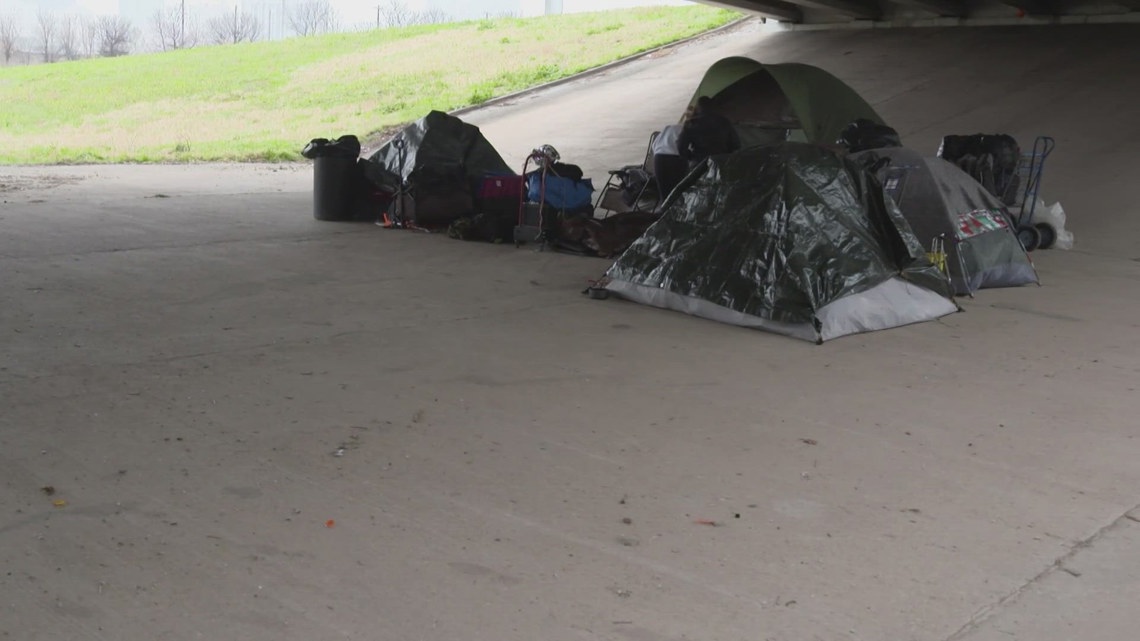
The Point In Time homeless count is on Jan. 22 in Tarrant County, but advocates warn it misses many families not living on the streets.
FORT WORTH, Texas — When most people think of homelessness, they picture individuals on street corners or living in tents. But advocates say the federal government’s annual count misses a growing population: families struggling in the shadows.
“The point in time count really shows us the tip of the iceberg,” said Carol Klocek, CEO of the Center for Transforming Lives.
The federally mandated survey, conducted annually to provide a snapshot of homelessness in Tarrant County, often overlooks people staying in motels, crowded into others’ homes, or living in their vehicles — particularly families with children.
Tanisha Thomas knows that reality firsthand.
“It was the beginning of the hardest time for me,” Thomas said. “I was staying in the Walmart parking lots.”
After her youngest son was born, Thomas moved from couch to couch, trapped in a cycle that left her unable to work without childcare and unable to afford childcare without work. The mounting pressure pushed her to a crisis point.
“I told them my situation, that I was suicidal, which I was,” Thomas recalled.
Her turning point came when she reached out for help. “First step for me was to ask for help,” she said.
The Center for Transforming Lives provided emergency shelter, and after three years of instability, Thomas moved into her own apartment.
“I feel it now. It was weights lifted off of my shoulders,” she said.
Today, Thomas’s car serves a different purpose. She drives it to and from Tarrant County College, where she made the dean’s list and is set to graduate in May.
“Our life is purposeful and there is a reason for everything we go through so we can go back and tell others how to get through it,” Thomas said.
The Affordable Housing Crisis
Thomas’s story reflects broader challenges facing single mothers in the region. According to data from the Centers for Transforming Lives, single mothers spend 51% of their income on rent, with the average single mother earning $33,909 annually, while the average rent for a two-bedroom home reaches $1,700 per month.
The eviction rate stands at five times the national average, with four in 10 renters evicted in 2023. Only 11 subsidized childcare seats exist for every 100 children who need them, and women with children under age 6 face unemployment rates of 6.7%. As many as 40% of single mothers lack health insurance, according to the Centers for Transforming Lives.
Klocek emphasized that accurate data from the Point In Time count is crucial for securing resources to address these systemic issues.
“We need to solve the affordable housing crisis in order to really address this, but we won’t unless we know what the need is,” Klocek said. “Those are investments that pay dividends for our community.”
For Thomas, those investments made all the difference — and she hopes her story will help others in similar situations find their way forward.