
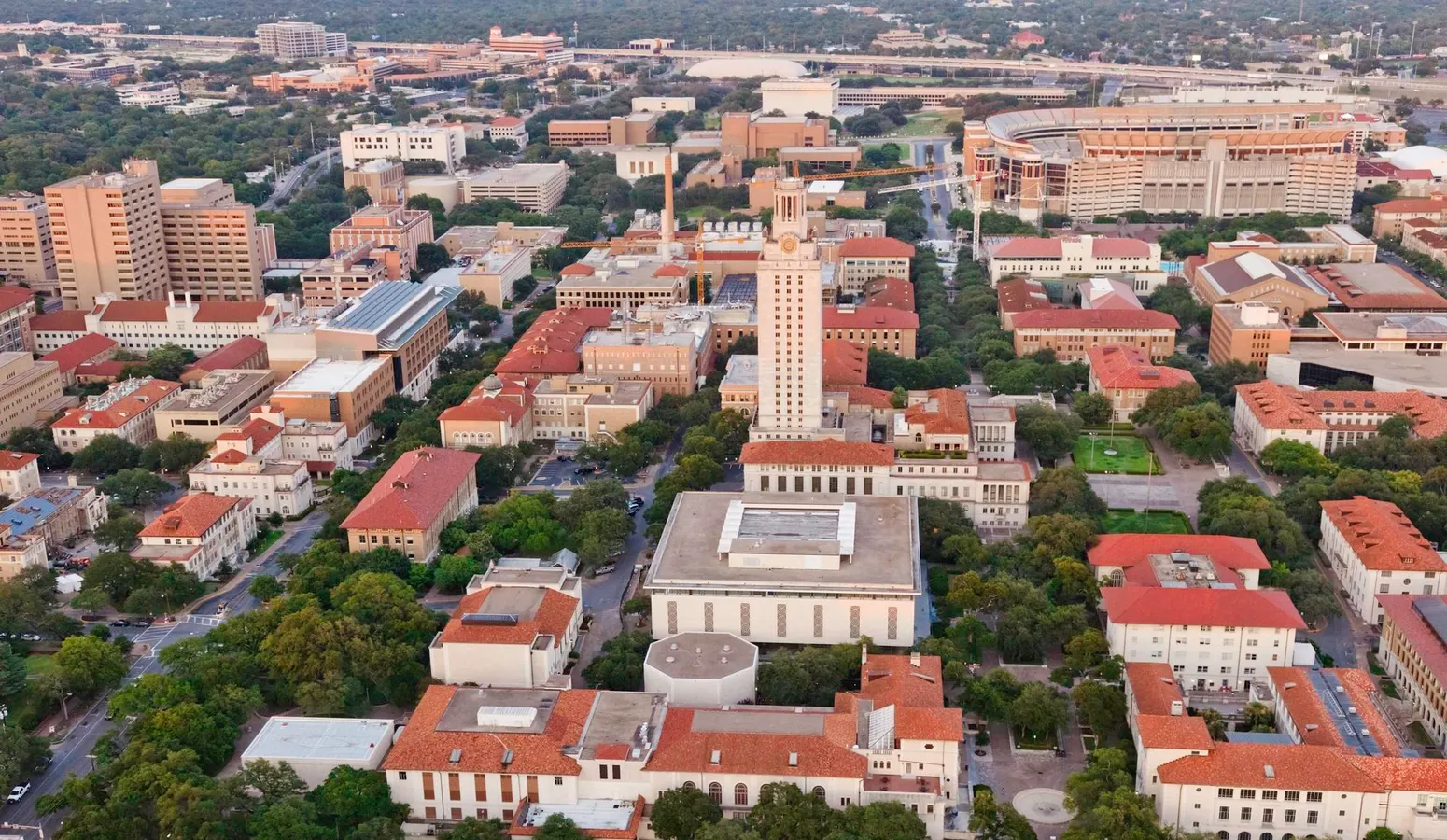
The University of Texas at Austin has been given $100 million by Tench and Simone Coxe to help fund its new medical center.
getty
The year has gotten off to a very good start on the philanthropic front at Pennsylvania State University and the University of Texas at Austin, both of which reported receiving historic private gifts this week.
Pennsylvania State University
An anonymous couple has made an estate commitment of approximately $55 million to Penn State University. The gift, which the university described as the second largest single commitment in its history, will be added to the couple’s existing endowed scholarship at Penn State, making it the largest such fund at the institution.
The donation will be used to fund scholarships for undergraduates with demonstrated financial need across every Penn State college and campus. The new commitment will grow an endowment that the donors began several years ago with an initial $50,000 gift and which they have strengthened with additional contributions over time.
“This generous act of philanthropy will help to keep a Penn State degree within reach for Pennsylvania students, fulfilling our land-grant promise to families and the commonwealth,” said Penn State President Neeli Bendapudi in a news release. “Scholarships are vital to our educational mission, and I am deeply grateful to these donors for supporting our undergraduates and setting an example of generosity that will resonate for many years to come.”
University of Texas at Austin
The University of Texas at Austin has been given $100 million from Tench and Simone Coxe for its new medical center. That center, scheduled to open in 2030, will combine with UT’s Dell Medical School and the UT MD Anderson Cancer Center, which is expanding to Austin, to create a new academic health system.
The gift, one of the largest in the university’s history, will help fund the development of a system consisting of a new hospital, existing outpatient clinics, the Dell Medical School, and its affiliated partnerships, including Ascension’s Dell Seton and Dell Children’s medical centers and Central Health and CommUnityCare Health Centers.
It will also feature UT’s extensive research and teaching enterprise, spanning fields such as health-related artificial intelligence, engineering, robotics, pharmacy, nursing and social work in bringing an advanced level of medical care to Austin and central Texas.
“Integrating UT’s world-class research into this new, advanced medical system will be a game changer,” said UT President Jm Davis, as part of the university’s announcement. “What is starting here will change medicine, life sciences research, and the health and vitality of countless lives. The Coxes’ generosity is transformative in making this happen, and we cannot thank them enough.”
Tench Coxe worked for more than three decades at the venture capital firm Sutter Hill Ventures, serving as a managing director from 1989 to 2020. According to Forbes, which pegs his net worth at $7.8 billion, Coxe is the third largest individual shareholder of tech giant Nvidia, behind founder and CEO Jensen Huang and board member Mark Stevens. He has served on Nvidia’s board since 1993.
Coxe said the opportunity to help build an institution from the ground up was compelling, a belief that grew after he met Claudia Lucchinetti, UT’s senior vice president for medical affairs and dean of Dell Medical School. “We have a close friend who had to travel to Houston for care she should have been able to get here at home,” he said. “Having spent my career backing strong leaders, meeting Claudia made it clear: Supporting the vision for the UT medical center is exactly the opportunity Austin needed.”
“Great medical care changes lives, and we want more people to have access to it,” added Simone Coxe. “What inspired us was a bold vision to build something here that could become a new model for health care in Austin and beyond.”
The Coxe gift is unrestricted, meaning that UT leaders will be free to invest it in various priorities such as recruiting world-class clinicians and scientists, investing in technology, expanding programs to improve access to treatment and funding new clinical facilities. While the couple had initially planned to remain anonymous, they ultimately decided to make their gift public in order to motivate others to contribute to the new medical center.