
Austin Mayor Kirk Watson is proposing an overhaul of how the City Council spends its money. A council committee unanimously recommended the policy on Wednesday.
Jay Janner/Austin American-Statesman
The Austin City Council is poised to tighten the rules governing how elected officials spend public money, a move sparked by American-Statesman reporting that exposed weak oversight and questionable expenses in some council offices.

The council’s Audit and Finance Committee voted unanimously Wednesday to advance a proposed spending policy that would establish clearer, citywide rules for how the mayor and council members use nearly $1 million a year in taxpayer-funded office budgets. The proposal heads to the full City Council on Jan. 22, where members have already signaled they want changes to provisions they see as overly restrictive.
Article continues below this ad
Council Member Paige Ellis, who does not serve on the committee but attended Wednesday’s meeting, emerged early in the discussion as a key voice questioning parts of the proposal, particularly limits on how much unspent money council offices could carry from one fiscal year to the next.
Under the draft policy, offices would be allowed to roll over no more than $50,000 annually, replacing a system that currently allows unlimited carryover. The proposal would also prohibit using rollover funds for staffing.
Ellis said her office has relied on carryover money in the past to hire part-time, temporary staff and to support small, district-focused projects, such as park improvements.
“In that regard, it was helpful to be able to be nimble with the dollars,” Ellis said.
Article continues below this ad
Council Member José Velásquez, who did not attend Wednesday’s meeting, expressed a similar concern earlier this week.
MORE: Are Austin City Council budgets too big?
Mayor Kirk Watson countered that large unspent balances could indicate council budgets are too big and said Austin is an outlier among Texas cities.
“The only place that gets to do that is the Texas Senate, and that’s limited to $20,000,” Watson said. “If you’re over-appropriating, that money could be utilized for other things.”
Article continues below this ad
Watson introduced the proposed policy last month after the committee agreed Austin needed a comprehensive framework for council spending. According to the draft, the goal is to ensure spending is reasonable, transparent and in the public interest.
The effort follows a Statesman investigation last year that found Austin relies on a patchwork of informal rules and internal documents to govern council office spending — unlike other major Texas cities, which have centralized, clearly defined policies. The reporting also identified spending categories that raised questions about oversight.
The review prompted Watson in November to order a formal examination of the city’s spending rules and ultimately led to the policy now before the council.
Cal Jillson, a political scientist at Southern Methodist University who contributed to the Statesman’s analysis, said consolidating Austin’s rules into a single policy would close many existing gaps. But he cautioned that enforcement and leadership buy-in will be critical.
Article continues below this ad
“It says all the right stuff, and I think the real key is that compliance be modeled from the top — the mayor and the council,” Jillson said. “The leadership needs to model humility rather than entitlement.”
Watson’s proposal spells out examples of allowable and prohibited expenses, many of which mirror issues flagged in the Statesman’s reporting. Prohibited spending would include nonprofit donations, transfers to other city departments, personal meals, upgraded flights, professional licenses and membership dues unrelated to official duties.
The policy would also designate the city’s chief financial officer, or a designee, as a financial liaison to the council, with authority to determine whether proposed expenses comply with the rules. In addition, council members’ purchasing card statements would be released publicly on a quarterly basis.
RELATED: Inside Austin City Council’s spending habits
Article continues below this ad
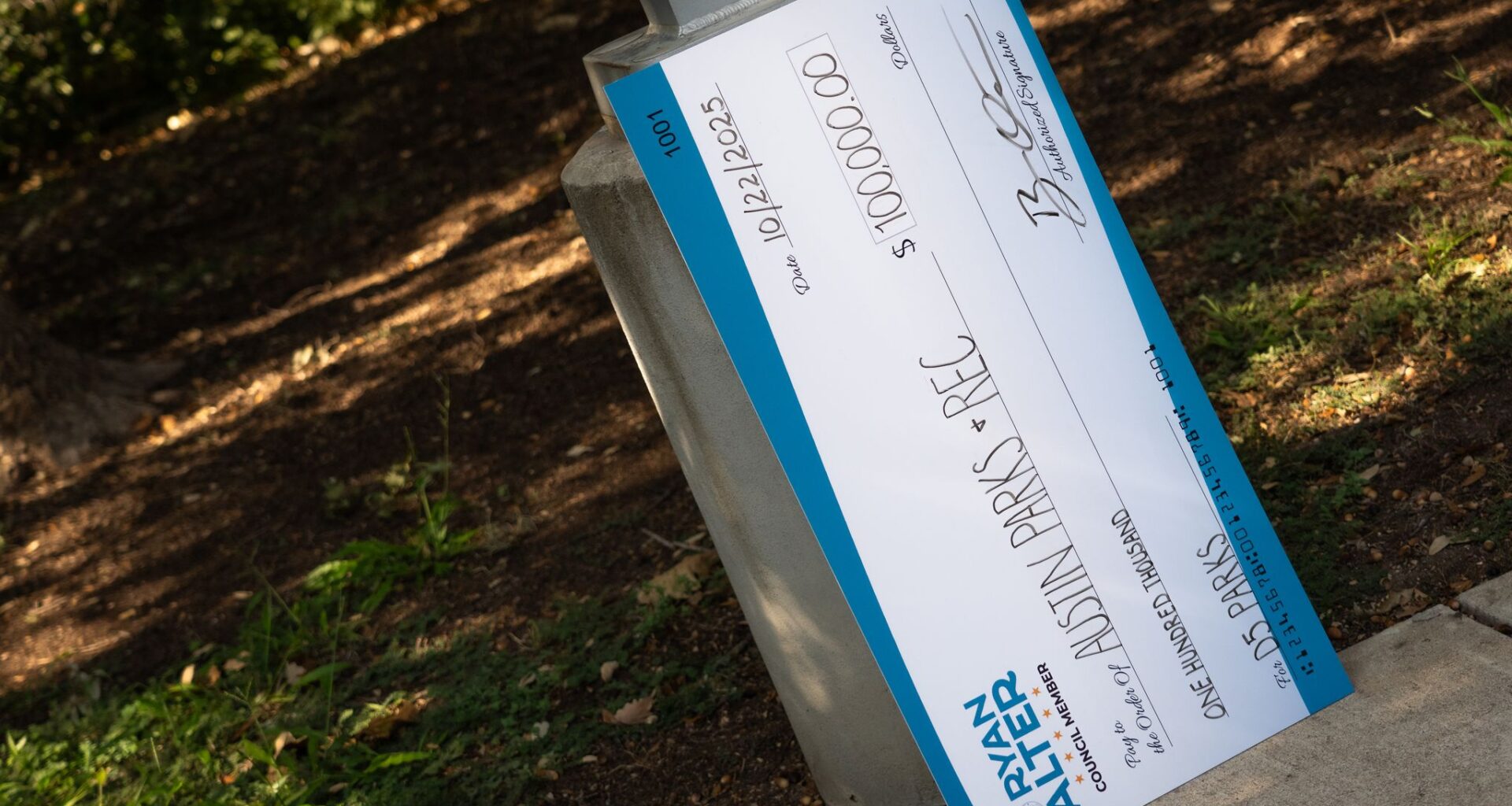
City Council Member Ryan Alter gave $100,000 from his office budget to the Austin Parks and Recreation Department in October last year. A new policy recommended by a council committee on Wednesday would ban such transfers.
Sara Diggins/Austin American-Statesman
Some council members, including Ellis, suggested changes to the proposed ban on transferring office funds to other city departments. Council Member Ryan Alter raised the issue, noting that he moved $100,000 from his office budget to parks maintenance projects in his district last year — a practice the new policy would prohibit.
Ellis proposed allowing such transfers if approved by a council vote.
Council Member Krista Laine echoed those concerns, arguing for flexibility to fund small projects through city departments or local nonprofits.
Article continues below this ad
“We’ve worked with the nonprofits that are active in our areas a long time,” Laine said. “It is very important to have the flexibility to be able to bring some amount of funding to even some of these small projects.”
Watson said the restriction is intended to bring Austin in line with other large Texas cities, which generally do not allow council members to unilaterally redirect office funds. No other city departments currently have that level of flexibility, he said.
If approved next week, Watson said the policy would likely take effect at the start of the next fiscal year.
Article continues below this ad