

A dyed-in-the-wool soccer fan, Royse City’s Dennis McGowan — a FC Dallas season-ticket holder and vice president of one of the team’s fan clubs — took solace in successfully navigating FIFA’s World Cup ticketing process.
He and a friend entered as many FIFA’s lottery draws as possible. McGowan, 38, was awarded the chance to buy two $350 tickets to June’s group-stage opener between Japan and the Netherlands at AT&T Stadium. But only at a later date will FIFA inform him where he is sitting, continuing a process he called convoluted and price-prohibitive.
“The average fan absolutely feels like they are priced out,” McGowan, VP of the Dallas Beer Guardians fan club, told The Dallas Morning News. “FIFA is here to bleed us dry as much as they possibly can. They know we [Americans] have the money. They see what we spend on Super Bowls. FIFA wants a piece of that pie.”
With the World Cup coming to North America for the first time since 1994, many U.S. fans eye a once-in-a-lifetime opportunity, a bucket-list event. The ticketing issues are especially important in D-FW because AT&T Stadium is hosting more matches — nine — than any other city. Days after the window for FIFA’s latest ticketing phase — its random selection draw — closed Tuesday, the governing body’s ticketing strategy continues to face sharp criticism over prices and process.
Business Briefing

FC Dallas season-ticket holder Dennis McGowan, 38, purchased two World Cup tickets through FIFA’s convoluted system. He is photographed at Germany Park in Dallas, January 14, 2026.
Tom Fox / Staff Photographer
Create a FIFA ID on its website and scroll through prices for matches at AT&T Stadium: Lottery winners can purchase tickets that range from $220 to $600 for Japan-Netherlands on June 14; from $265 to $700 for England-Croatia on June 17; and from $265 to $700 to watch global superstar Lionel Messi and Argentina face Austria on June 22.
Want to attend the World Cup semifinal at AT&T Stadium on July 14? For FIFA lottery winners, that will cost between $930 and $3,295 per ticket. And attending the final at New Jersey’s MetLife Stadium will put fans out another $4,185 to $8,680 a ticket.
Interviews with more than a dozen individuals in ticketing, sports business and the soccer world paint a picture of pronounced ticketing concerns at a time FIFA anticipates generating $13 billion in the current cycle (2023-26). Among issues cited: That FIFA’s dynamic pricing — prices vary based on demand for marquee matchups — is a commercial overreach, intended to maximize revenue over opening the door to new fans to maximize long-term growth of soccer.
While some ticketing executives understand FIFA instituting dynamic pricing for the first time in the World Cup, others fault FIFA for not initially offering more affordable tickets to long-entrenched soccer fans. And still others lambaste what they view as FIFA’s opaque ticketing process, calling this FIFA’s least transparent World Cup despite the organization’s stated intent to be as open as possible. And the fan scramble for World Cup tickets is playing out against a backdrop of third-party resale markets offering tickets with even higher prices and fewer safeguards.
In an exclusive interview with The News, Alan Rothenberg, chair of the 1994 World Cup organizing committee, defended Zurich-based FIFA implementing dynamic pricing for this World Cup but bemoaned the fact that the U.S. Soccer Federation is not in control of ticketing strategy and other tournament elements.
“FIFA is running this entire World Cup …,” said Rothenberg, president of U.S. Soccer from 1990 to 1998. “I wish the U.S. Soccer Federation was involved completely in everything — not just the ticketing strategy. I think it would actually have been smoother and easier for the host cities, because FIFA basically has to deal directly with 11 different American cities besides the Mexican and Canadian cities. They still would have called the shots. It’s still theirs.”
FIFA did not return messages from The News seeking responses to criticism of its ticketing process and pricing. But Gianni Infantino, FIFA’s president, last month in Dubai said, “What’s crucial is that the revenues that are generated from this are going back to the game all over the world. Without FIFA, there’d be no football in 150 countries in the world. There is football because, and thanks to, these revenues we generate with, and from, the World Cup, which we reinvest all over the world.”
Still, fan emotions remain inflamed, said Danny Navarro, a social media influencer [TravelFutbalFan] who provides followers World Cup travel tips. He said the pricing represents “price gouging” and called FIFA’s ticketing strategy “absolutely shameful,” adding, “rather than being a good steward of the sport, FIFA saw dollar signs in their eyes. It’s really the most egregious process fans have seen. All my followers, we have this collective disdain for this entire process.”
University Park’s Michael Peticolas, 54, has purchased tickets for every World Cup since Germany hosted in 2006. When asked to describe FIFA’s ticketing process for this World Cup, he offered an impassioned 20-minute response uninterrupted, calling it a “snafu,” “absolute bonkers” and a “cluster…”
“FIFA World Cup ticketing is just a different animal …,” said Peticolas, who owns Peticolas Brewing Company. “The way the sales phases were structured has changed over the course of the last year; that is extremely frustrating. The process has been clunky to say the least and — diabolical is not the right word — but there’s a reason they’ve done what they’ve done. It’s just all about, ‘How do I maximize this dollar?’”
FIFA announced Wednesday that more than 500 million ticket requests were submitted during the 33-day application window. At the same time, Football Supporters Europe (FSE) cited data that ticket prices for this World Cup are five times more expensive than Qatar in 2022. And the maelstrom surrounding prices and process persists.
“This does not help the reputation and image of the World Cup and maybe the status of soccer in our country, because you’re not necessarily going to get all the soccer fans in the stadiums,” Bob Heere, a University of North Texas professor of sports management and director of UNT Sports Innovation Space, told The News. “You’re going to get enough people in the stadium that have discretionary income to go to these games, but a lot of people are not happy that they can’t go and are getting priced out. That’s going to hurt your brand a little bit.”
Is FIFA exploiting fan loyalty?
Rothenberg remembers the last World Cup in the U.S. playing out in a vastly different soccer landscape: paper tickets were all the rage and the U.S. Soccer Federation controlled both ticketing strategy and revenue — with FIFA only needing to rubber-stamp final decisions.
The 1994 event, played in nine U.S. cities, yielded a $50 million-plus surplus, Rothenberg said, prompting the creation of the U.S. Soccer Foundation. A portion of that surplus, he said, was used through the foundation to fund the birth of Major League Soccer.
Another soccer springboard is expected for this World Cup, but there is a higher baseline than in ’94.
“It will be a big boost,” he said. “But it won’t be like going from zero to 60. It will be like going from 60 to 90.”
That optimism abounds even though, six months before the first match, FIFA’s ticketing strategy continues to ignite backlash, attracting criticism from everyone from New York City Mayor Zohran Mamdani to British Prime Minister Keir Starmer.
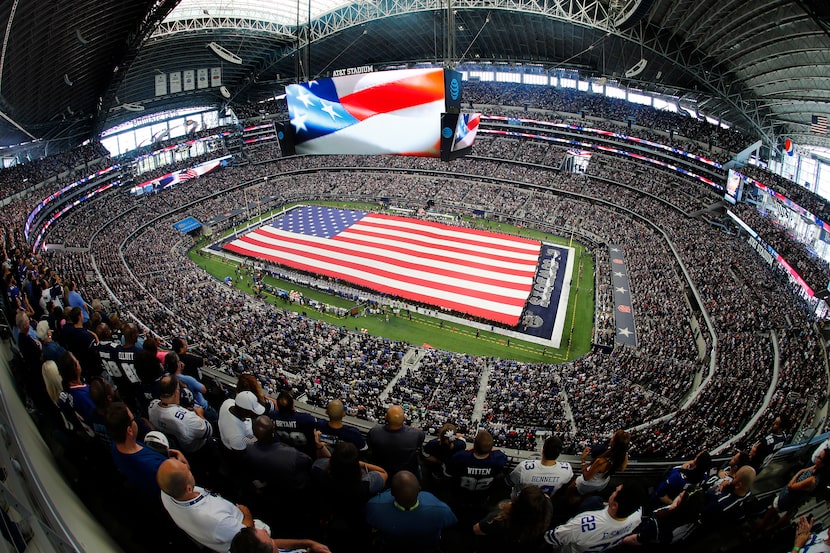
Representatives from the branches of police, fire and military stretch a field-sized U.S. flag across the football field during 9/11Anniversary ceremonies before the Dallas Cowboys New York Giants game at AT&T Stadium in Arlington, Texas, Sunday, September 11, 2016. (Tom Fox/The Dallas Morning News)
Tom Fox / Staff Photographer
Fans can purchase individual tickets through FIFA’s site if selected in a lottery. The final chance to buy tickets at face value will come in what FIFA is calling a “Last-Minute Sales Phase,” when all remaining ticket inventory will be made available on a first-come, first-served basis closer to the tournament.
FIFA emphasizes that its Resale/Exchange Marketplace is the only secure channel for reselling tickets. Tickets are also available through third-party resale sites such as SeatGeek and StubHub, but they cannot guarantee a resale ticket is legitimate in the same way FIFA’s resale market can.
“Ticketing makes me very nervous,” Dan Hunt, co-chair of the North Texas World Cup Organizing Committee, told The News prior to matchups being announced last month. “I don’t want patrons to be taken advantage of. There’s not a lot of knowledge out there. I don’t want people to be taken advantage of. That’s a critical story you have to start telling. It’s a big one.”
Andy Swift, Secretary of the Board of Directors for the North Texas World Cup Organizing Committee, echoed that sentiment, saying during a news conference last month that he recommends “extreme caution” when purchasing tickets outside FIFA’s official site.
University Park’s Peticolas said, “If I’m buying from FIFA, I know it will be a legit ticket. If I’m buying from a broker, I’m worried. I just don’t know if it’s an official ticket or not.”
Martin Endemann, Head of Policy at Football Supporters Europe, which represents the interests of supporters in European football, told The News that between the “record-high” prices and FIFA’s resale market “with no caps on prices — where FIFA takes percentages from the seller and buyer — it’s clear FIFA’s ticketing policy is to exploit the loyalty of fans as much as possible.
“They appear to see fans as customers to wring out for every cent, rather than as a valuable voice that contributes so much to the game.”
Pricing reflects ‘true market’
FIFA’s Infantino has been steadfast in his defense of ticket prices.
When he spoke last month at the World Sports Summit in Dubai, he said, “We have six to seven million tickets on sale. And in 15 days, we received 150 million ticket requests. So, 10 million ticket requests every single day.
“It shows how powerful the World Cup is. In the almost 100 years of the World Cup, FIFA has sold 44 million tickets in total. So in two weeks, we could have filled 300 years of World Cups. Imagine that. This is absolutely crazy.”
Five group-stage matches will be played at the Dallas Cowboys’ home, including two featuring Messi and Argentina, which will face Austria and Jordan.

Inter Miami’s Lionel Messi (10) celebrates his first half goal agianst FC Dallas midfielder Facundo Quignon (5) in a Leagues Cup Round of 16 match at Toyota Stadium in Frisco, Texas, August 6, 2023.
Tom Fox / Staff Photographer
Tickets for World Cup matches are divided into four categories, from the most affordable category four tickets in small sections near the top of stadiums to category one in the lower bowl.
At AT&T Stadium, the category three and four tickets make up very limited parts of the 400-level sections behind the goal lines. More expensive category two tickets makes up the rest of the 400-level and some 300-level sections. The most expensive category one takes up the remaining sections and the entire lower bowl of the stadium.
Tickets for Argentina vs. Austria, Argentina vs. Jordan, and England vs. Croatia are priced at $700 in category one, $500 in category two, and $265 in category three. The most expensive group-stage ticket currently listed is for the United States vs. Paraguay opener on June 12 at SoFi Stadium in Los Angeles, priced at $2,735 in category one, $1,940 in category two, and $1,120 in category three.
Group-stage prices stand in stark contrast to what U.S. soccer officials promised when bidding for the tournament seven years ago — thousands of $21 seats during the opening phase of the tournament.
If ticket prices are too steep, Rothenberg said, an attractive consolation could be the fan festivals in each city. Fair Park is hosting an official fan festival for all 39 days of the World Cup.
Several ticketing executives defended the general use of the dynamic pricing model, with Rothenberg saying it “reflects the true market, so I don’t know how anybody can quarrel with that. Perhaps FIFA didn’t do as good a job as they might have in terms of telling people in advance about dynamic pricing. But the United States is accustomed to ticket buyers living with that [dynamic pricing] on a regular basis.”
The cost of parking passes at AT&T Stadium for the World Cup is also guided by dynamic pricing. FIFA offers $75 passes for group-stage matches, while they balloon to $175 for the semifinals, according to its website.
“They are going to [dynamic] price hot dogs,” Navarro, the social media influencer, said half-jokingly. “They are trying to squeeze every single dollar.”
FIFA said in a news release that it will reinvest revenue it generates from the World Cup to fuel the growth of men’s, women’s, and youth soccer throughout the 211 FIFA member associations. FIFA said it expects to reinvest more than 90% of its budgeted investments for the 2023 to 2026 cycle.
With its intent to maximize revenues, Heere said, FIFA criticism is warranted because “they’re ultimately a non-profit, and so there’s no reason for them to do this other than ‘We need to make as much money as we can for our members.’”
Thirty-year communications veteran Michelle Sinning, Principal at Bernstein Crisis Management, views FIFA’s reaction to the kerfuffle caused by its ticketing strategy as its version of an own goal in soccer: predictable yet avoidable.
She said it marks a contradiction in values, a breaking of a social contract, because FIFA is promoting a “football for all” mantra while rolling out pricing she believes excludes most fans. She added FIFA “leaned on metrics when supporters were looking for empathy and accountability.
“FIFA answered an emotional backlash with a spreadsheet.”
An ‘unreasonable burden’ on FIFA
Chris Giles, the former Oakland A’s Chief Operating Officer, now runs identity-based ticketing platform FanRally — which runs next-generation season-ticket programs for more than 50 teams from MLB, the NBA and the NHL, including the Texas Rangers, Houston Rockets and Dallas Wings.
He understands FIFA’s Catch-22:
List prices too high and spark outrage. List prices too low on the primary market and they’ll be grabbed en masse and placed on secondary markets at a much higher price point. Had FIFA underpriced World Cup tickets, Giles said, between 60% to 80% of the tickets would end up going to bots and, ultimately, third-party resale markets with a higher price tag.
He called dynamic pricing the “most powerful lever” rights holders have to capture the revenue from their events. Dynamic pricing occurs whether the rights holders implement it or not, he said, pointing to the ticket demand during the Taylor Swift Eras Tour. The listed $500 tickets were quickly gobbled up by bots and then listed on the third-party secondary market for up to $5,000 apiece.
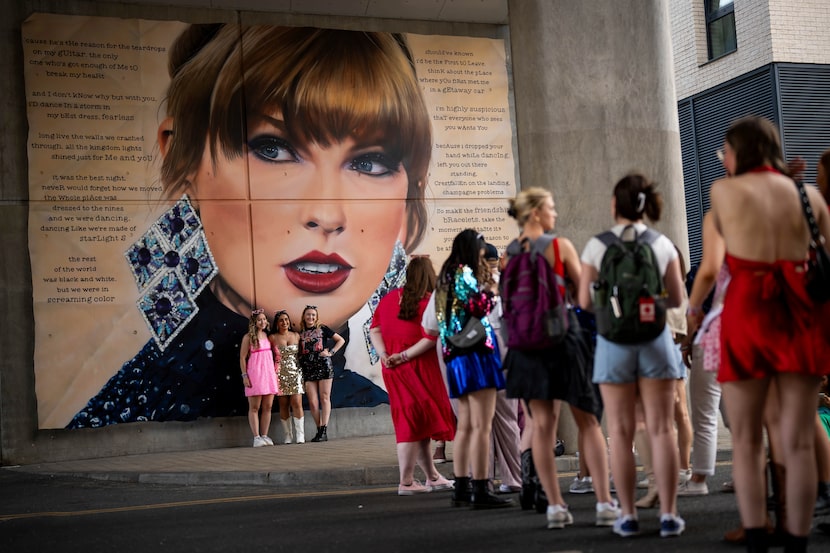
ARCHIVO – Fans de Taylor Swift posan frente a un mural antes de asistir a un concierto de Swift el 21 de junio de 2024 en Londres. (Foto Scott A Garfitt/Invision/AP, archivo)
Scott A Garfitt / Scott A Garfitt/Invision/AP
“The vast majority of those tickets are actually acquired by brokers using pretty sophisticated bots that create a whole bunch of web instances so the money then flows to these unaffiliated scalpers, and the more of a spread there is between your price and the market price, the more brokers are going to infiltrate your on-sale process,” Giles said. “A lot of structural things with the way ticketing works today make it really difficult for rights holders to get tickets in the hands of fans at the price they want it.”
“It’s really hard to blame FIFA for pricing them at what they believe is near-market price, because it’s not changing the prices that fans ultimately pay. It’s simply changing who gets paid.”
For the 1994 World Cup, Rothenberg said, he approached FIFA before the final and said, “Let’s price every ticket at the Rose Bowl at $1,000. It will mean $100 million gate.”
FIFA was “irate,” Rothenberg recalled, adding, “I made the argument that $1,000 was less than street value. Why let brokers and scalpers make the profit rather than you? Well, obviously FIFA has come around by this time to realize, ‘Yeah, why let third parties make the money when it’s our event?’ I think there’s unfair criticism just because people aren’t taking a careful look.”
Paige Farragut also understands first-hand what FIFA is confronting. She spent more than 20 years with the Texas Rangers, including serving as Senior Vice President of Ticket Sales and Service and being responsible for all ticket revenue streams.
“Fans actually drive the prices either up or down; it can go either way,” she said. “Dynamic pricing is the right way to do it, because you do want to maximize profits. But also the caveat would be making sure you hold back some seats to make sure there’s an affordable price for people that can’t pay the dynamic prices.”
Take the perspective of Highland Park’s Robert Smith, who has spent more than 20 years in the ticketing industry, building companies such as EventDynamic, which used dynamic pricing to reimagine ticket pricing for professional and college teams.
“What do you want the primary [ticket marketplace] to do? It is pick your poison?” Smith said. “The tickets should be priced correctly, and correctly means if I have 100 tickets for sale, and I price them at $100 each, there’s demand for exactly 100 tickets. If I price them for $50 and 2,000 people want to buy them, then it’s absolute chaos. What’s the solution? At some point, you’re putting such a burden on that person selling the tickets. It’s just unreasonable.”
Fans will be coming from great distances for World Cup matches. Visit Dallas projects 3.8 million visitors to D-FW during the tournament. Monica Paul, President of the North Texas World Cup Organizing Committee — which is separate from FIFA — said 54% of attendees at AT&T Stadium matches are expected to be international fans.
The stadium will accommodate approximately 80,000 spectators per game. But what will be the makeup of the crowd?
Will FIFA see a ‘Super Bowl effect’?
Inside World Cup stadiums, Giles and others expect a unique allotment of fans.
“I call it the Super Bowl effect,” Giles said. “The atmosphere in the stadium could be subpar, and there’s really not much FIFA can do with the current ticketing infrastructure to solve that, besides what I would call identity-based ticketing, which effectively is tickets that work like air travel reservations.
“When you buy an airline ticket, I can’t speculate that the NFC Championship game is going to be in a certain market, and then triple the price and list it for resale.”
The consequence of a Super Bowl-esque crowd, Navarro fears, is that FIFA is prioritizing maximizing ticket revenue over trying to maximize long-term growth of soccer by bringing new fans, new demographics to the global event.
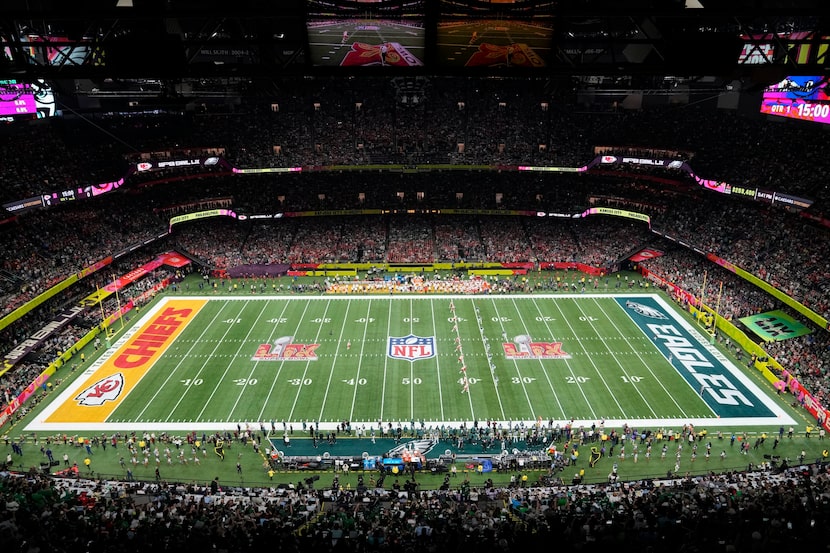
FILE – The Kansas City Chiefs kickoff to the Philadelphia Eagles at the start of the NFL Super Bowl 59 football game, Sunday, Feb. 9, 2025, in New Orleans. (AP Photo/David J. Phillip, File)
David J. Phillip / AP
“That holds water if there’s empty seats,” ticketing veteran Smith said. “If you told me they’re maximizing revenue by only selling 90% of the tickets, that holds water. If you turn on a game and it’s completely full, it doesn’t hold water because they can only get 100% of people in those seats. So they’re not holding anybody back by pricing them how they’re pricing them.”
Heere, the North Texas professor, is skeptical that a large amount of non-soccer fans will suddenly become lifelong fans from attending one World Cup match. He said many “novelty seekers” will purchase tickets, but that’s not going to convert them into soccer fans beyond this event.
“It’s not like, ‘Oh, I went to the England-Croatia game, and now I’m going to follow the Premier League,’” he said. That’s a nice wish to have. But that conversion rate is extremely low.”
In the face of public criticism, FIFA last month introduced the Supporter Entry Tier, a limited number of tickets priced at $60 for each of the 104 World Cup matches. The move came just days after fans showed outrage at prices revealed in FIFA’s third phase of ticket sales.
Rothenberg acknowledged that was a “PR move,” a response to criticism, and would have been better off offered initially.
The selection and distribution of those tickets will be managed by what FIFA defines as Participating Member Associations (PMAs). The PMAs will be in charge of ensuring “tickets are specifically allocated to loyal fans who are closely connected to their national teams.”
FIFA allocates 8% of match tickets to national associations to sell to their biggest supporters. FIFA said about 10% of those allotments will be priced at $60.
For some, too little, too late.
“They should have done that from the start, saying, ‘Hey, we reserve 1,000 tickets for every federation so that the hardcore fans can go for 60 bucks, 100 bucks — right in line with previous tournaments,’” Heere said. “Had they done that, a lot of criticism might not even have happened, but [they unveiled limited $60 tickets] after the fact, when they realized they had a PR crisis.”
Endemann of Football Supporters Europe said there’s been a “complete lack of transparency around ticket prices, including those for fans with disabilities, from FIFA. They left fans in complete uncertainty, only to then reveal exorbitant ticket prices, which will cut out the most loyal supporters, and a handful of cheap token tickets six months out from the tournament.”
Peticolas, the veteran of World Cup ticket purchases, said the most frustrating aspect of the process has been how convoluted it has been.
“That’s another departure from the past,” he said. “It was very clear. It was laid out how each phase worked, when it opened, when it closed, what was the result of the phase. This has been very ‘hide the ball.’ FIFA has not been up-front at all the entire time, and there’s no one to contact, and their FAQ is not going to provide those answers. The way those first two phases operated was like something I’ve never seen before. Like, wait, I’m entering a lottery to then get a chance to go buy tickets? I’ve never even heard of that before and never seen that anywhere else.”
Amanda Hill, CEO of Dallas-based Three Box Strategic Communications, is a mom of two boys who has been counting down the days until the World Cup. The issue is not the lack of communication, she said, because she has received more than 90 emails from FIFA since last May.
“The chaos stems from too much choice, too many channels and not enough clarity from opt-in to purchase for casual ticket buyers …,” Hill said. “From the beginning, FIFA could have communicated a range of expected prices, as well as dates when fans would need to commit to buying and be charged for tickets. A buyer’s guide with all information in one place upfront would have given the fans control with plenty of time to plan for the expense.”
And Sinner said backlash was avoidable, not by charging less but by communicating more early and responding with “empathy instead of metrics.” FIFA could have set aside a significant percentage of tickets at affordable prices and communicated that before sales opened, she said.
Farragut, the former Rangers executive, echoed that communication sentiment. She said the Rangers made a concerted effort of over-communicating with fans during the COVID-19 pandemic regarding return-to-play ticketing policies and pricing at then-new Globe Life Field — and FIFA should have taken the same tact.
“Even if it’s not news you want to hear, having that versus letting the gossip wheel go and people hear, ‘Well, I heard we’re never going to get tickets.’ That’s the biggest part,” she said. “Over-communicate across the board.”
In Rockwall, McGowan, the FC Dallas season-ticket holder, had an international soccer game on TV in the background as he talked to The News about next steps in his World Cup ticketing odyssey. He’s considering getting a party bus so he, his wife and friends can get to AT&T Stadium with few logistical obstacles.
And he’s already fretting how he might secure tickets for another World Cup match. Given FIFA’s pricing and process, he may check out the third-party resale markets, hoping prices drop as matches near.
“I understand that there is a market and there’s a top of this market that has seemingly no end, especially in this country when it comes to sporting events,” McGowan said. “I don’t blame FIFA for trying to take as much advantage of that as possible. But on the other end, what happens after this? Is it really about love of the game? What happens when the World Cup is over and all the international fans go home?”
 Nexo becomes first title sponsor for Dallas Open tennis tourney
The second Dallas Open will take place in February at The Ford Center at The Star in Frisco.
 Dallas offering $200,000 grant to lure Atlético Dallas headquarters near Fair Park
The new men’s soccer team is planning to bring new jobs, a bar and a street soccer court to the area.