
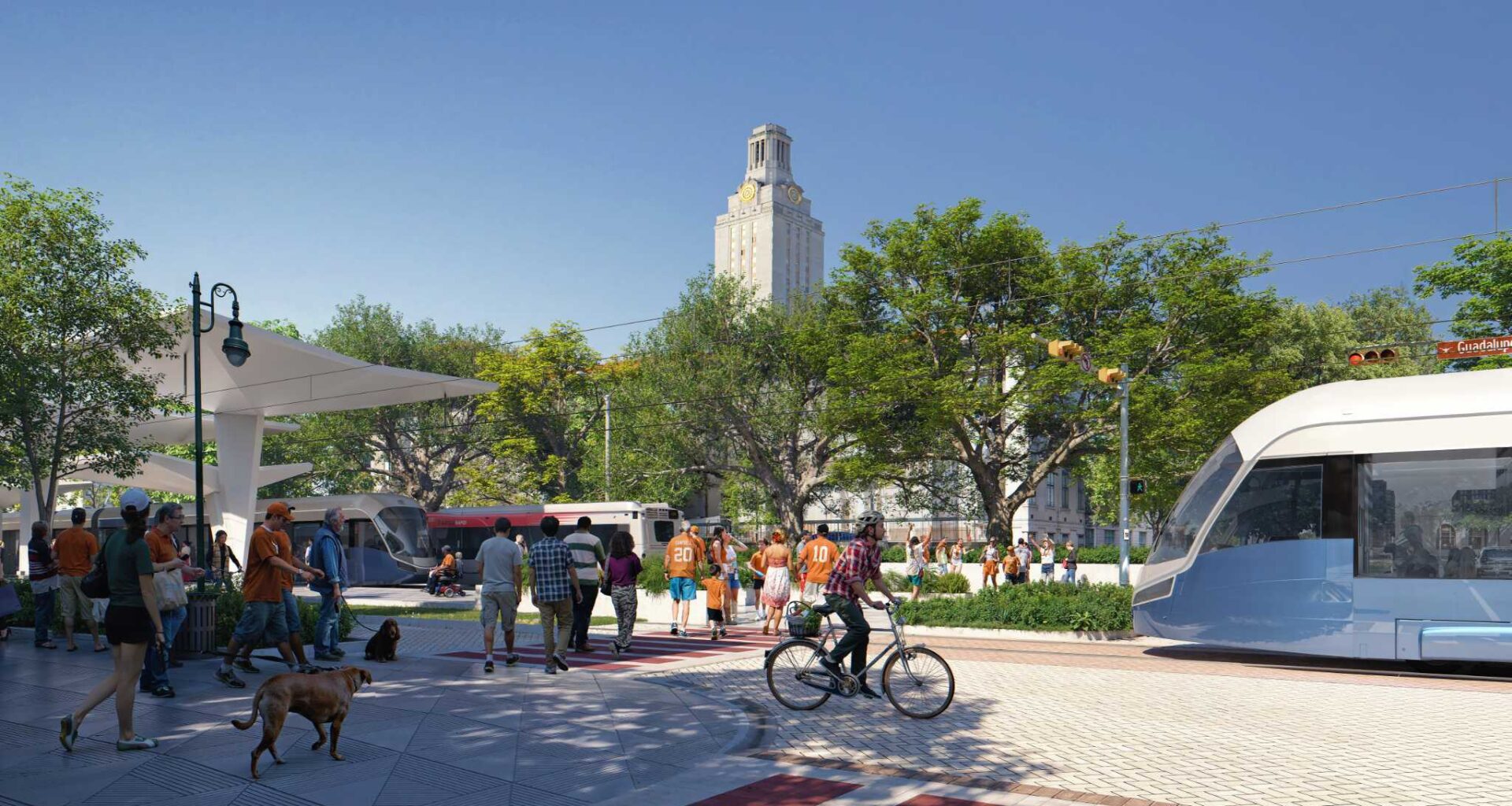
An ambitious plan to run a light rail line through the heart of Austin cleared a major federal hurdle Friday, nudging the long-delayed project closer to reality — even as big questions linger around the fate of the $7.1 billion initiative.
The Austin Transit Partnership, which is designing the system as part of Project Connect, received a key approval from the Federal Transit Administration: a so-called “Record of Decision” on the project’s environmental study. The sign-off clears the way for more detailed design work and early preparations along the 9.8-mile rail corridor.
The decision doesn’t lock in the roughly $4 billion in federal funding ATP is seeking. But it does confirm the project meets federal environmental requirements and gives the agency permission to press ahead, said ATP CEO Greg Canally.
“The federal government has given us a green light to keep advancing the project into its preconstruction activities,” Canally told the Statesman. ATP expects to select its main contractors in the first few months of the year.
“It gives us confidence to go ahead and award construction contracts,” Canally said. “That lets us start getting ready for early construction work, like utilities.”
The primary design-build contract alone is expected to cost upwards of $3 billion, the Statesman has previously reported.
The finalized environmental plan also reflects several recent design changes, including the addition of a fourth downtown station, the location of a new bridge over Lady Bird Lake and fewer impacts to nearby homes than earlier versions of the plan.
As it’s currently proposed, the light rail system would stretch from 38th to Oltorf streets, while another branch would take passengers from near Lady Bird Lake to just inside State Highway 71 near — but not to — Austin-Bergstrom International Airport. Future extensions could bring rail farther east to ABIA, and farther north to the Crestview area, but those are dependent on hypothetical funding.
Friday’s decision marks another step toward securing billions in federal grants and follows a “medium-high” viability rating from the FTA just weeks ago, signaling federal confidence as the project competes for funding.
Canally said the environmental review moved at an unusually fast clip. The study was completed in under two years — a rarity for major transit projects, which typically take five to seven years to clear the process. The pace keeps ATP on track to begin construction work in 2027, he said.
Still, major obstacles remain. The project has faced repeated delays and was significantly scaled back as costs soared. And next month, the Texas Supreme Court will hear arguments in a lawsuit that could decide whether the project’s funding mechanism is legal.
“But none of that has stopped us from progressing the work,” Canally said. “We’re doing it. Light rail is coming to Austin.”