
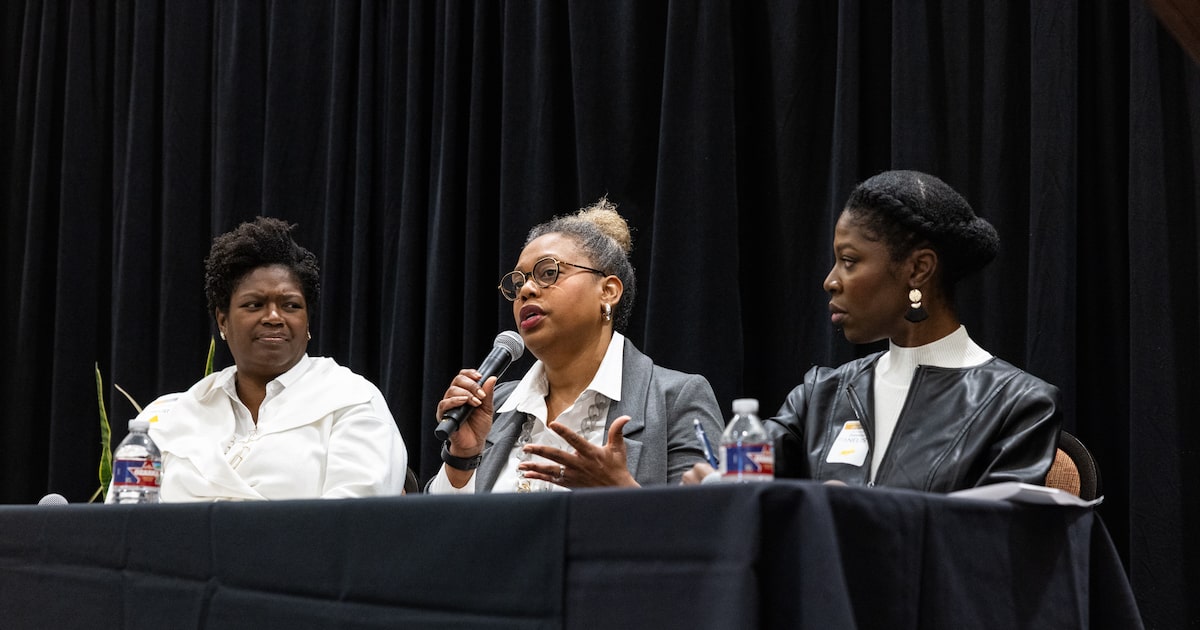
The city of Dallas is building a comprehensive “community opportunity index” in an effort to actively identify and address where investments and policies can most effectively close gaps in education, employment, housing and health.
Dallas leaders shared details Friday during the city’s first Drivers of Opportunity Symposium, which builds upon a framework Dallas City Council adopted last year to shift policy conversations from highlighting problems to prioritizing solutions.
City leaders want to address the long-persisting disparities many residents face in education, employment, housing, and health, said Jessica Galleshaw, Dallas’ deputy director for housing and community empowerment and chief opportunity officer. Doing so is essential if Dallas wants its residents to participate in North Texas’ booming economy amid its explosive population growth.
The push for the drivers of opportunity framework began early last year, when federal directives pressured Dallas and other cities to limit or end certain diversity, equity, and inclusion policies or risk losing grant funding.
Political Points
Related
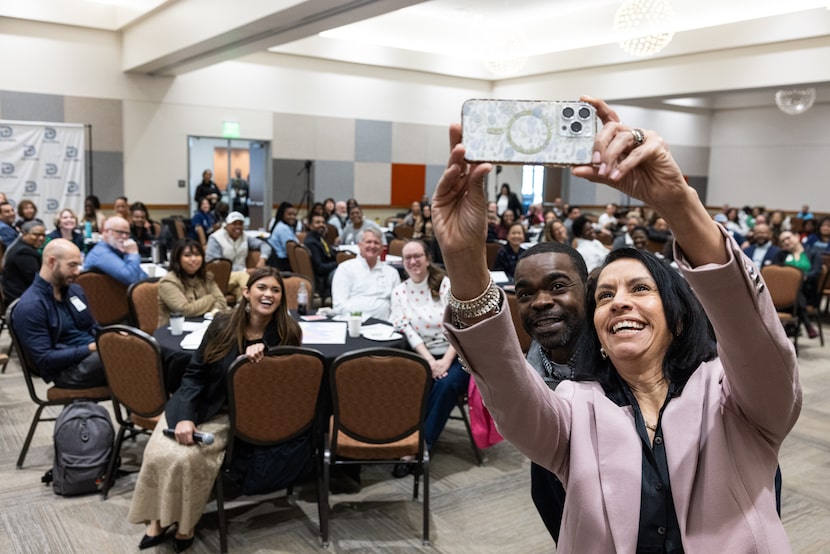
Assistant City Manager Liz Cedillo-Pereira and council member Zarin Gracey take a selfie with the crowd after speaking at the Drivers of Opportunity Symposium hosted by the city of Dallas on Friday, Jan. 16, 2026.
Angela Piazza / Staff Photographer
In response, the Dallas City Council ordered a review and overhaul of city policies to comply with federal rules while preserving efforts to boost residents’ economic mobility and well-being. City leaders convened a task force, conducted department-wide assessments, and worked with executives from local institutions to create a new strategic direction.
Drawing on research from national organizations such as the Urban Institute, the resulting framework focuses on five core “drivers of opportunity”: gainful employment, high-quality education, opportunity-rich neighborhoods, healthy environments with access to health care, and public safety and well-being.
“Even though a lot of people are doing really well, that’s not true for everyone,” Galleshaw said. “What we really want to drive is a solution to that.”
Galleshaw said she hopes the community opportunity index will feature a mix of public data from city departments and data from the city’s partners to help leaders make informed decisions. The city is also planning to gather data and community feedback from the symposium to guide investments into the roadblocks residents face.
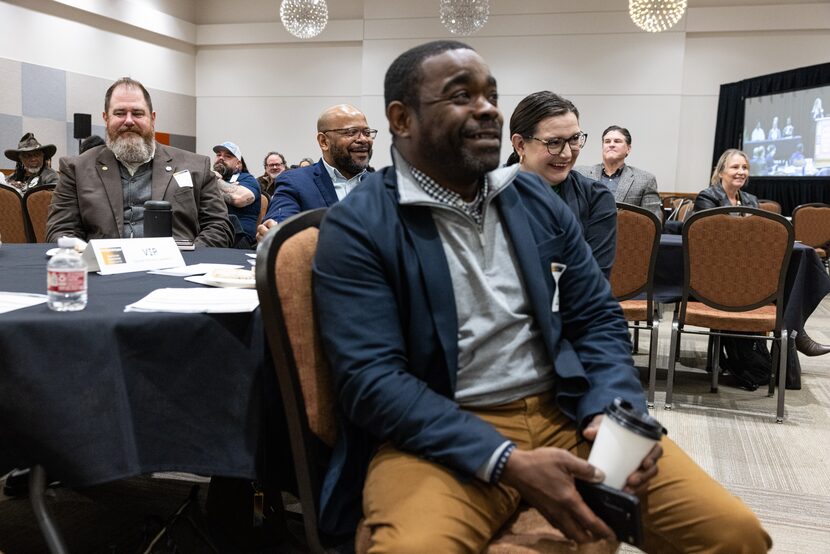
City housing officials (from left) Thor Erickson, James Armstrong III, and Jessica Galleshaw sit behind City Council member Zarin Gracey at the Drivers of Opportunity Symposium hosted by the city of Dallas on Friday, Jan. 16, 2026, in Dallas.
Angela Piazza / Staff Photographer
That matters, because Dallas City Manager Kimberly Bizor Tolbert has urged leaders among the “large anchor institutions across the community” to think about ways to bolster the work already underway to help the most in need, to ensure all Dallasites have access to opportunities for economic mobility, Galleshaw said.
Participants broke out into small groups to share feedback and ideas on the main drivers influencing opportunity in Dallas, focusing on topics like employment, high-quality education, neighborhoods, health, and public safety. At the employment table, one attendee stressed that getting more residents employed creates a bigger tax base for the city, creating more stability and healthier outcomes in the long term.
Education feedback emphasized broad access and lifelong opportunities. One participant said education initiatives should also focus on older adults and children prior to preschool. Attendees also said digital access and mental health play a major role in equitable education.
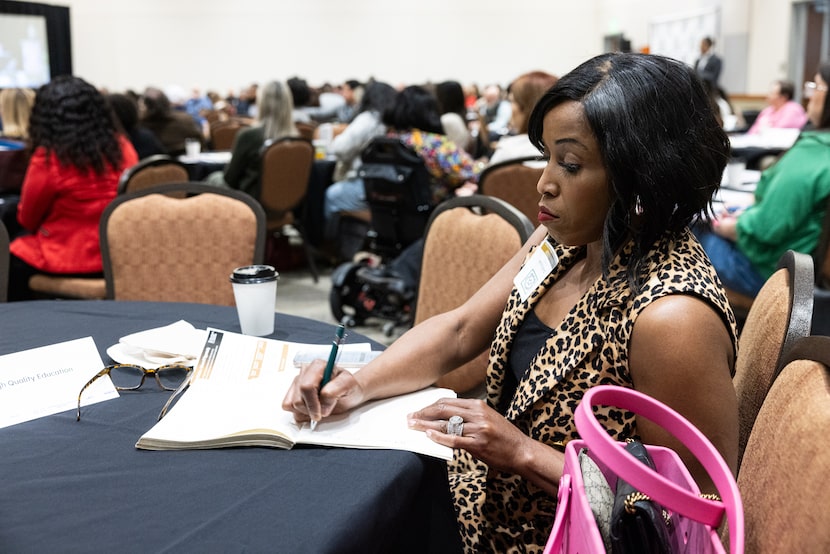
Tiwangi Hillard takes notes during the the Drivers of Opportunity Symposium hosted by the City of Dallas on social media on Friday, Jan. 16, 2026, in Dallas.
Angela Piazza / Staff Photographer
Among nonprofit leaders was Shannon Hendricks, executive director of Heart House Dallas. The organization supports refugee, immigrant and low-income children and families in the Vickery Meadow area with a focus on mental well-being, trauma, and literacy.
Hendricks said the event illustrated the value of being resilient in their mission. Not just for her organization, but for everyone striving to create better lives for the people of Dallas.
“The work we do is important, and change does not happen overnight,” Hendricks said. “We have to keep in mind that small impact happens every day with the work that we do, and that eventually leads to big impact. And just because the words change, our work does not change.”
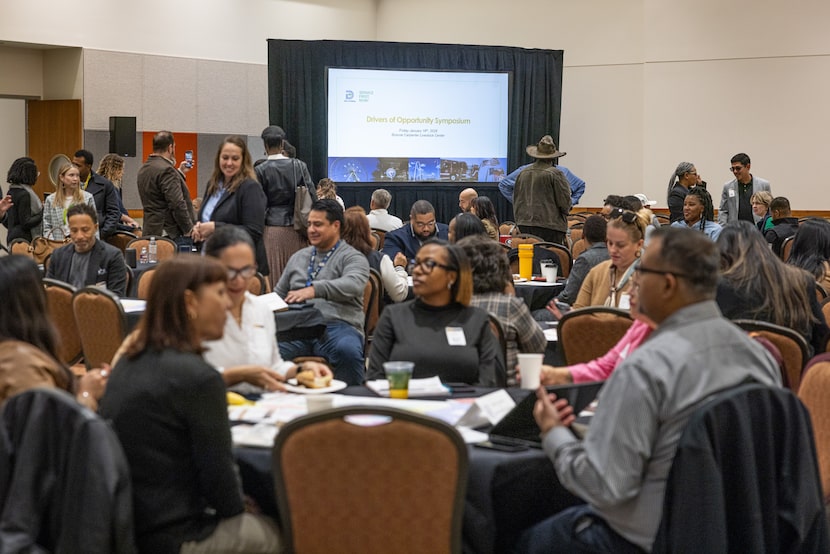
City officials and community stakeholders gather for the Drivers of Opportunity Symposium hosted by the City of Dallas on Friday, Jan. 16, 2026, in Dallas.
Angela Piazza / Staff Photographer
This reporting is part of the Future of North Texas, a community-funded journalism initiative supported by the Commit Partnership, Communities Foundation of Texas, The Dallas Foundation, the Dallas Mavericks, the Dallas Regional Chamber, Deedie Rose, Lisa and Charles Siegel, the McCune-Losinger Family Fund, The Meadows Foundation, the Perot Foundation, the United Way of Metropolitan Dallas and the University of Texas at Dallas. The News retains full editorial control of this coverage.
Dallas workforce program helps students build more than just careersLooking for a job in Dallas? Fair Park was the place to meet, interview, get hired