
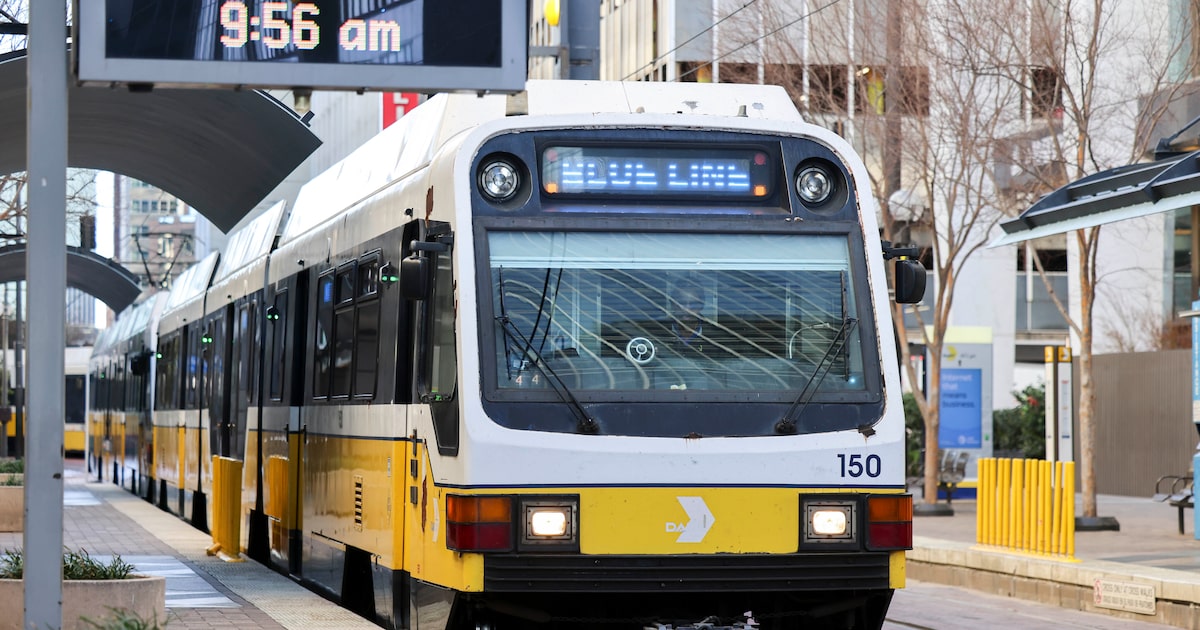
Five North Texas cities face a shrinking window to stop elections that could sever their ties with the Dallas Area Rapid Transit system.
Plano, Irving, Farmers Branch, Highland Park and University Park have scheduled May 2 elections to ask voters if they should dissolve DART in their cities — an opportunity that, by state law, comes once every six years. More cities could follow suit.
DART counters that a withdrawal vote would mean instant losses for riders, from closed rail stations to eliminated bus, GoLink and paratransit service.
“A significant part of DART customers and our service connects the 13 cities that DART operates, and those connections would likely be broken,” said Rob Smith, the agency’s vice president of service planning and scheduling for DART. “The numbers are in the hundreds, in some cases large hundreds, in terms of the passenger impacts.”
Breaking News
Cities have until March 18 to cancel elections, but county elections offices would need to be notified in late February to take the measure off the ballot, according to Plano officials.
With just over a month to come to a compromise, DART’s future hangs in the balance. The votes could determine whether DART remains a unified regional system or fractures city by city, with consequences for riders, traffic congestion and mobility across North Texas.
Leaders in five of DART’s 13 member cities have said the sales tax they contribute to the agency far exceeds the value of services the system provides, and have qualms with the system’s governance model that favors Dallas.
Many are considering alternatives like Via, the on-demand microtransit service Arlington uses, which they hope will fill the gap should they leave the region’s public transportation system.
Advocates, seniors and the disabled community have decried the loss of a strong regionwide transit network, changing paratransit services and expected traffic increases in North Texas. The potential slash to service would constitute a drastic blow to the regional system at a time when transportation planners say North Texas needs more options to get around.
Related

Joy Hinkelman, executive director for the Wellness Center for Older Adults in Plano, said DART had work to do to improve paratransit services. But she hopes cities and the agency can salvage their relationship.
“DART needs the cities, the cities need DART,” she said. “I would just love to see everybody sit down at the table … and find a mechanism that works.”
What’s at stake
Ahead of calling a March public hearing to outline potential service cuts for DART riders, the agency released its most detailed account of what post-exit election service could look like. Service in cities that cut ties with DART would end the day after votes are canvassed.
Canvassing is the official examination of the votes and can take place three to 11 days after the election.
Anthony Ricciardelli, who represents Plano on the DART board, said at the agency’s board meeting Tuesday it was premature to consider calling a public hearing on potential service changes.
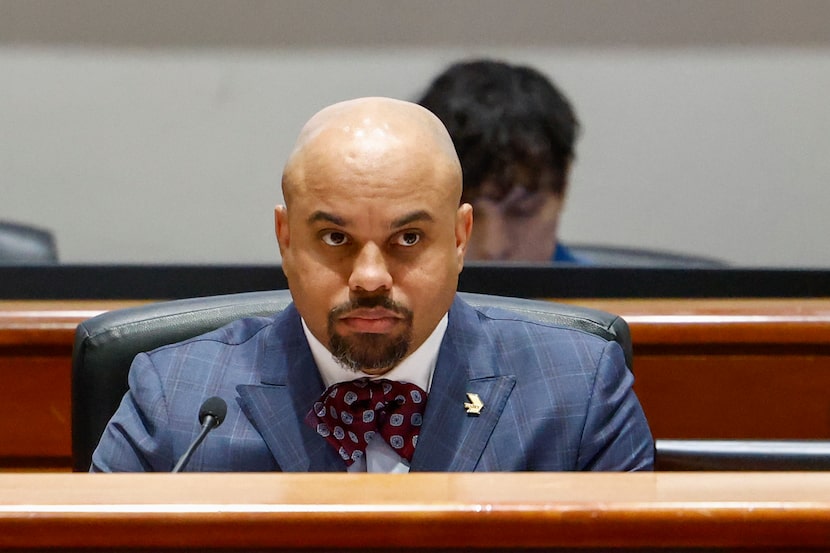
DART Board Chair Randall B. Bryant listens to a speaker during a DART board of directors meeting, Tuesday, Jan. 13, 2026, in Dallas.
Elías Valverde II / Staff Photographer
“Since these pullout elections were called, we haven’t had a single discussion about how to resolve member city concerns,” Ricciardelli said in his comments to the board. “Instead, we’re talking about calling a public hearing for two and a half months from now.”
DART CEO Nadine Lee said DART has a “statutory requirement” to inform riders of potential changes to service.
Irving, Farmers Branch and Plano have told DART what it would take for them to call off elections. The proposals include lists of demands for changes like a phased return of sales tax, improved security at stations and changes to service, including discontinuing fixed bus routes and GoLink services.
Bryant said he is planning to formally consider the terms soon but said they are not fully fleshed out yet. Plano, for example, resent an updated proposal months after their initial letter. The agency also needs to work out what those compromises would mean.
“What will be the outcomes of the proposals if we were to implement them?” Bryant asked. “We are doing the work to try to figure that out, and once we do, we will present it to the board.”
Related

Some DART board members also shared concerns that the agency is not sharing information about what alternative transit options cities may implement in lieu of DART services. Ricciardelli said to the board he had concerns the agency could “give the misleading impression that there will be no public transit in the withdrawing cities if the withdrawal elections pass.”
DART’s projection of pending cuts, should several cities leave, included changes to about 800 bus stops, 13 GoLink zones and more than a dozen rail stations. Irving Mayor Rick Stopfer, who serves on the DART board, accused the agency of fearmongering.
“If we’re serious about taking care of people, you skip over the scare tactics, and you deal with the real issues,” said Stopfer. “You don’t scare people.”
State of negotiations
Member cities remain in negotiations with DART on changing the agency’s governance and funding structure. Over the past few months, a group of member cities, DART staff, the North Texas Commission and the North Central Texas Council of Governments has met regularly to address the issues driving both sides apart, according to Bryant.
Related

DART is evaluating what kind of sales tax reduction it could withstand to offer relief to cities, he said, in order to develop a funding proposal.
Bryant has also asked Dallas Mayor Eric Johnson to consider putting DART governance to a vote. Dallas effectively holds the voting control of eight of the DART board’s 15 seats, according to Bryant. He hopes to see support for a “one city, one vote” model of governance and ensure that no one city has control over the board.
“As the principal municipality of DART and the leader of our region, Dallas’s engagement is essential,” Bryant wrote in a letter to Johnson dated Jan. 6. “It is widely understood that this effort cannot move forward without Dallas’s formal input and leadership on this governance issue.”
Future of Microtransit
Leaders in Plano, Irving and other cities in North Texas are contemplating what their transit futures could look like without DART.
Plano has budgeted $4 million for a six-month contract with a transportation vendor, such as RideCo or Via, and plans to add microtransit services regardless of the outcome of the May election. The city wants to keep service continuous, then reevaluate the contract in the fall.
Plano paid $116 million to DART in the 2023 fiscal year, according to agency documents.
Related

Arlington has contracted with Via since 2017. RideCo, an on-demand microtransit and paratransit software, is used in Houston, San Antonio and Round Rock.
“It’s really important that we do get the pilot program in place,” said Plano City Council member Julie Holmer at a council meeting. “I don’t want to wait until May. I would like to make sure that we have an opportunity to work out any kinks.”
Plano’s Collin County Connects Committee, a citizen group the city created to evaluate transportation options and providers, didn’t come to a consensus on a recommendation.
Some members expressed frustration with the scope of the committee and wished the council would reject alternative transit altogether in favor of remaining in DART.
Related

Irving’s mayor said they’ve also met with Via and Uber and are considering a microtransit option. He has pledged not to forget about the paratransit riders who rely on public transportation.
“Even if our residents don’t vote out of DART, we’re going to spend our own money to take care of people,” Stopfer said.
Leaving DART means disconnecting from the region, Bryant said, and he does not believe microtransit on-demand services can replace DART to fulfill riders’ transit needs.
“They don’t even adequately serve the transit needs of the cities that they currently are in,” he said.
Plano residents like Alex Flores and others in the region have complained about the shortfalls of microtransit, including road congestion and long waits.
Related

“With microtransit services like Via in Arlington, all I can think of is terrible,” Flores told Plano’s council in November. “I have been stranded in Arlington multiple times using their microtransit services to the point that I have not gone back.”
With a looming deadline and a growing list of cities considering a withdrawal election — Addison’s council is still debating membership — the pressure is mounting. Bryant said it’s “a delicate balance” for the agency.
“We should be looking for solutions that work for all 13 cities,” Bryant said. “… Not making any decisions to keep or retain a city at the expense of a city that has not called for a withdrawal election.”