
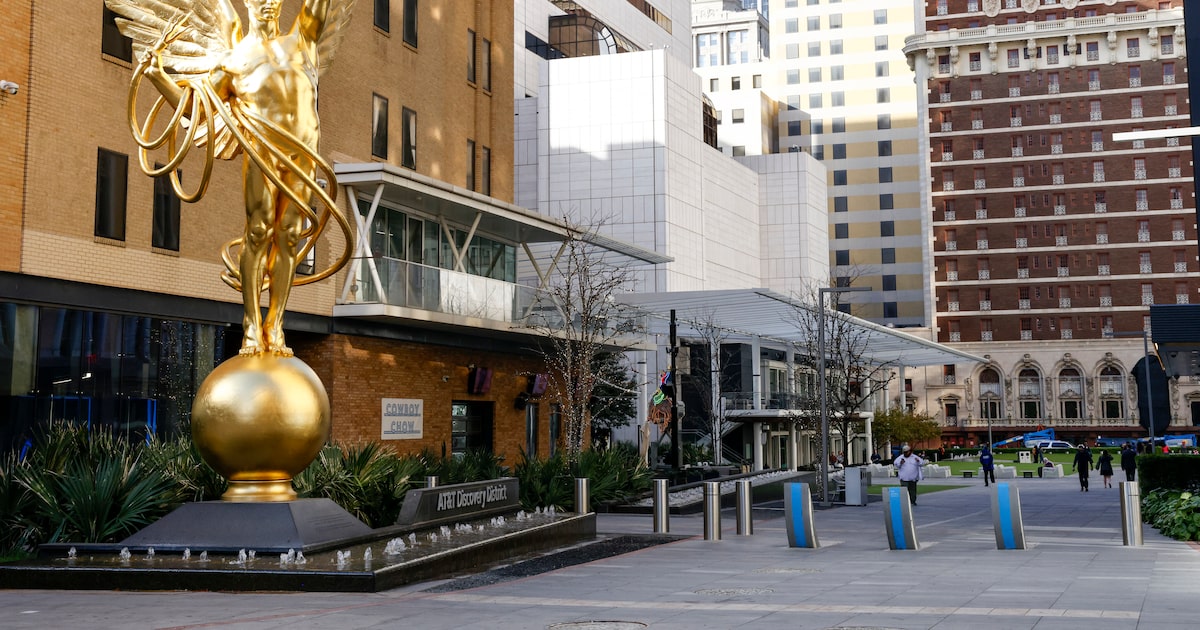
Downtown Dallas has the bones of a great city center: unmatched access, cultural assets, iconic towers, major employers and a history of reinvention. What it often lacks, especially after work hours, is the lived experience that makes a place feel not merely functional, but magnetic.
We tend to talk about downtown investment in familiar categories: safety, transportation, housing, office occupancy, retail. Those are essential. But there’s a missing category that quietly determines whether all the others succeed: inspiration.
A high-performing city must also be an inspiring city. And inspiration is the product of daily encounters with beauty: beauty in public spaces, in street-level life, in lighting and shade, in materials, in the care of the landscape, in the warmth of gathering places, in the presence of art and the choreography of human movement. When those elements are present, people don’t just pass through downtown. They choose it. They bring friends. They linger. They return. They invest.
Beauty is a multiplier
We often treat beauty like frosting: nice to have once the “real” problems are solved. But beauty functions more like yeast: It helps the whole system rise.
Opinion
A downtown that feels cared for and thoughtfully designed encourages behavior that is more respectful, more social and more civic-minded. It supports the small rituals that make public life work: a lunch outside, a stroll after a show, a spontaneous conversation on a bench, a parent letting a child run ahead without fear. These are not luxuries. They are the building blocks of trust, belonging, and shared identity — things our civic life desperately needs.
When downtown is beautiful, the city’s identity becomes visible. It says, without words: “We are a place that values human life — everyday life — not just transactions.”
And that message has consequences. It affects whether a talented young professional chooses to stay, whether a company decides to recruit here, whether a visitor becomes an ambassador, whether a resident feels pride rather than resignation.
The next era of downtown investment is experiential
We are living through a shift. Downtowns across the country are being re-evaluated because work patterns have changed. The winning response is not to cling to an old model. It is to build a new one.
Experience is what cannot be downloaded. It’s what draws people out of their homes and into the public realm. It’s what makes the city feel alive on a Tuesday evening, not just a Friday night after an event.
The environments we inhabit shape who we become. A city that surrounds us with harshness, neglect and dead zones subtly trains us to lower expectations — about what we deserve and about what we owe each other. A city that surrounds us with care, harmony and delight does the opposite. It trains attention. It trains patience. It calls us upward.
Beauty is not merely aesthetic. It is formative. It strengthens the inner life that supports the outer life. It makes it easier to be the kind of neighbor — and citizen — we hope to be.
When you invest in beauty downtown, you are investing in civic character.
What this looks like in practice
In downtown Dallas, beauty-focused investment looks like this:
Pedestrian-forward ethos: broad, clean, uncluttered sidewalks and crosswalks, and informed wayfinding connecting downtown attractions and points of interest.Street-level comfort: shade, trees, seating, water and the simple hospitality of places built for people to pause, not just pass through.Nighttime dignity: lighting that makes downtown feel safe and welcoming, not glaring or dim. A nighttime environment that invites presence.Updated technology: broadly accessible Wi-Fi and plentiful intelligent security cameras.Design excellence where people actually touch the city: corners, crosswalks, plazas, entries, storefronts, signage and materials that communicate quality and care.Art integrated into daily life: not as an afterthought, but art that becomes a reason to walk, gather and return. Art that helps tell Dallas’ story.Stewardship as a promise: beauty that is maintained. A downtown that looks loved because it is loved.
None of this replaces the fundamentals. It amplifies them. When a downtown feels inspiring, every other investment works harder.
A challenge for Dallas
This is where civic leaders, donors, philanthropists and institutional partners can make a defining difference. Government can build and maintain core infrastructure, but the leap from adequate to extraordinary requires civic philanthropy. Nonprofits can fund what budgets and bureaucracies often struggle to prioritize. The highest forms of public life have always been co-created.
Dallas is not short on ambition. The question is what kind of leadership we want now.
Do we want downtown to be merely productive? Or do we want it to be inspiring — an environment that elevates the lives of residents, attracts the best talent, anchors civic pride and becomes a national model for what a city can feel like?
The best cities in the next decade will be the ones that treat the public realm as a moral and cultural project, not just a logistical one.
It is time for Dallas to invest accordingly.
Kyle Ogden is president and CEO of the Thanks-Giving Foundation.