
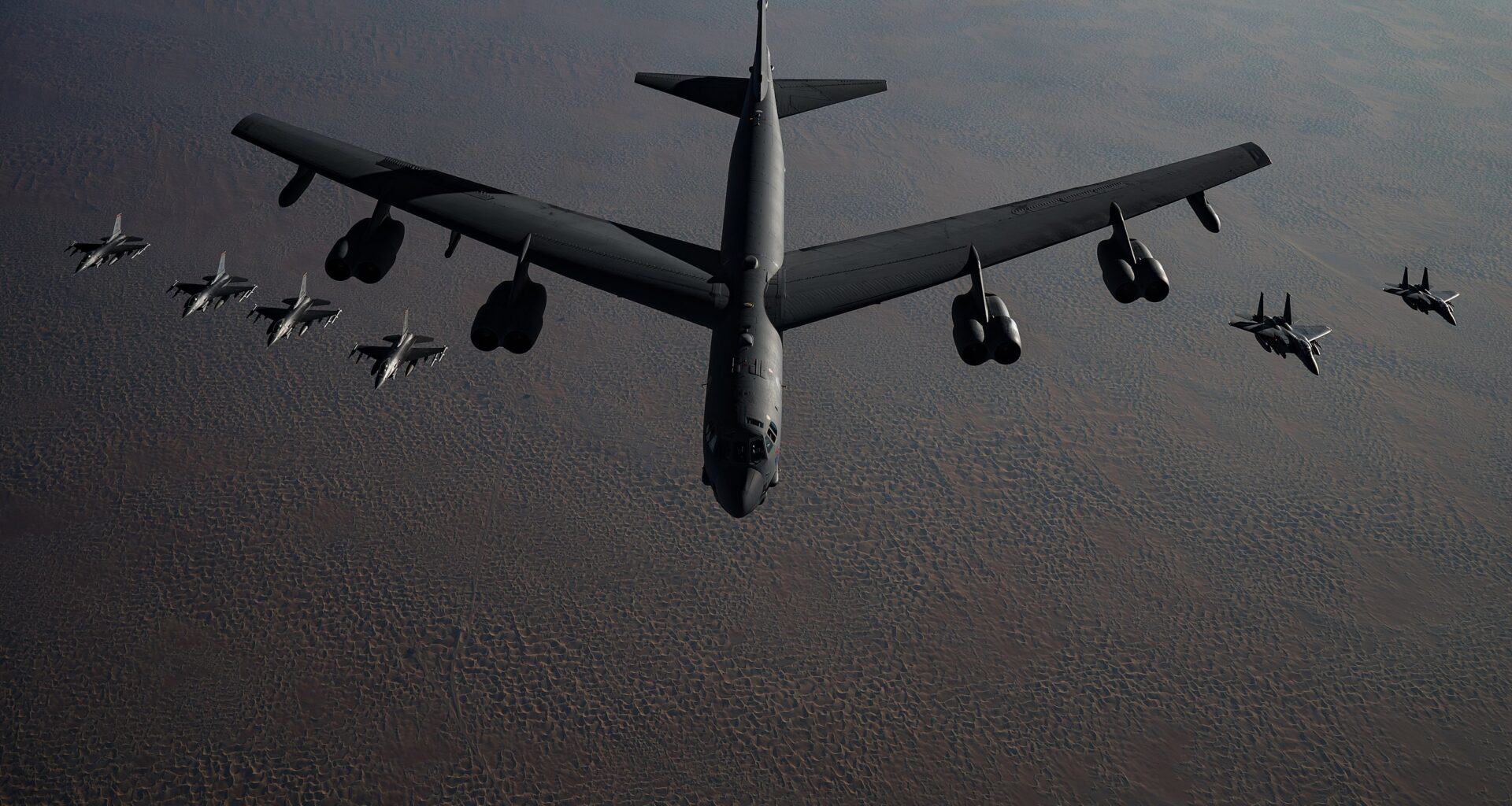
The B-52 Stratofortress has been used by the U.S. military for 70 years. A project at Boeing San Antonio could see the aircraft used through 2050.
The U.S. Air Force awarded Boeing a $2 billion contract to continue building new engines for the B-52 on Dec. 30. Boeing will install those Rolls-Royce engines on two test aircrafts at its modification facility at Port San Antonio, according to a Jan. 6 press release.
“The modifications will also improve reliability, streamline maintenance, lower life-cycle cost and enable longer missions — all things that directly support the warfighter,” according to Boeing. The company will test the new engines before they go into mass production for other B-52s.
A Department of War contract announcement said the work is expected to be completed in 2033 and will also take place at facilities in Oklahoma City and Seattle.
Port San Antonio staff were optimistic about Boeing’s success and praised the company and its San Antonio workers.
“The Port’s economic impact will grow as Boeing and our other customers continue to expand. Equally important, it highlights how San Antonio — and especially the talent at Port San Antonio — can bring solutions to complex problems by harnessing capabilities across sectors including signals, cyber, aviation and automation,” said Port San Antonio President and CEO Jim Perschbach. “We are thrilled for Boeing and the opportunities this contract will bring to its current people and those that Boeing will hire in the near future.”
According to the U.S. Strategic Command, the upgrades also include improving the B-52’s radar system and adding a new missile launch system.
In 2023, Boeing won a $367 million contract to work on the B-52 bomber’s radar systems in San Antonio.
The upgrades will result in the Air Force designating a new version of the B-52. The current iteration, a B-52H, had been in service since 1961. The new model will be called a B-52J.
According to the Air Force Nuclear Weapons Center, the plane can carry nuclear weapons and fly up to an altitude of 50,000 feet.