
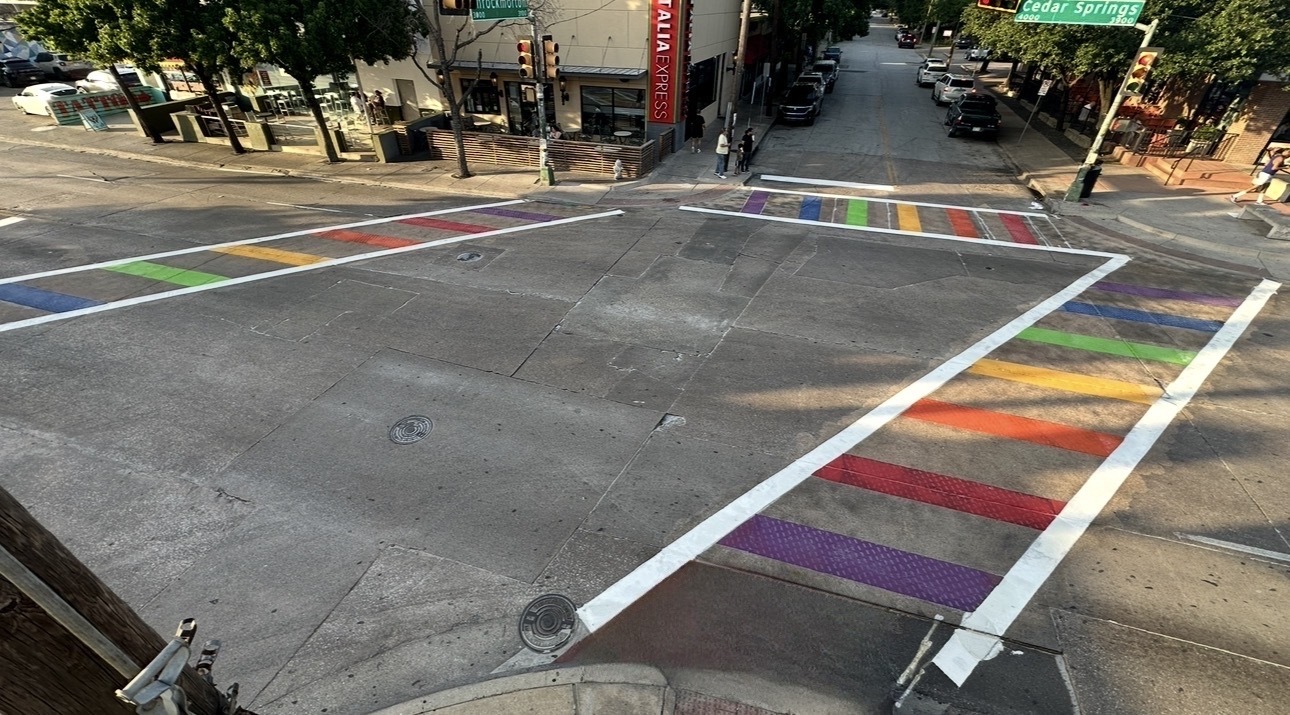
Because Dallas waited until the last day to file for an exemption to an order to remove its rainbow crosswalks, Dallas is the last Texas city to get a final order to remove them. The city has until January 31 to remove them or face a loss of state and federal road funding.
The order says the rainbow crosswalks do not meet “uniformity standards” and, although safety has increased where the crosswalks have been installed, they didn’t have a licensed engineer’s safety seal.
In addition to the rainbow crosswalks, Dallas will have to remove Black Lives Matter crosswalks on Martin Luther King Jr. Boulevard. It couldn’t have been racism that the order came on MLK Day.
Other “nonconforming” crosswalks are in University Park where an SMU Mustang set of crosswalks have been installed, Uptown on McKinney at Lemmon Ave East where a patterned crosswalk was installed years ago and Bishop Arts where crosswalks, lighting and landscaping are credited with that shopped mecca’s finally taking off after 20 years of fits and starts.
Nothing is stopping the Cedar Springs Merchants Association from painting the sidewalks rainbow colors or projecting rainbows onto the street. The order just says we can’t have painted rainbows and they have to be removed.
“The forced removal of the rainbow crosswalks is an intentional act of erasure, plain and simple,” said LGBTQ Chamber CEO Tony Vedda. “These crosswalks were never a safety issue. They were 100 percent privately funded and used NO tax dollars for the installation. The crosswalks are being targeted because they represent LGBTQ+ visibility in a state that continues to politicize our existence. Stripping them away sends a chilling message that our community’s contributions to society and presence is conditional and expendable.”
“The removal of the rainbow crosswalks is disappointing for many of our local businesses,” said Cedar Springs Merchants Association President Kevin Miller. “The crosswalks have become a recognizable feature of the Cedar Springs neighborhood and help reinforce the district’s identity as a welcoming destination for customers and visitors. Anything that diminishes that sense of place has a real impact on how people experience and support this neighborhood.”
— David Taffet
Related