
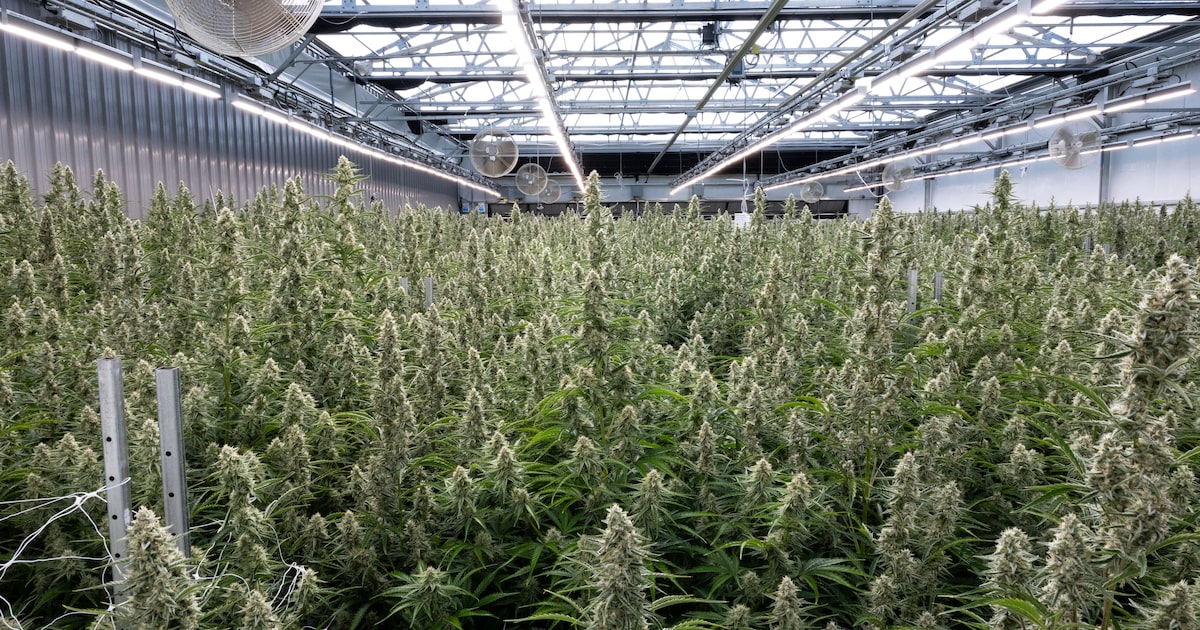
Texas’ medical marijuana program has been growing since state lawmakers approved its expansion last year. Here’s what you need to know about the drug, how it’s being used and what science says about its effectiveness.
What is medical marijuana?
Medical marijuana is state-regulated cannabis approved for certain medical conditions. In Texas, the prescribing health professional and patient must be registered in the state’s Compassionate Use Registry. The registry had over 135,000 patients listed by their physicians at the end of last year, 32% more than the previous year, according to the Texas Department of Public Safety, which administers the program.
Although the terms cannabis and marijuana are often used interchangeably, they are not the same. Cannabis refers to all products made from the Cannabis sativa plant. Marijuana, meanwhile, is any part of the plant — or product made from it — that contains higher levels of tetrahydrocannabinol, or THC, the compound known for causing feelings of euphoria and relaxation.

(From left) Field organizer Ejai Wren and campaign manager Tristeza Ordex from Ground Game Texas collect signatures for a petition to decriminalize marijuana possession at Oak Lawn Branch Library on Super Tuesday, March 5, 2024, in Dallas.
Juan Figueroa / Staff Photographer
News Roundups
THC is one of more than 100 chemicals in marijuana known as cannabinoids. Another widely known and active cannabinoid is cannabidiol, or CBD, which is not psychoactive. CBD can also be derived from the hemp plant, a cousin of marijuana, or manufactured in a laboratory.
What is medical marijuana being used to treat?
It is being used to treat symptoms such as pain, nausea and insomnia, but not the diseases or conditions causing those symptoms, said Dr. Sina Najafi, an integrative medicine physician who runs a Texas-based telemedicine practice called Zen Cannabis Clinic. Najafi has been prescribing it since 2021 for people with conditions such as Crohn’s disease and inflammatory bowel disease.
It is also available to Texas patients with chronic pain disorders, terminal illnesses, multiple sclerosis and traumatic brain injury, according to the state’s Occupations Code.
How is medical marijuana given?
Any permanent Texas resident with a qualifying condition can get medical marijuana through a physician registered in the state’s Compassionate Use Program.
Related

There are currently three dispensing organizations authorized in Texas: Texas Original, goodblend and Fluent. In December, the Texas Department of Public Safety issued conditional licenses to nine new medical marijuana distributors, with three more to come by April 1. These companies aren’t allowed to do business until they receive full approval by the state, as outlined in House Bill 46, which expanded the compassionate use program last year.
If all the new dispensaries are approved by the state, there will be 15 total in Texas, an expansion that supporters of the program told The Dallas Morning News will hopefully increase access to medical marijuana for patients.
Related
Najafi said medical marijuana comes in edibles or under-the-tongue tinctures — whichever route a person is most comfortable with. Under HB 46, physicians registered with the state’s Compassionate Use Program can now also prescribe medical marijuana inhalers. These are for patients who can’t take medical marijuana orally or ingest it, Najafi said. He added smoking it can pose significant health risks, particularly to the lungs.

Christy Zartler, left, joins members of the Texas-based group called Mothers Advocating for Medical Marijuana for Autism, or MAMMA, at the Texas Capitol on Wednesday, March 15, 2017, in Austin. The group, which includes the Zartler family, wanted the Texas Legislature to pass a bill that would legalize cannabis for autistic patients. (Smiley N. Pool/The Dallas Morning News)
What does scientific research say about medical marijuana?
Federal restrictions have stymied research into marijuana, said Francesca Filbey, a neuroscientist and professor of psychology at the University of Texas at Dallas. Filbey studies how cannabis use affects sleep, pain and mood disorders such as anxiety and depression.
One major barrier is marijuana’s classification as a Schedule I substance — in the same category as heroin and LSD — which makes it difficult for researchers to access and study it. Scientists typically must obtain a Schedule I research license and use cannabis from a lab authorized by the National Institute on Drug Abuse. And when studying marijuana’s effects in people, researchers can’t simply hand out a joint or edible and track what happens. Instead, they often rely on animal studies or recruit people who already use marijuana.
“Because we’re only able to do observational studies, it limits what we can say about cause and effect,” Filbey said. “We can’t tell people to use or not use.”

Francesca Filbey is a neuroscientist and professor of psychology at UT Dallas.
UT Dallas
Research suggests cannabinoids such as THC and CBD interact with the endocannabinoid system, a molecular network found throughout the body that supports homeostasis, or biological balance. Evidence of marijuana’s benefits has been mixed, however, and effects can vary depending on the product, dose and person.
In Filbey’s research, she and her colleagues have found people who develop cannabis use disorder — addiction to cannabis — tend to report poorer sleep and memory.
Related

Other research has found cannabis may provide nausea relief and improve depression, although separate studies suggest repeated cannabis use may worsen symptoms. A 2024 study found repeated cannabis use among veterans with traumatic brain injury appeared to increase the risk of early-onset cognitive disorders such as dementia. And a 2017 review of scientific literature found some “low-strength” evidence that cannabis can alleviate pain related to nerve damage, but noted there was insufficient evidence on how marijuana affects other types of pain.
Najafi and Filbey are hopeful researchers can soon fill in gaps in scientific knowledge after President Donald Trump signed an executive order in December to expedite the reclassification of marijuana as a Schedule III drug. This would put it on par with ketamine and other drugs defined as having a “moderate to low potential for physical and psychological dependence,” making it easier for scientists to do research.
“People are reporting benefits, so there is something there,” Filbey said of marijuana use. “We just need to figure out who those people are, what makes them respond well and what are the potential side effects we need to be aware of.”
Miriam Fauzia is a science reporting fellow at The Dallas Morning News. Her fellowship is supported by the University of Texas at Dallas. The News makes all editorial decisions.
 In southern Dallas, Girl Scouts launches DreamLab to spark STEM curiosity
As the 113-year-old organization reimagines itself, it hopes to introduce more girls in underserved communities to resources to STEM.
 What’s the scientific difference between snow and other types of winter precipitation?
A lot depends on the changing air temperature from the clouds to the ground.
 From lab to liver: UT Southwestern awarded $25M to 3D print organs
The federal award supports efforts to grow organs for transplant and other research.
 Dallas researchers get $2.3M to study rare childhood disease
The five-year study will explore why damaged bone fails to heal, and how that process might be reversed.