
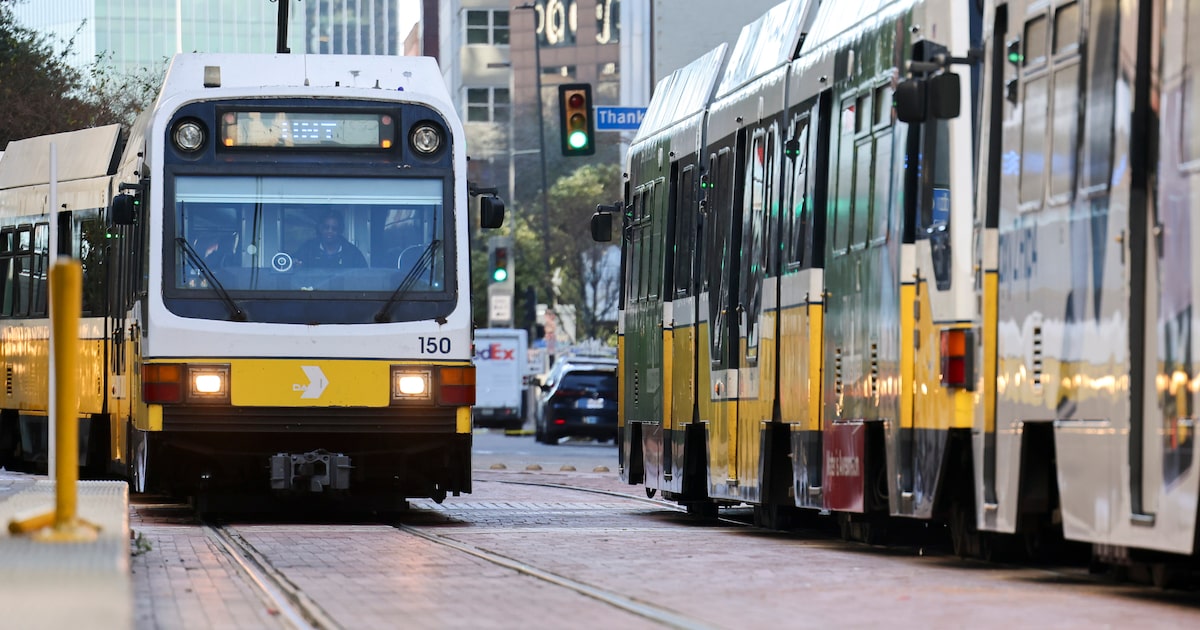
Dallas City Council members were split Tuesday on conceding power to try to save Dallas Area Rapid Transit.
At stake: an attempt to appease suburban member cities who say they don’t have a fair seat at the table.
The debate among Dallas leaders comes as the agency tries to balance a suburban mutiny with the system’s Dallas-centered governance model, funding pressures and calls for reform to its service.
As cities seeking an exit call for a greater distribution of power on DART’s board, some Dallas leaders were against giving up control of half of the votes.
Breaking News
Related

“There’s a reason that DART starts with a ‘D,’” Dallas City Council member Cara Mendelsohn said at the council’s Transportation and Infrastructure Committee meeting.
The committee, made up of seven of the council’s 15 members, narrowly passed a motion to accept principles regarding DART’s governance, funding and service and recommend the city keep half, or close to half, of the votes on the agency’s governing body.
The committee reviewed the state of talks between member cities and DART as five of DART’s 13 member cities near deadlines to call off May exit elections. Cities have until the end of February to take that measure, and other cities are considering calling elections of their own.
For several months, a group of city managers and DART leaders has met to discuss governance, service and funding options, with members from Dallas, Garland, Rowlett, Irving, Plano and Richardson joining the conversations, according to Dallas city documents.
Related

The working group has not come to firm consensus on all fronts but has developed a framework of shared goals — among them, a “one city, one vote” baseline for representation, with no city having a single majority vote.
Dallas currently holds seven full seats on DART’s 15-member board of directors, and Garland, Irving and Plano each holds one.
The other five seats are divided proportionally between the remaining cities based on population, with Dallas sharing an eighth seat with Cockrell Hill. Many significant board actions require a supermajority vote, according to DART Board Chair Randall Bryant.
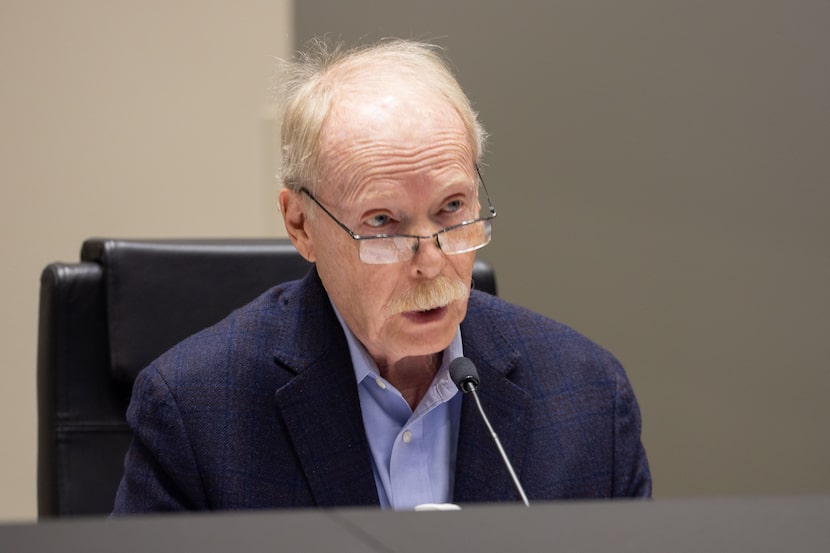
Dallas City Council member Paul Ridley directs a question to Dallas Public Library Director Manya Shorr during a meeting at City Hall on Tuesday, Jan. 20, 2026 in Dallas.
Juan Figueroa / Staff Photographer
The working group hopes to:
Have equitable representation on DART’s board based on funding, population, employment and ridership. Ensure no city has a single majority vote, with “one city, one vote” as the baseline for representationAttract new members to DART and consider population updates every five years.Develop reforms for the agency’s service and funding structure.
The Dallas transportation committee considered a rethought governance model proposed by the working group of city and DART leaders. The model has 20 seats, one for each city plus additional seats for more populated cities and some cities with weighted votes.
The proposal, which grants DART about 40% of the board’s power, is not a final recommendation but a working model up for continued discussion.
Council member Bill Roth said Tuesday he wasn’t sure 40% of the board’s control is enough for Dallas, which he called the region’s “hub.”
Mendelsohn asked why Dallas should give up governance if it contributes roughly half the agency’s sales tax revenue and makes up roughly half its service area and population.
Dallas leaders have shown concern in the past for losing a majority on the DART board due to projected population shifts.
Council member Kathy Stewart said it’s time to negotiate and listen to member cities who are dissatisfied. Deputy Mayor Pro Tem Gay Donnell Willis said she’s open to “one city, one vote” but said there is room to negotiate Dallas’ weight on the board.
Currently, member cities pay a 1% sales tax to DART that acts as its primary source of revenue. Some member cities have said this contribution is far greater in value than the service cities receive.
Cities that do not contribute this sales tax to DART can use the penny sales tax for things like economic development or alternative transportation options.
Mendelsohn said a focus on funding and service could improve DART’s value proposition to cities.
“There’s a real reason, a legitimate reason, the suburbs are questioning the value that they’re getting, and we should question it also,” she said.
Committee Chair Paul Ridley proposed his own governance model at Tuesday’s meeting with 50% of the board’s weight for Dallas while still giving each city a seat at the table. In his model, each city does not get one full vote, with votes weighted by population.
Related

“It is difficult to conceive of a plan by which Dallas makes significant [concessions] … without the reassurance that that will resolve overall issues,” Ridley said.
Bryant, who has urged Mayor Eric Johnson to take leadership over reforming DART’s governance, said the committee’s discussion was a win for the 13 cities in his agency as negotiations continue between DART and member cities.
“Dallas is the principle of municipality,” he told The Dallas Morning News. “But the suburban cities have a very critical problem right now with not having a voice at the table… the solution hopefully brings some level of compromise.”
Power fight
SPLIT COUNCIL: Dallas City Council members are divided over whether to give up board control to keep suburban cities from leaving DART.HIGH STAKES: Five of DART’s 13 member cities have scheduled May exit elections and face late-February deadlines to cancel them.POWER QUESTION: Suburban cities want more say on DART’s board, while some Dallas leaders argue the city should retain roughly half the votes.NEGOTIATIONS ONGOING: A working group of city managers and DART leaders is weighing new governance, funding and service models, with no final agreement yet.