
In a historic move, Dallas County officials voted Wednesday to symbolically exonerate a man executed nearly 70 years ago for a crime he could not have committed.
Tommy Lee Walker, a 19-year-old Black man and new father, was convicted in 1954 of the murder of Venice Lorraine Parker, a 29-year-old white woman and dime-store clerk, under a bridge near the Love Field airport.
Following a two-hour special session downtown, the Dallas County Commissioners Court unanimously passed a resolution that states evidence proves “egregious violations” of Walker’s constitutional rights, including his arrest without probable cause, interrogation without the assistance of counsel, the denial of a jury representative of his peers, the suppression and misrepresentation of material evidence, and the use of a confession now recognized as unreliable under modern scientific and legal standards.
“Neither of them knew the other existed,” Dallas County District Attorney John Creuzot said of Walker and Parker. “Despite differences in their upbringing, education or day-to-day lives, they are historically bonded together by devastating similarities.”
Breaking News
The same is true of their children, now in their 70s, who met Wednesday for the first time.
“Looks like we both grew up,” Joseph Parker, Venice’s son, quipped as he embraced Edward Lee Smith, who shares Tommy’s middle name.
“I’m so sorry for your loss,” Smith replied.
Each got a chance to address the commissioners directly, to detail the ways such an injustice has haunted them throughout their lives.
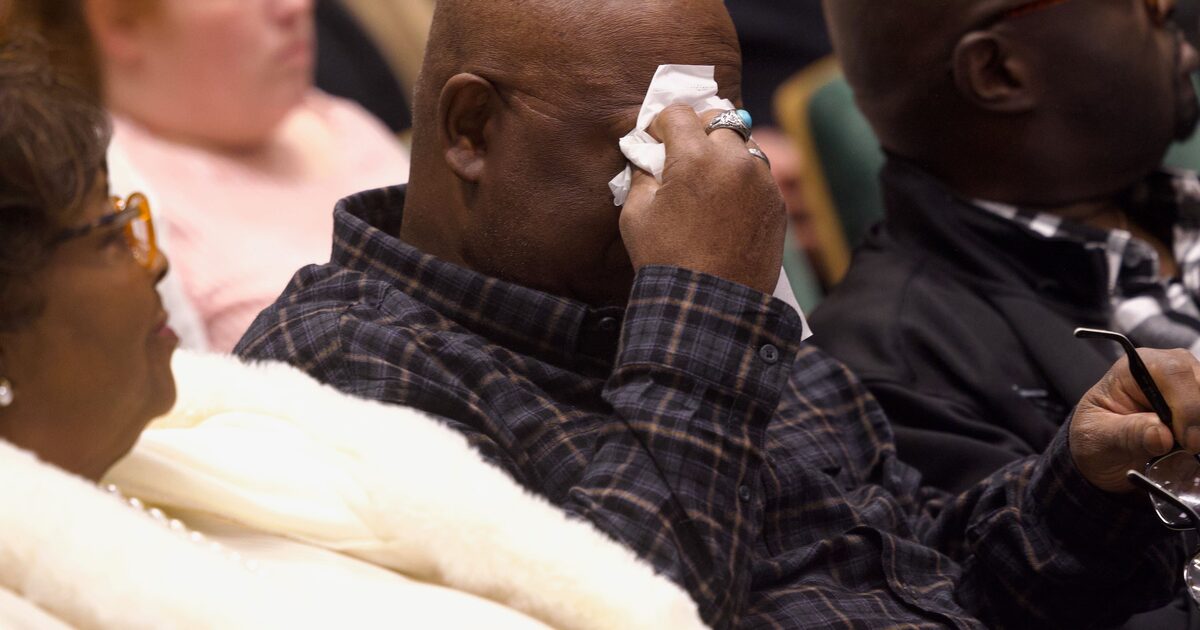
Smith gripped the podium, head bowed and shoulders hunched, as he wept through much of his statement.
“I’m 72 years old, and I still miss my daddy,” Smith cried. Standing by his side, Creuzot wiped tears from his eyes.
According to previous reporting from The Dallas Morning News, Parker was found with her throat slashed on Sept. 30, 1953. Investigators said then she had been both robbed and raped.
The murder only compounded city-wide hysteria over reports of a “negro prowler.”
Months later, Walker was picked up by police for questioning in connection with a robbery at a gas station where he’d once worked. Instead, he was interrogated for hours about Parker’s death.
Out of fear, Walker said, he confessed, but quickly recanted, previous reporting says. He told reporters that he couldn’t have killed Parker because he was with his girlfriend, who was in labor, at the time of the slaying. Multiple other witnesses corroborated his story, adding that Walker also lived miles from the crime scene and didn’t have a car.
It didn’t matter. In March 1954, Walker was condemned and sentenced to death by an all-white jury.
Despite multiple appeals, Walker was executed by electric chair on May 12, 1956. He was 21.
On the day of his funeral, more than 5,000 people came to pay their respects.
In an interview with D Magazine for a story that led to the re-examination of Walker’s case, L.A. Bedford, Dallas County’s first Black judge, called Walker’s death the “greatest injustice I have ever seen in my life.”
Good news: Texas is executing fewer peopleExecution date set for man who admitted to killing 2 outside Garland music studio