
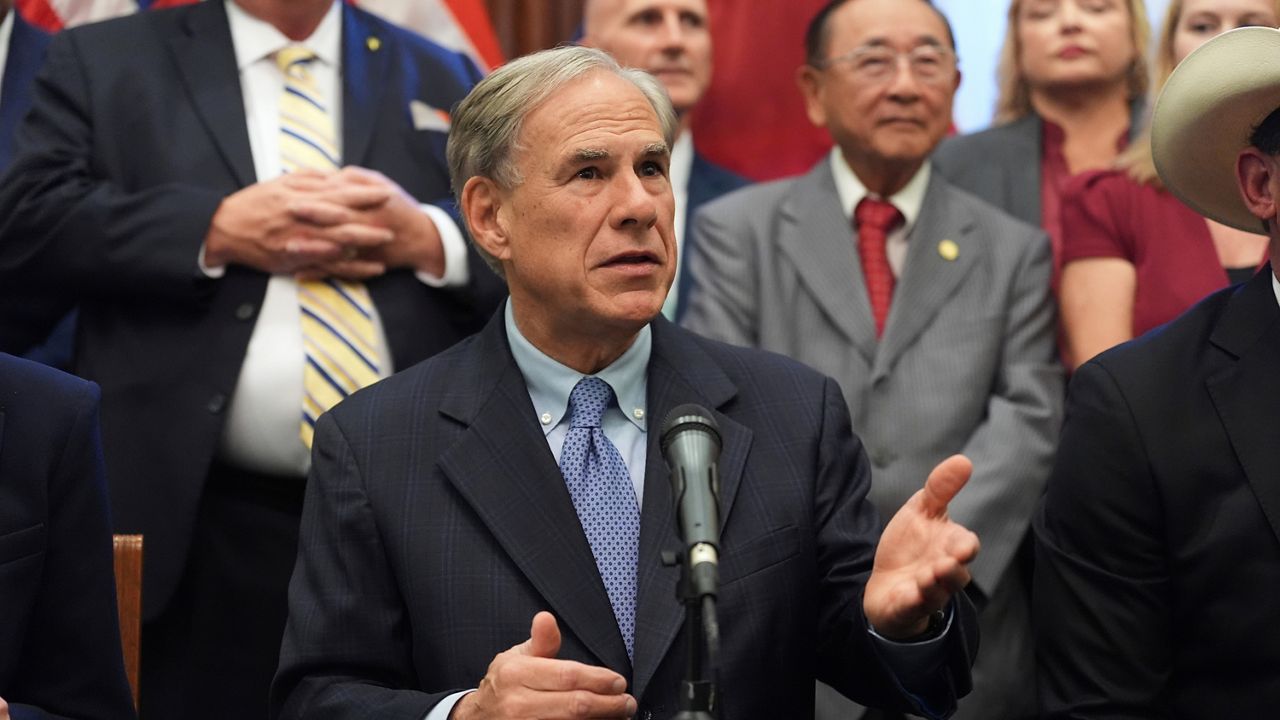
TEXAS — Gov. Greg Abbott is calling on Texas state lawmakers to create a new statewide position that would allow the state to override decisions made by locally elected district attorneys, a proposal that is already sparking legal and political debate.
Abbott has dubbed the proposed role a “chief state prosecutor,” framing it as a way to rein in what he describes as lenient prosecutorial practices in some urban counties.
Abbott first raised the proposal in a December post on X, responding to another post about an Austin man who has faced over 30 criminal charges, some of which have been dismissed or reduced, according to that post.
The governor later reiterated the idea during a campaign stop in Fort Worth with North Texas police associations in January.
“Going forward, we must weld shut the revolving door of easy bail for career criminals. We must hold rogue district attorneys accountable,” Abbott said.
Legal experts say the mechanics of such a position remain unclear and could raise constitutional concerns.
Leigha Simonton, an attorney with the law firm Dykema, said the proposal could undermine the discretion traditionally afforded to local prosecutors. Simonton has over two decades of experience in the Department of Justice and previously served as chief federal prosecutor for the Northern District of Texas.
“You have to allow prosecutors to do their jobs and exercise discretion because every case is unique, every defendant is unique,” Simonton said.
Under the current system, district attorneys decide which crimes to prosecute within their jurisdictions and can seek assistance from the Texas Attorney General’s Office when additional resources are needed or when circumstances warrant state involvement.
Simonton said creating a chief state prosecutor could open the door to significant logistical and legal questions.
“How do they get the cases? Like, how do they find out about the cases? Is there…will the law provide for an assistant attorney general to be embedded in each DA’s office? Will it only be the major city DA’s offices?” she said.
Texas lawmakers in 2023 passed a law, Texas House Bill 17, allowing for the removal of district attorneys who refuse to prosecute certain crimes. That law has already been applied to Travis County District Attorney José Garza, though the effort has so far been unsuccessful.
Some Dallas-area attorneys view the new proposal as another political tactic aimed at Democratic-led urban counties.
“Texas is not a one-party state, at the county level, Dallas County, Harris County, Travis County, Bexar County, you know, the four biggest urban counties in the state,” said Christopher Kratovil, also an attorney with Dykema.
Critics warn such a position could trigger a revolving door of litigation.
Simonton says Texas voters may need to vote for a constitutional amendment to make this a reality.
“I see this as a long process if it were to happen,” she added.