
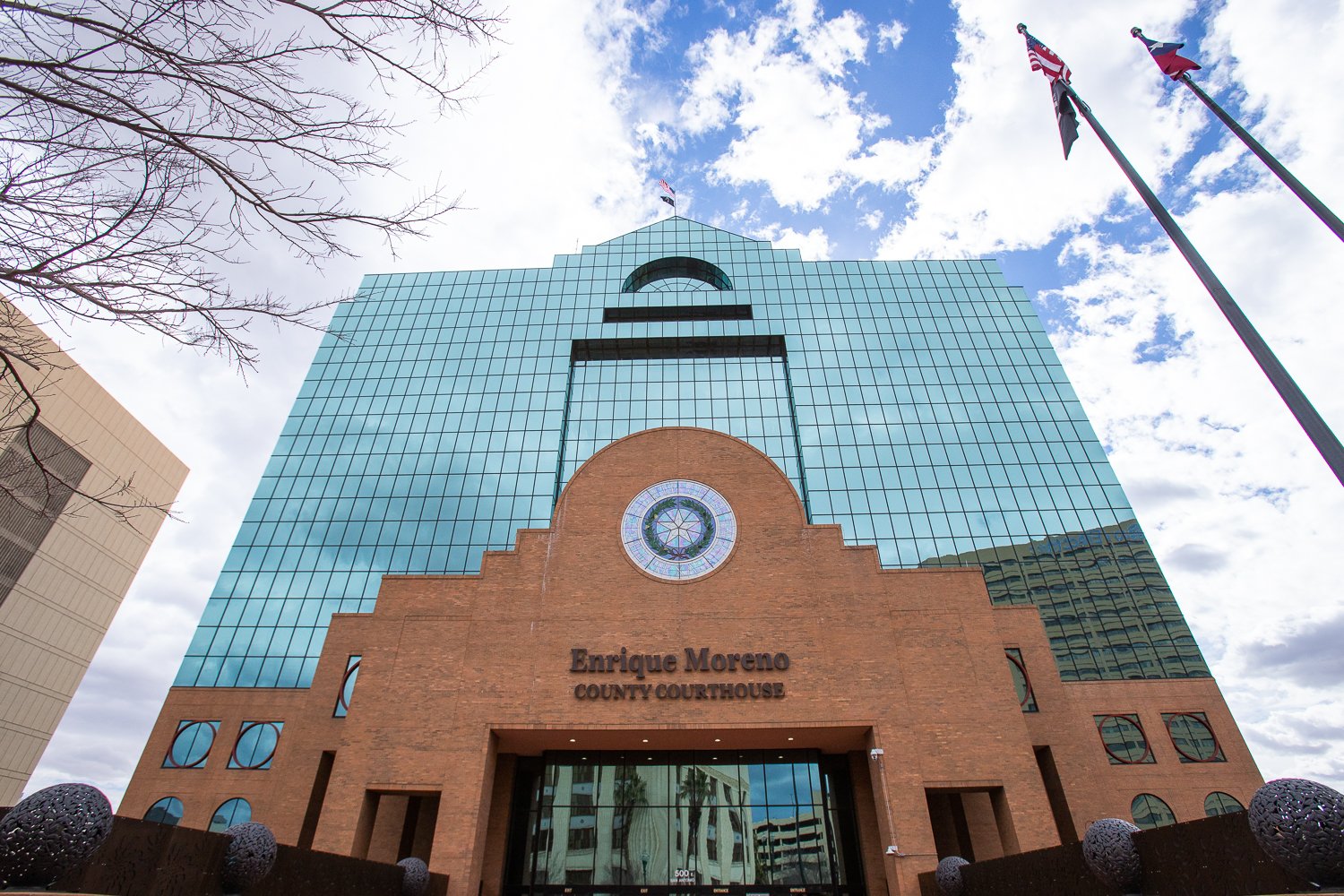
Attorneys with the immigration advocacy group Estrella del Paso last month asked that District Court Judge Marlene Gonzalez recuse herself from a case involving an unaccompanied migrant minor, alleging that she demonstrates cruelty toward and bias against immigrant children.
Court transcripts show Gonzalez repeatedly questioned unaccompanied minors about whether they had “abandoned” their families to come to the United States and, in one case, called a Guatemalan child labor victim a liar while dismissing his injuries because he had no visible scars. In other hearings, she challenged children who described abuse, kidnapping and sexual exploitation — asking why they did not stay elsewhere in Mexico and scolding a teenage trafficking victim for engaging in prostitution.
Gonzalez on Jan. 5 agreed to recuse herself, but said in court documents that she did so to save time and resources – and “not for the reasons alleged” in the motion asking for her recusal.
The judge declined an interview request from El Paso Matters, citing the Texas Code of Judicial Conduct, but provided a statement.
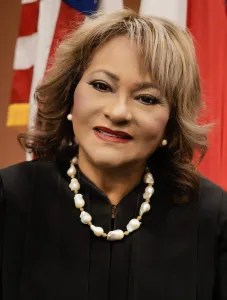 El Paso District Court Judge Marlene Gonzalez
“Please be advised that recusal motions and the judicial proceedings upon which they are based are items of public information that anyone can obtain by making a request for such information,” the statement said.
Estrella del Paso, the Catholic Diocese ministry which provides free immigration legal services, also declined an interview with El Paso Matters.
“As attorneys, we take our legal and ethical duties to our clients very seriously, and we file every motion and document with the court with these duties in mind. The motion filed includes several detailed examples that our legal team took time and detailed care to compile,” Estrella del Paso said in a statement. “We will not comment on the motions or our interactions with the court.”
The recusal is one of several requests over the last few years asking Gonzalez to step aside from cases, raising broader concerns about how allegations of bias and unprofessional conduct in her courtroom affect the families who appear before her.
Gonzalez, 71, a Democrat whose husband was a Border Patrol agent, practiced law for more than 30 years in El Paso before being elected as judge of the 388th Judicial District Court in 2020. The court presides over family law issues, including divorce and child custody.
She was reelected in 2024, defeating attorney Joy Degenhart with 73% of the votes in the Democratic primary. Degenhart at the time accused Gonzalez of being “biased and unprofessional,” engaging in conduct that led to several attorneys asking that she recuse herself.
At the time, Gonzalez told El Paso Matters that the accusations were likely based on Degenhart’s lack of understanding of the local judicial system. Following the election, Gonzalez filed a state bar grievance against Degenhart, which was later dismissed by the bar’s District Grievance Committee.
ELECTION ARCHIVES: 388th District Court candidates trade claims about judicial fitness
Degenhart, who said she plans to run for the seat again in 2028, this week said cases are often delayed or reassigned to visiting or substitute judges when judges are recused. That causes backlogs on the two other El Paso family courts, and substitute judges’ costs are typically borne by taxpayers, Degenhart added.
“Unaccompanied minor children are being treated cruelly, but it goes beyond those cases,” she said. “The requests for recusals also go to divorce cases and protective order applications that have real world consequences when attorneys have to file recusal requests because they know their client is not going to obtain a fair hearing or trial.”
Unaccompanied minors in court
While state courts do not decide immigration status, they make predicate child welfare findings under Texas family laws – including those that may be used by a minor to seek Special Immigrant Juvenile status under federal immigration law.
 A mural by artists Kelsey Kilcrease and Nikki Diaz graces the side of Estrella del Paso, formerly Diocesan Migrant and Refugee Services, in Central El Paso. (Corrie Boudreaux/El Paso Matters)
Attorneys with Estrella’s Unaccompanied Children’s Program on Dec. 17 filed a motion seeking Gonzalez’s recusal. The judge’s “mistreatment of unaccompanied noncitizen children leads to the appearance of impropriety, partiality, and prejudice,” the organization states in the court filing, adding that the judge has demonstrated cruelty and insensitivity toward the children.
The case involves a 16-year-old from Mexico who has been in the custody of the federal government’s Office of Refugee Settlement in El Paso since June 2025 after being transferred from U.S. Border Patrol custody near Hidalgo, Texas.
The girl, who El Paso Matters is only identifying as Maria because she’s a minor, left Veracruz, Mexico, when she was 15 and came to the United States alone in May 2025.
She’s petitioning the court that her parents be prohibited from removing her from El Paso and be returned to Mexico, stating she’s been neglected by them and is being threatened with future mistreatment.
What court transcripts show
Jacob Wedemeyer, a managing attorney with Estrella del Paso, in the motion also asked that Gonzalez recuse herself from all cases involving unaccompanied migrant children.
The organization’s motion references transcripts and prior rulings in multiple uncontested cases in which Gonzalez allegedly engaged in extensive questioning of minor children regarding their family relationships, migration history and experiences of abuse or neglect. It further alleges that, in some cases, petitions were denied without written findings or stated reasons.
The filing includes sworn declarations from attorneys and social service providers who have represented or accompanied unaccompanied noncitizen children in Gonzalez’s courtroom, as well as excerpts from official court transcripts.
The motion states Gonzalez repeatedly questions minors who arrived in the United States without their parents about abandonment, asking in multiple cases, “You abandoned your mother and your brother, isn’t that true?” and “So, you abandoned your family to come and pursue your dream to live in the United States; isn’t that true?”
In a June 2025 case involving a child labor victim from Guatemala, the teenager testified he started working at age 6 in agriculture and later construction, saying he was injured while working and that nobody took him to the doctor.
“And you have your fingers? You have your 10 fingers, complete?” Gonzalez asked, court documents show. “I don’t see any scars in your face. That means that there was no accident that affected or damaged your skin.”
Court transcripts show Gonzalez asked him if he was the only child in Guatemala who worked, and called him a liar when he tried to respond.
Other transcripts describe a September 2025 case involving a 17-year-old Guatemalan who testified about being assaulted by his father and leaving for Mexico when he was 13. He testified he had been kidnapped and beaten, including by Mexican police officers who took his money. After about 10 minutes of interrogation, Gonzalez asked, “Why didn’t you stay in another part of Mexico? It’s beautiful, and it’s big.”
In December 2023, court records show, Gonzalez questioned a “timid” 17-year-old who had been admitted to “multiple psychiatric facilities,” asking what kind of mental illness he suffered from. She continued, “So, you believe that coming to the United States was a free-for-all, and that you could do whatever, and you can go to any place that you want?”
In a sworn declaration, Lidia Valadez, a social services manager with Estrella del Paso, said Gonzalez “inflicted fear to the youth with her behavior of superiority and intimidation,” adding that the judge lacks cultural competence and humility and is not impartial.
Monica Allen, a social services provider with the organization who manages high-risk cases involving minors, in a declaration stated a 17-year-old Guatemalan who had been severely sexually abused was “retraumatized” during a hearing in the uncontested case. The social worker was not allowed to submit testimony on the girl’s behalf, so an attorney for Estrella del Paso had to direct examine the girl. In a similar case involving a 16-year-old Venezuelan who testified she was prostituted, Gonzalez “scolded the girl that she should not engage in prostitution,” court documents show.
Related
LISTEN: EL PASO MATTERS PODCAST