
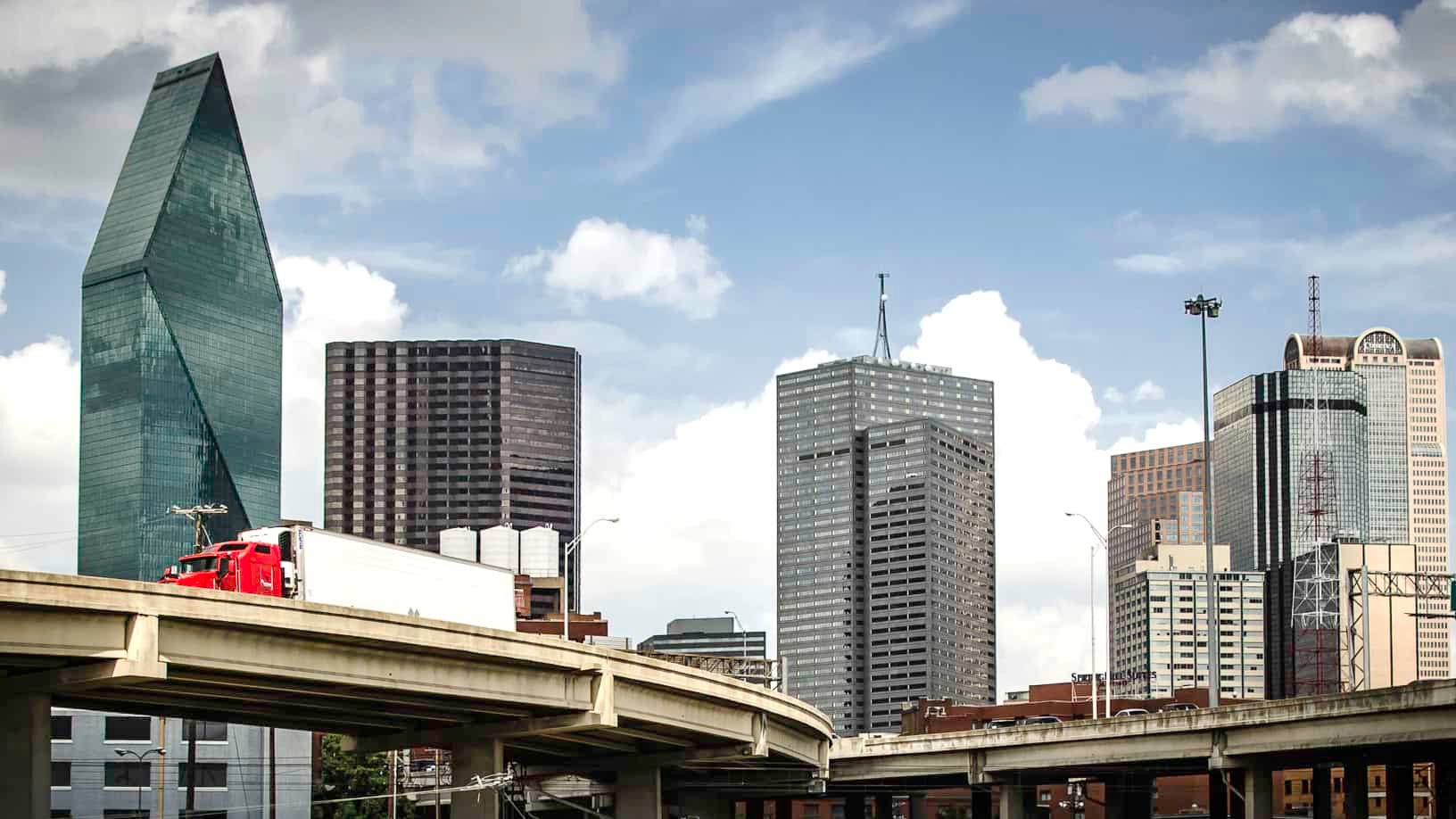
Dallas-Fort Worth, the sprawling economic powerhouse often dubbed the Big D, stands on the brink of a potential shutdown this weekend as a brutal winter storm barrels in. With a population exceeding 8 million across more than 16,000 square miles, making it the fourth-largest metro area in the U.S., DFW isn’t just a big city in Texas; it’s a global freight nexus. Home to major corporations, distribution hubs, and transportation networks, the region’s economy thrives on moving billions in goods annually. But if forecasts hold, ice accumulations could “ice in” this vital node, triggering cascading disruptions across national supply chains.
Meteorologists warn of an Arctic air mass plunging into North Texas starting Friday, January 23, 2026, ushering in a wintry mix of rain, freezing rain, sleet, and snow through Sunday, January 25. The National Weather Service has issued Winter Storm Watches for the DFW area, predicting up to half an inch of ice in spots, with temperatures tumbling into the teens and single digits amid wind chills as low as -10°F. This isn’t a cute, nostalgic holiday snowfall; it’s a sheet of ice that could coat roads, bridges, and power lines, leading to widespread outages and hazardous conditions. Unlike the deadly 2021 Uri storm, this event may be shorter-lived, but its post-holiday timing could make freight woes worse.
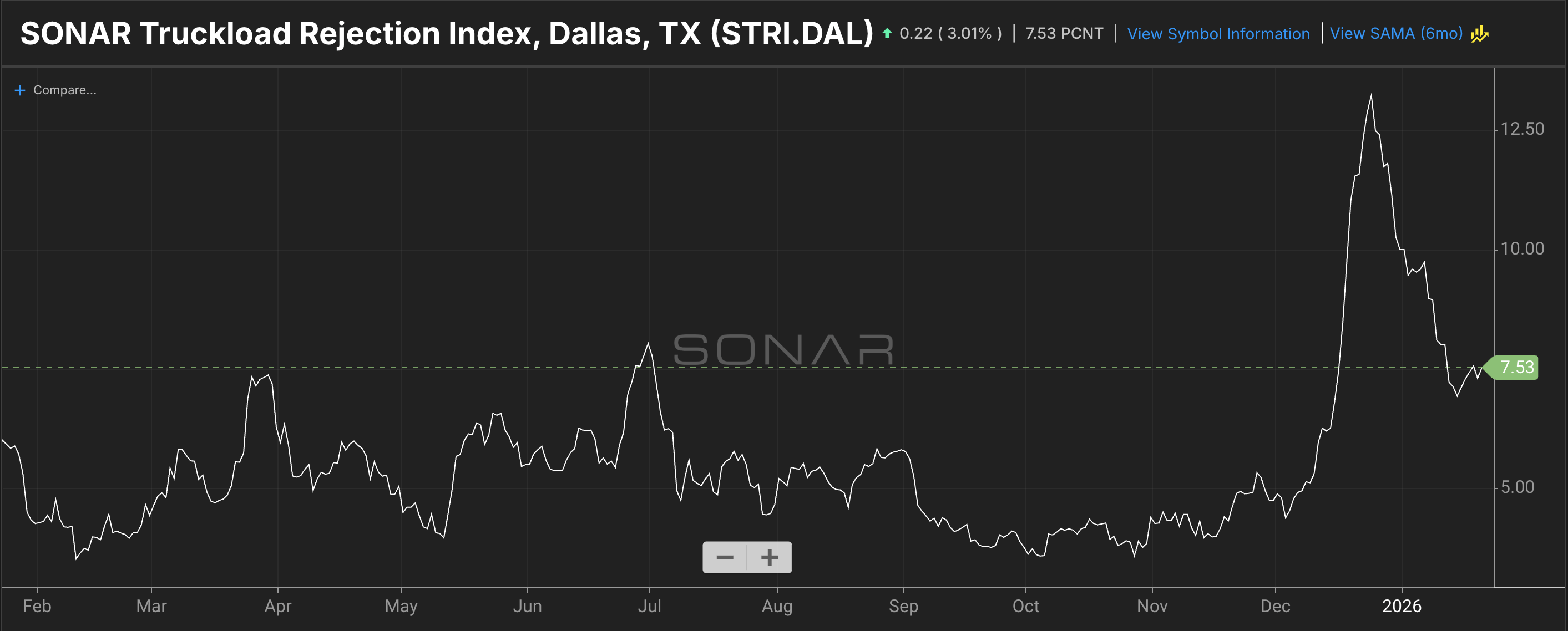
(Already, truckload carriers are rejecting 7.5% of outbound shipments from Dallas. Capacity will tighten further if Dallas gets iced in. Chart: SONAR. To learn more about SONAR, click here)
DFW’s transportation infrastructure, a linchpin for U.S. logistics, is particularly vulnerable. The region boasts an intricate web of interstates, including cross-border corridor I-35, I-20, and I-45, which funnel millions of truckloads yearly. Ice on these highways spells disaster: slick surfaces cause pileups, closures, and detours, stranding drivers and halting deliveries. Bridges and overpasses, like those spanning the Trinity River or elevated sections of I-30, are notorious chokepoints; they freeze first, increasing the risk of structural strain from ice weight and traffic halts. Past events, such as the 2021 freeze, saw highways iced over for days, crippling trucking operations.
Rail networks fare no better. DFW hosts massive yards from BNSF and Union Pacific, handling intermodal cargo from coast to heartland. Ice can buckle tracks due to contraction, while snow and sleet disrupt switches and signals, leading to delays or shutdowns. In 2021, rail service ground to a halt amid power failures, echoing potential repeats here. Distribution centers including Amazon’s massive facilities in Irving and Walmart’s hubs in Fort Worth could face power outages and access issues, forcing closures and inventory backups. DFW International Airport, a top cargo gateway, will almost certainly see de-icing delays and ground stops, causing ripple effects to airline schedule reliability nationwide.
Commodity flows through Dallas are diverse and voluminous, underscoring the stakes. As a nexus for energy, the region channels oil, gas, and petrochemicals from Permian Basin fields to refineries and exports. Consumer goods, electronics, and automotive parts stream through via truck and rail, feeding Midwest and Southern markets. Agricultural commodities including grain and cotton flow outbound, while imports from Mexico bolster manufacturing. During the 2021 ice storms that affected Texas’ power grid, petrochemical shortages disrupted global supply chains, spiking prices for plastics and fuels.
If iced in, regional freight patterns would fracture. Trucking, already volatile with spot rates up 10% from prior cold snaps, could see surges as capacity evaporates—diesel gelling in subzero temperatures strands power units, while “protect from freeze” demands spike reefer trailer needs. Flows from Texas to the Midwest grind to a halt, delaying perishables and e-commerce parcels. Exports via Gulf ports slow, echoing Harvey’s $125 billion hit. Broader implications: multibillion-dollar losses in just-in-time chains, empty shelves for essentials, and inflated costs amid ongoing volatility.
As the storm approaches, carriers are prepping with anti-gel additives and reroute. But in an era of climate extremes, this freeze could test DFW like it hasn’t been in years. Shippers, brace for impact: Dallas on ice means America feels the chill.