
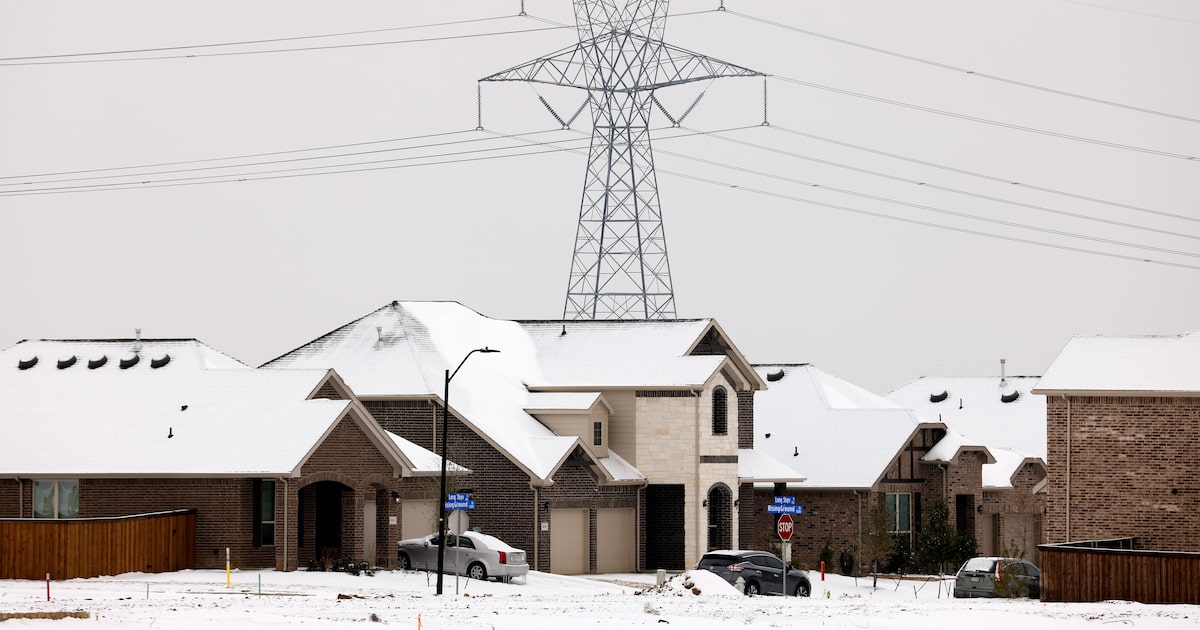
As dangerously cold temperatures loom in the forecast for Dallas-Fort Worth, power grid reliability is on the mind of many Texans.
After the state experienced extensive power outages and freezing temperatures for more than 100 consecutive hours during Winter Storm Uri in 2021, the Texas Legislature mandated weatherization of power facilities. This required the Public Utility Commission of Texas (PUCT) to establish weather emergency standards for generation and transmission facilities in the ERCOT region.
The first phase of the winter weather emergency preparedness standards was adopted in October 2021 and summer weather standards were adopted in September 2022.
In the years since, ERCOT — which operates the power grid for most of Texas — has erred on the side of overpreparation, ERCOT CEO Pablo Vegas told The Dallas Morning News last winter.
D-FW Weather Wise
“We think it’s important to stay ahead of this because of the really high impact the weatherization program does have on the reliability of the fleet,” he said at the time.
Related
 What is weatherization?
Weatherizing generation and transmission facilities is similar to what homeowners may do on a seasonal basis, to prepare and protect their houses during the winter or summer.
“For summer or winter, this may include checking the heating, ventilation, and air conditioning (HVAC) system, insulating pipes and garage doors, and sealing any cracks around pipes, windows, and doors,” ERCOT officials wrote in a report.
“These actions are a form of weatherization preparedness.”
Why is weatherization important for grid reliability?
Weatherization of cooling and heating systems are crucial in the winter and summer, especially as electric demand continues to grow.
These precautions ensure power facilities’ infrastructure components are protected ― and prepared to operated reliably ― when extreme weather conditions can cause electrical demand to peak.
Facilities are required to create lists of both cold weather critical components and hot weather critical components prior to the beginning of the respective season.
“Each critical component on the list must be protected adequately for the rigors of the season, maintained, and monitored to ensure that it remains in working condition,” according to ERCOT.
Related
 When does ERCOT inspect facilities?
ERCOT has trained inspectors who visit power facilities to ensure PUCT rule requirements are being met.
Most inspections take place during the winter season, running December through February, and summer season, around June to September, according to ERCOT.
The agency said by December 1, a facility must complete its winter weather emergency preparedness measures. The deadline for summer is June 1.
ERCOT conducted a total of 4,079 weatherization inspections at both generation and transmission facilities as of the end of the summer 2025 season, according to information provided a recent ERCOT Board of Directors meeting.
Has weatherization worked?
ERCOT seems to think so, reporting the “benefits of the weatherization standards have been demonstrated through the grid’s strong performance” during winter storms from 2022 to 2025.
“This strong performance is attributed to the many reforms and improvements made since 2021, including weatherization, which has made a positive impact on grid reliability,” according to the report.
Related
This reporting is part of the Future of North Texas, a community-funded journalism initiative supported by the Commit Partnership, Communities Foundation of Texas, The Dallas Foundation, the Dallas Mavericks, the Dallas Regional Chamber, Deedie Rose, Lisa and Charles Siegel, the McCune-Losinger Family Fund, The Meadows Foundation, the Perot Foundation, the United Way of Metropolitan Dallas and the University of Texas at Dallas. The News retains full editorial control of this coverage.