
Well, that was frustrating.
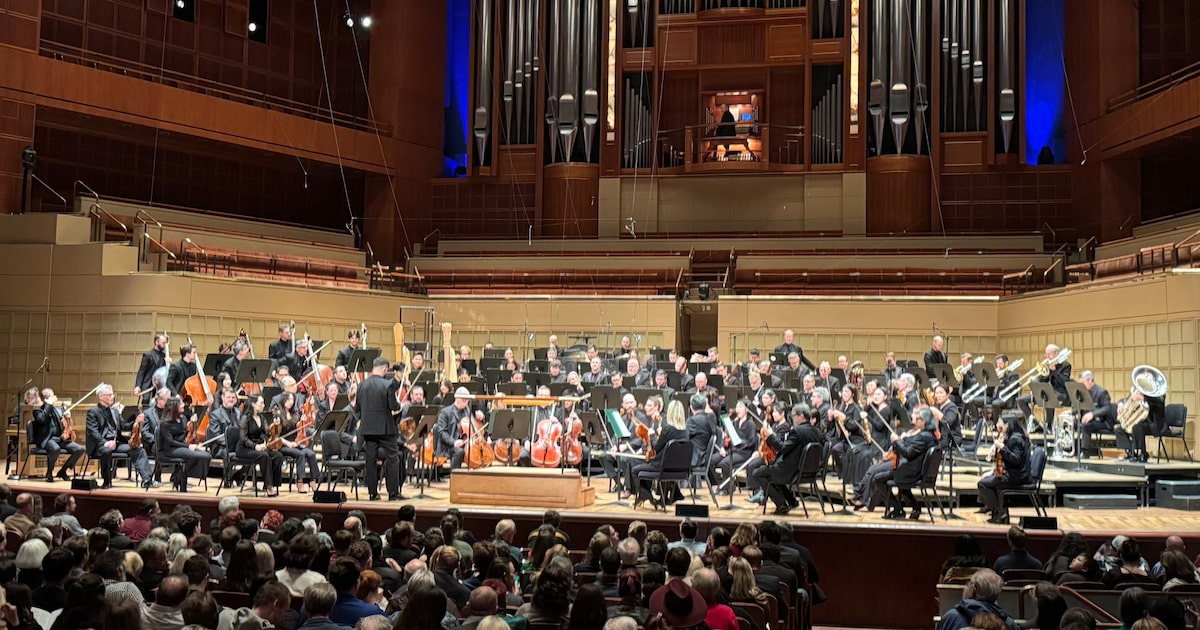
It was good to see a full and enthusiastic audience for the Dallas Symphony Orchestra’s Thursday night concert. But in Gustav Holst’s The Planets the experience was compromised by applause after every movement but one. The exception was because people applauded at a break before the end of the penultimate “Uranus, The Mystic.” One man shouted a loud “bravo” after the opening “Mars, The Bringer of War.”
Area classical music presenters need to address the growing frequency of applause between movements meant to be heard without interruption. It’s not a matter of snobbery; it’s that both musicians and listeners need a sense of multi-movement continuity and contrast, with silent moments to catch breaths in between.
Recorded announcements asking people not to take photos or make recordings during concerts could add something like, “Please take a moment to look at the program page, and if you see a piece with multiple movements, it will be best enjoyed if applause is held until all movements have been played.”
News Roundups
As it was, too much of the magic of Holst’s interplanetary suite — its import more astrological than astronomic — was dissipated. Guest conductor Edward Gardner, principal conductor of the London Philharmonic, was obviously frustrated when even his upheld hands couldn’t stop the applause. I couldn’t help think the performance suffered some lack of focus and precision because musicians had to gin up attentions anew before each movement.
Related

There was plenty of raw energy in climaxes — sometimes too much for so supportive and reinforcing an acoustic as the Meyerson Symphony Center’s. There were lovely solos from, among others, principals Daniel Hawkins (horn), Mark Debski (interim oboe), Nathan Olson (co-concertmaster) and Christopher Adkins (cello), and Bradley Hunter Welch released imposing rumbles from the Meyerson’s big C.B. Fisk organ. Women of the Dallas Symphony Chorus, prepared by Anthony Blake Clark, floated otherworldly oohs and ahs from the hall’s hidden reverberance chambers. But this wasn’t the performance it could have been.
The program included the U.S. premiere of Scottish composer James MacMillan’s euphonium-and-strings concerto Where the Lugar Meets the Glaisnock. Those are names of two rivers that meet in the town of Cumnock, where MacMillan (born in 1959) grew up.
It was commissioned and performed by David Childs, a distinguished professor at the University of North Texas. A program note by the composer said it would last 25 minutes, but on Thursday it took only 16.
The euphonium, a tenor tuba, shifts among moods solemn, restless, agitated, triumphant and reflective. Sustained support from the strings gives way to watery ripples and busy chatters, with piquant harmonic implications.
Childs supplied poetry as well as pizzazz. Gardner led incisively, although some of the busy string writing sounded as if it could have been more precise.
Opening the all-British program was William Walton’s Te Deum, composed for the 1953 coronation of Queen Elizabeth II. Although originally scored for full orchestra and chorus, it was quite effective in Christopher Palmer’s arrangement for brass, harp and organ.
Jolly sections make much of dramatic back-and-forth writing for brasses and organ. Now in full force, filling the choral terrace, the Dallas Symphony Chorus sang stirringly, although, as Walton intended, a smaller contingent of the singers evoked the praise of prophets, apostles and martyrs. It was all great fun, with wonderfully juicy progression for the final “Let me never be confounded.”
Due to anticipated cold and ice, the DSO has canceled Friday and Saturday repeats of this program. Ticketholders will be contacted via email regarding ticket options. For information: 214-849-4376, dallassymphony.org.