
Last November, one brave (or foolish?) woman took a dip in the murky waters of the San Antonio River to search for her dropped phone, earning a nearly unanimous reaction of disgust from passersby and viewers of the subsequent viral TikTok video. Swimming or wading in the river carries a misdemeanor fine of $500, and its waters famously contain higher-than-desired levels of E. coli. While the woman seemingly did not find her phone that day, perhaps somebody did during the city’s latest river draining, last week.
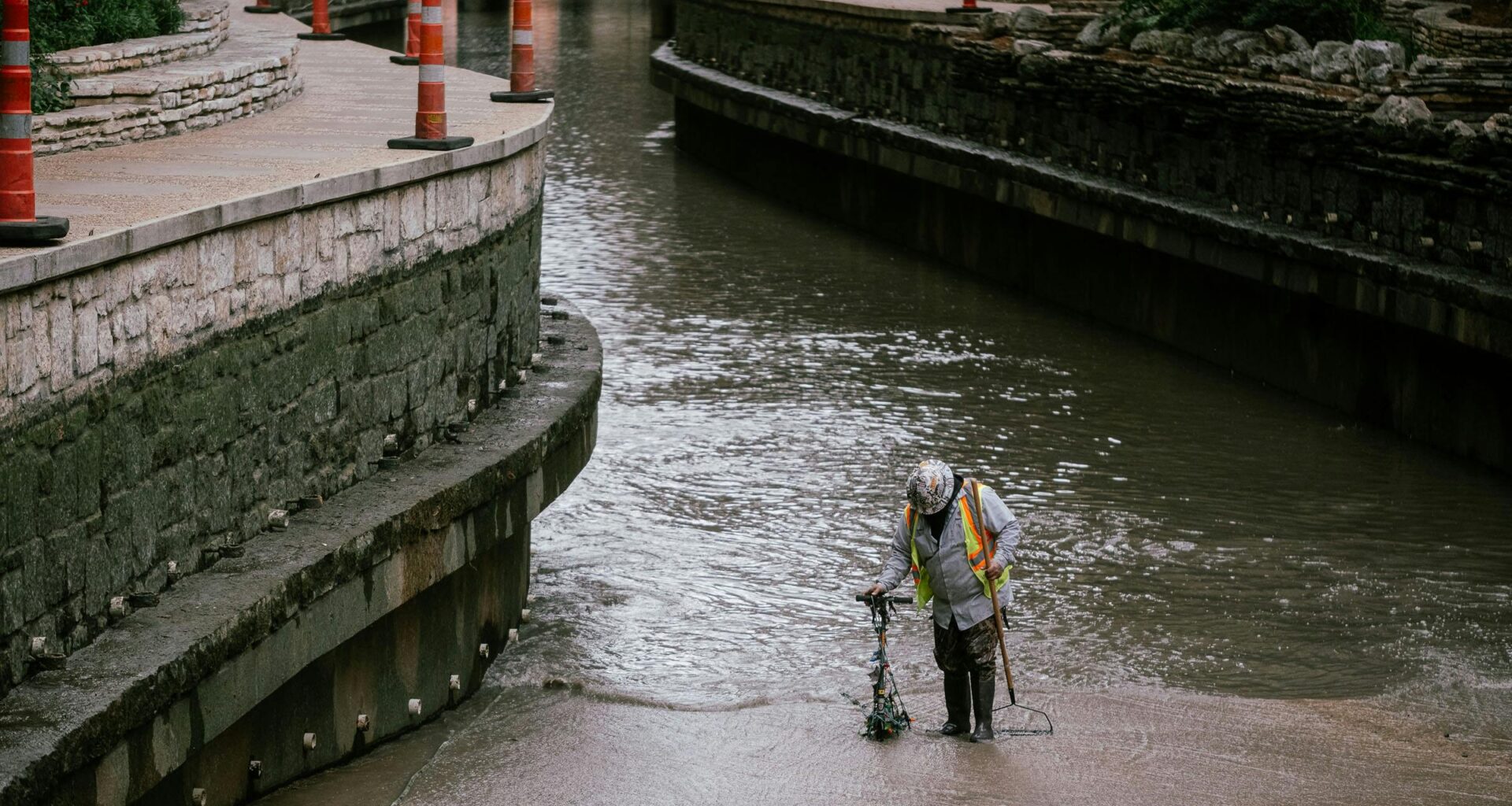
San Antonio temporarily drains the downtown portion of the river every couple of years as part of its River Walk Maintenance Program. The event has become notable for the items the team pulls out of the water—phones, laptops, folding chairs, Mardi Gras beads, bike parts, scooters. The river draining is a detailed joint effort between the City of San Antonio’s Center City Development & Operations department, its Public Works department, and the San Antonio River Authority. This year, throughout the week of January 11–19, crews from the different departments worked in the drained sections of the river to remove trash, debris, and sediment buildup and inspect and make repairs as necessary to the river walls.
The San Antonio River Authority plays a vital role in monitoring and protecting aquatic wildlife and water quality. Whereas snakes, turtles, crawfish, and birds can relocate when the water is low, fish can become stranded during the draining. Aquatic biologists and experts from the River Authority’s Environmental Sciences Department patrol the river and locate any stranded fish so that they can move them to deeper waters.
And then there are the apple snails. The River Authority also works to prevent the spread of invasive species, and giant apple snails (Pomacea maculata) have become a giant problem since they were first discovered in the San Antonio River, in 2019. Their population has grown rapidly: Female apple snails lay clutches that contain five hundred to one thousand (sometimes even two thousand!) eggs, which they lay weekly. These snails eat vegetation that native species rely on, and their sheer breeding numbers, coupled with their lack of natural predators, creates an imbalance in the river’s ecosystem. It’s not clear how apple snails, which are native to South America, appeared in the San Antonio River, but experts believe they were most likely dumped from home aquariums.
This year, the River Authority used the latest river draining as an opportunity to install “exclusion devices” in areas of the river where the snails are particularly populous. These barriers are affixed to the river walls below the waterline, and if the measure is successful, they should prevent the snails from climbing to lay their eggs, which must mature on the dry walls before hatching.
The biennial river draining renders an otherwise defining centerpiece of San Antonio an unflattering sight for a week. One city worker remarked to me, while we both stared at the mounds of trash exposed by the dewatering, “This just reminds me of how disgusting we [humans] can be.” But it’s a vital undertaking that maintains the integrity of the river, and, while we might think it’s just there for us, it preserves an ecosystem both above and below the surface.
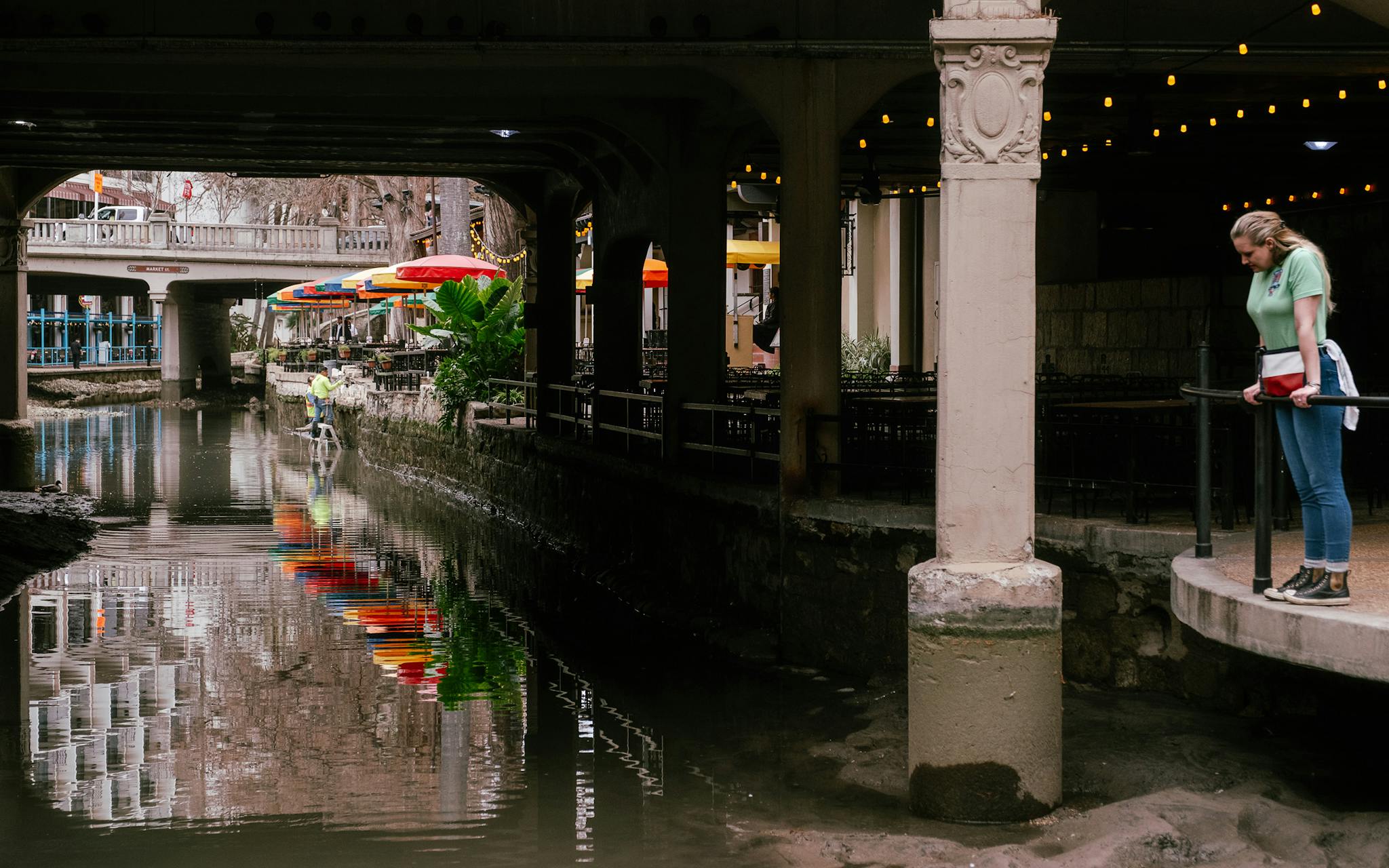
An employee of one of the River Walk restaurants looking down on the drained river while crews work on the walls downstream.
Photograph by JoMando Cruz
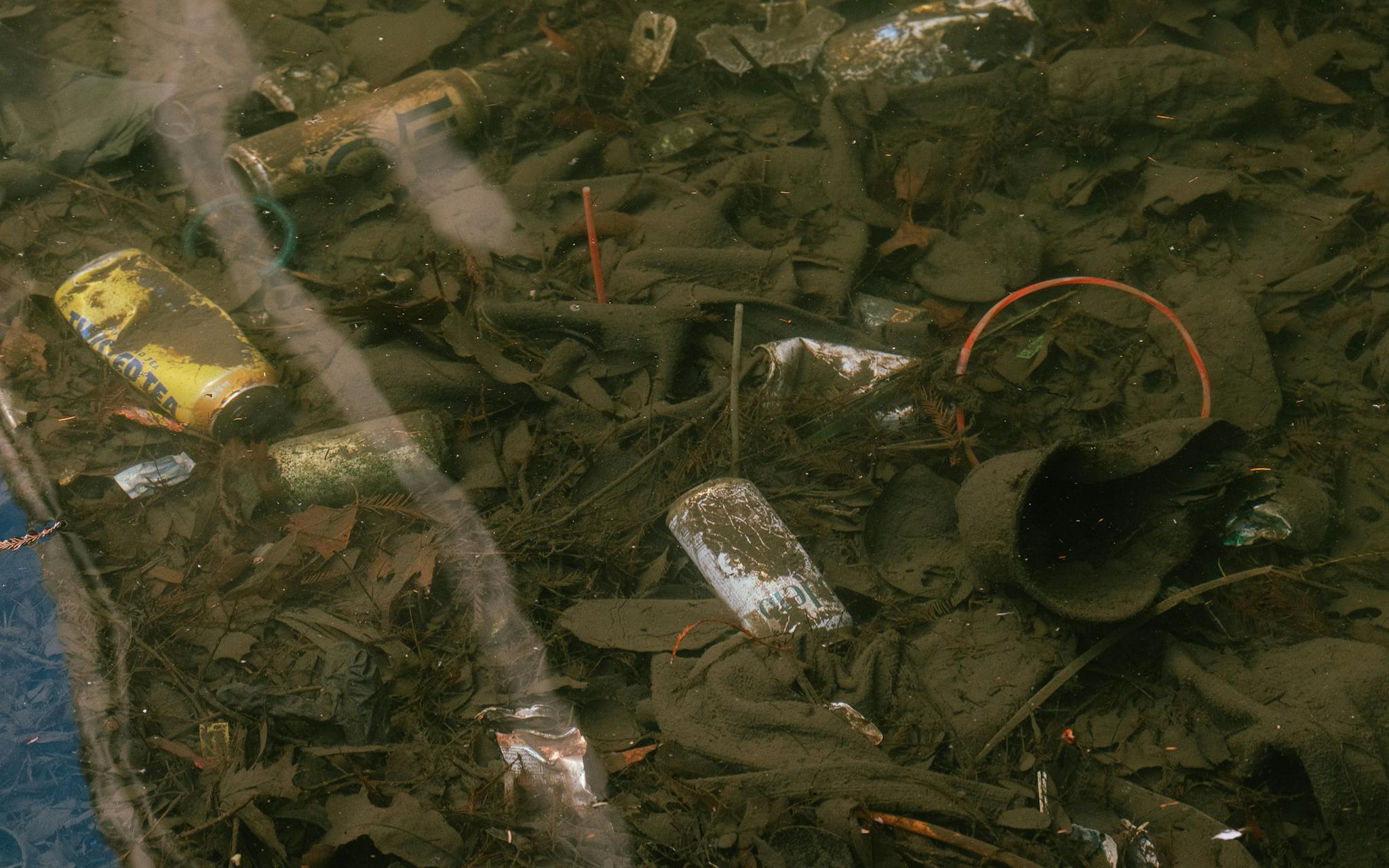
The river draining exposes cans and bottles on the river bottom, particularly in the downtown loop of the River Walk.
Photograph by JoMando Cruz
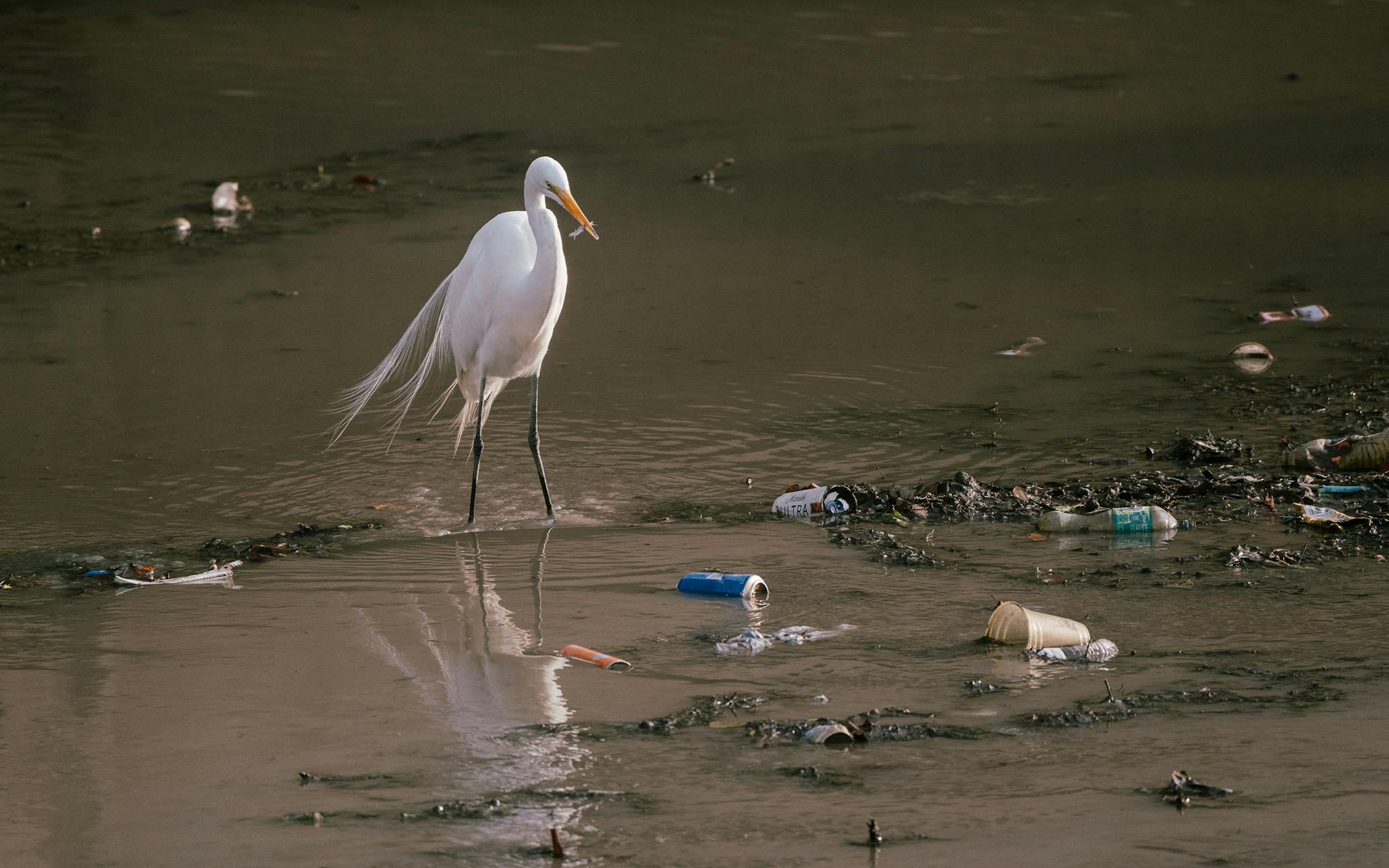
While the draining exposes a lot of trash, it also allows birds to more easily feast in the shallow water.
Photograph by JoMando Cruz
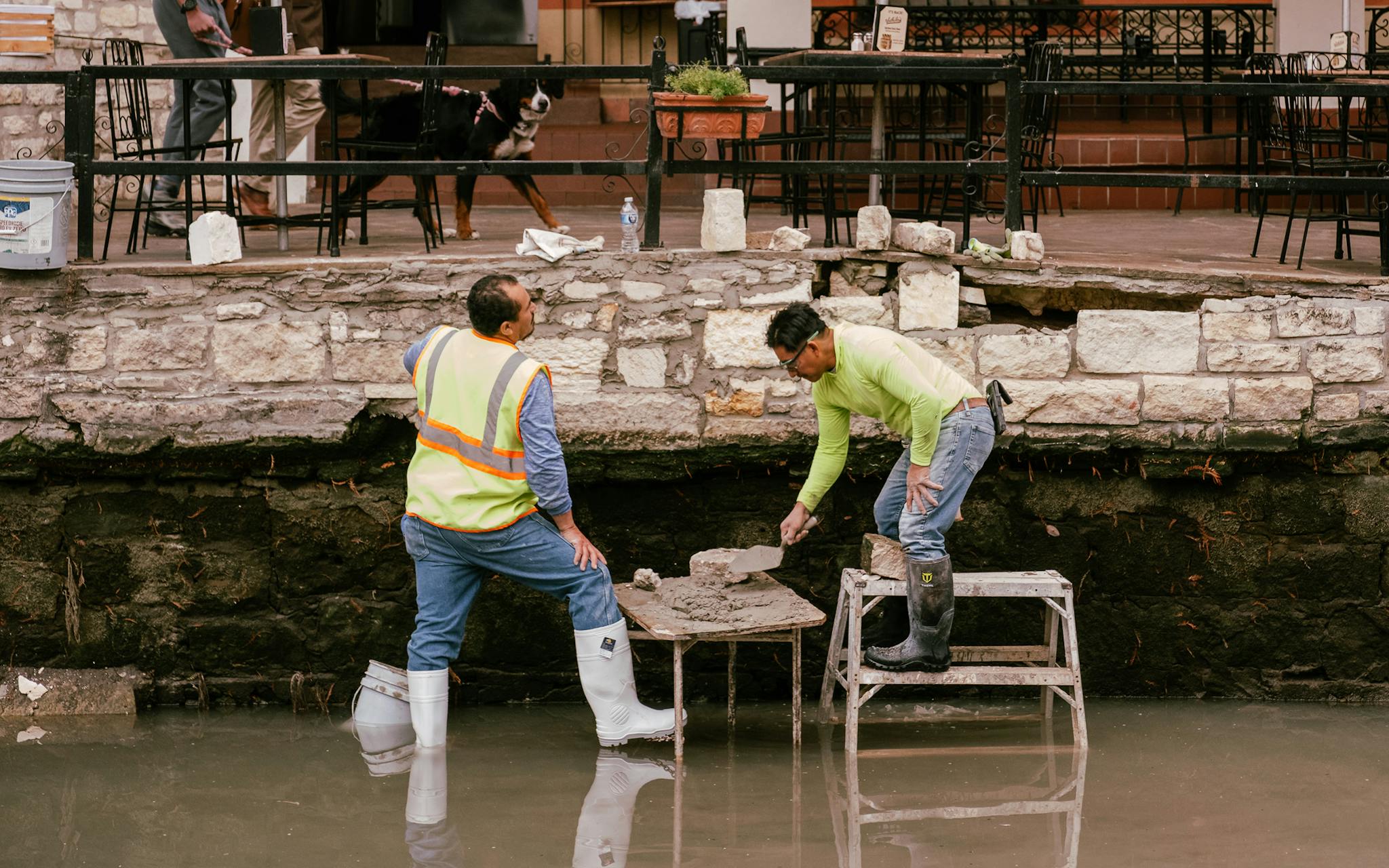
The draining allows crews to make repairs to the river walls where necessary.
Photograph by JoMando Cruz
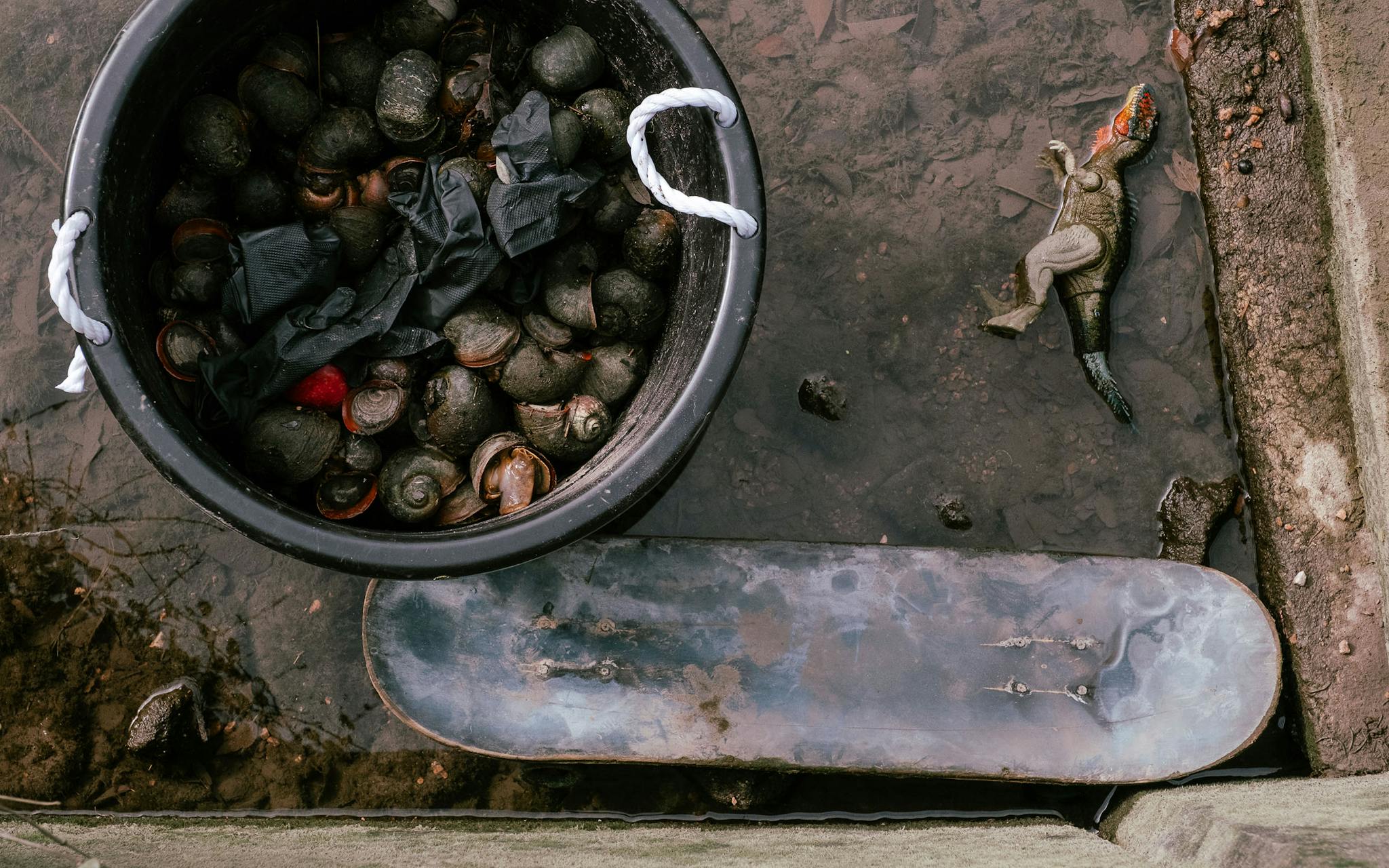
A toy dinosaur and a skateboard lying next to a bin of giant apple snails removed from the river.
Photograph by JoMando Cruz
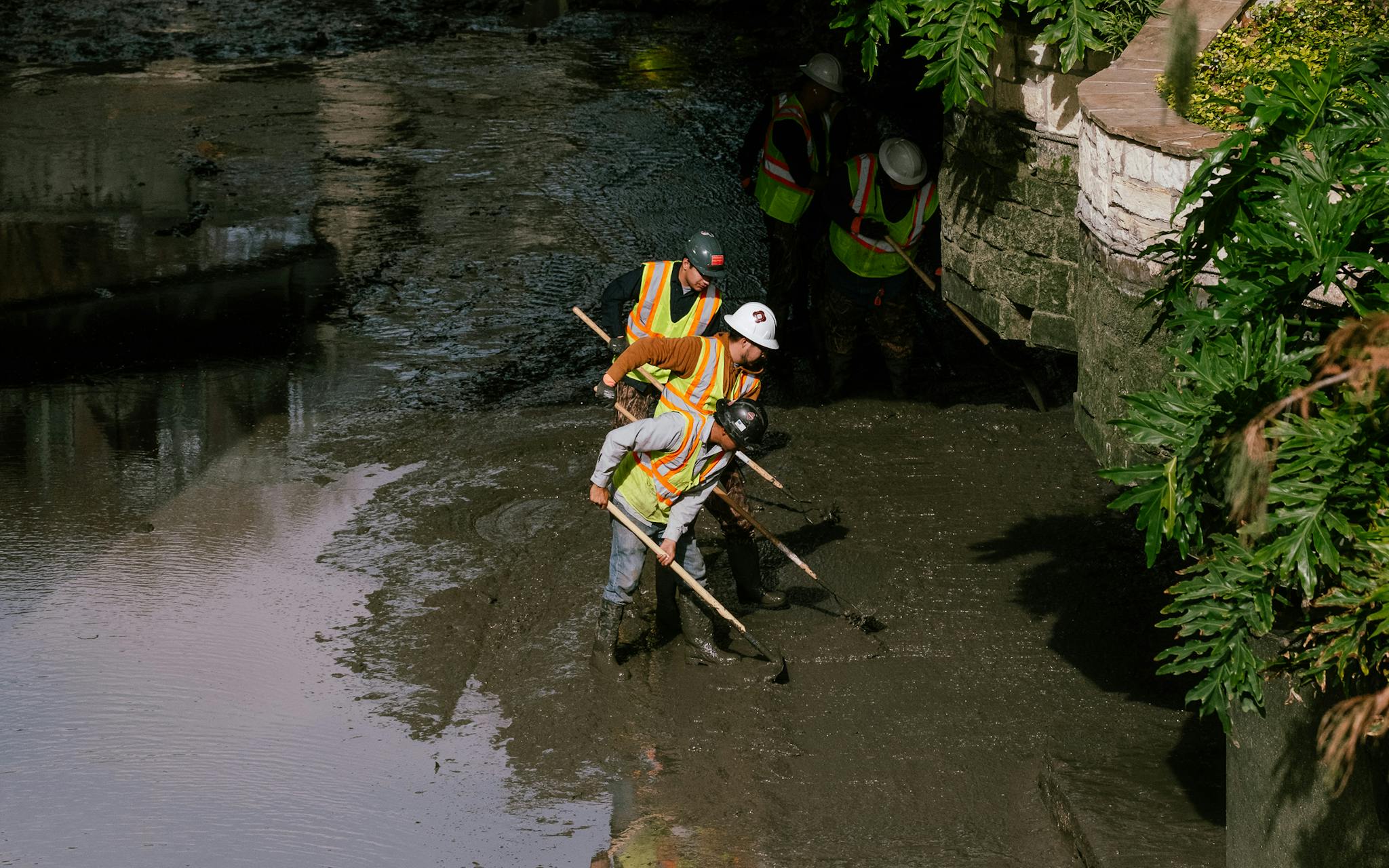
Apart from removing trash and debris, San Antonio Public Works crews also clear sediment to keep river channels clear.
Photograph by JoMando Cruz
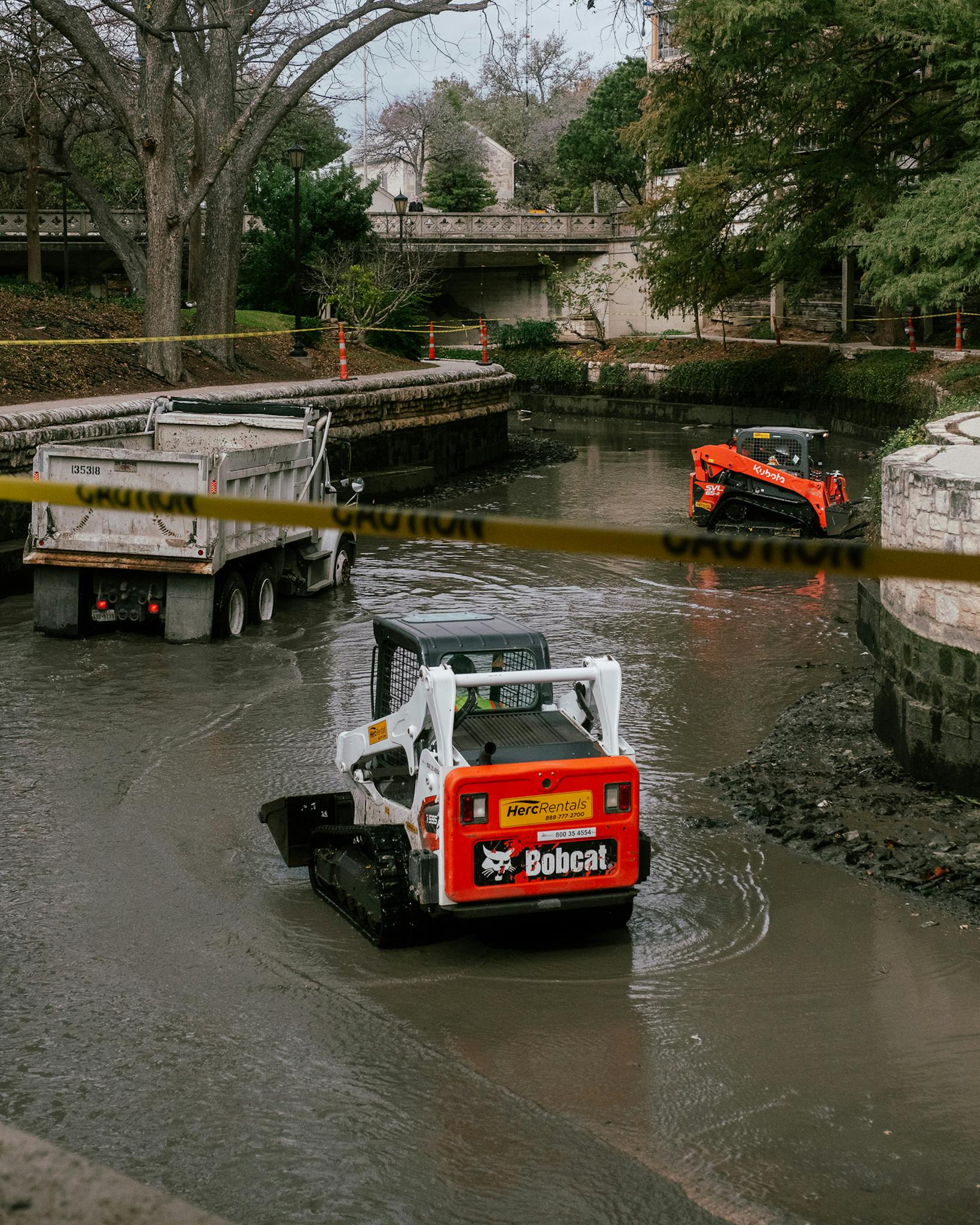
Public Works crews clearing sediment and debris from the downtown portion of the San Antonio River Walk.
Photograph by JoMando Cruz
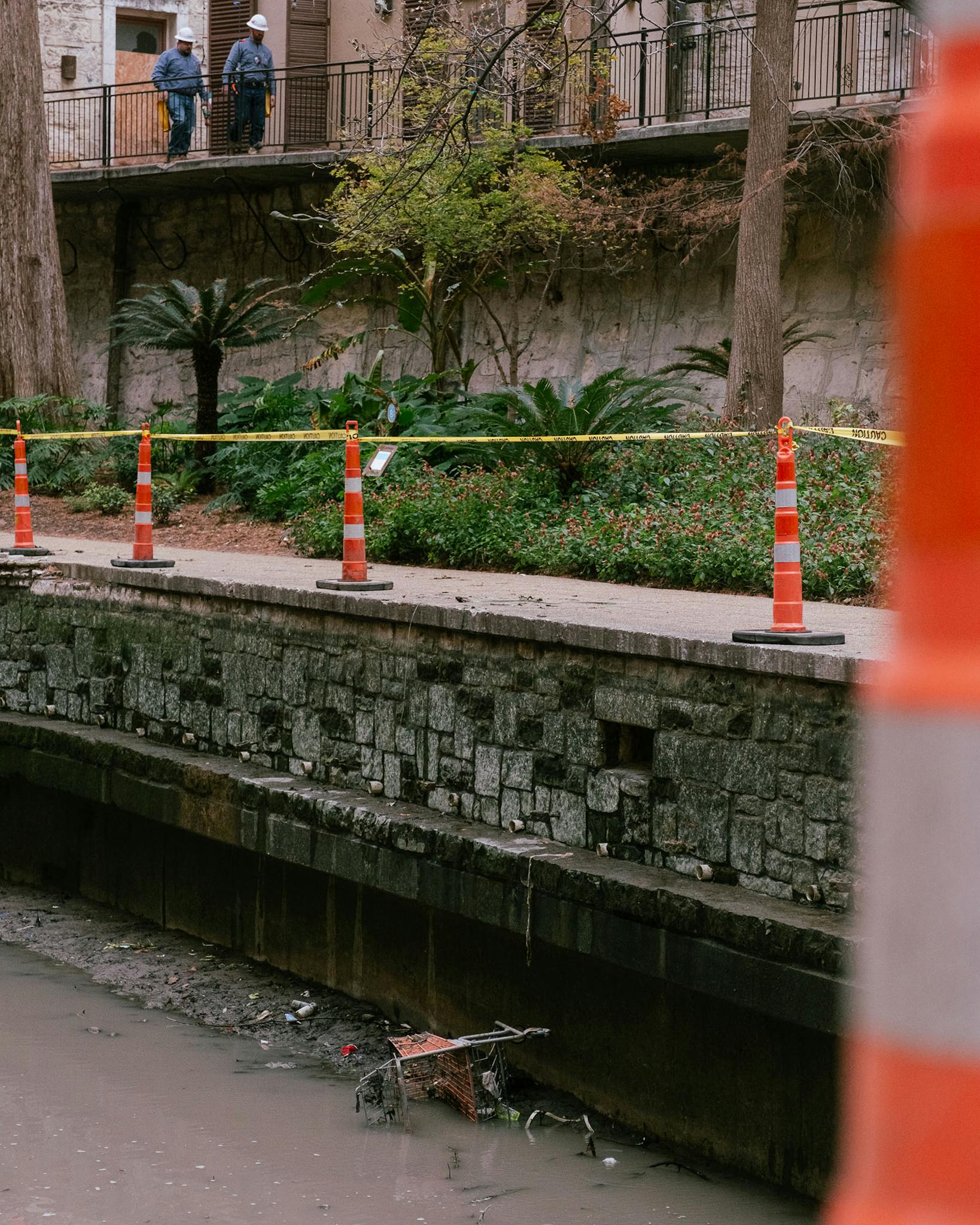
The dewatered river exposed a shopping cart in the downtown portion of the River Walk.
Photograph by JoMando Cruz
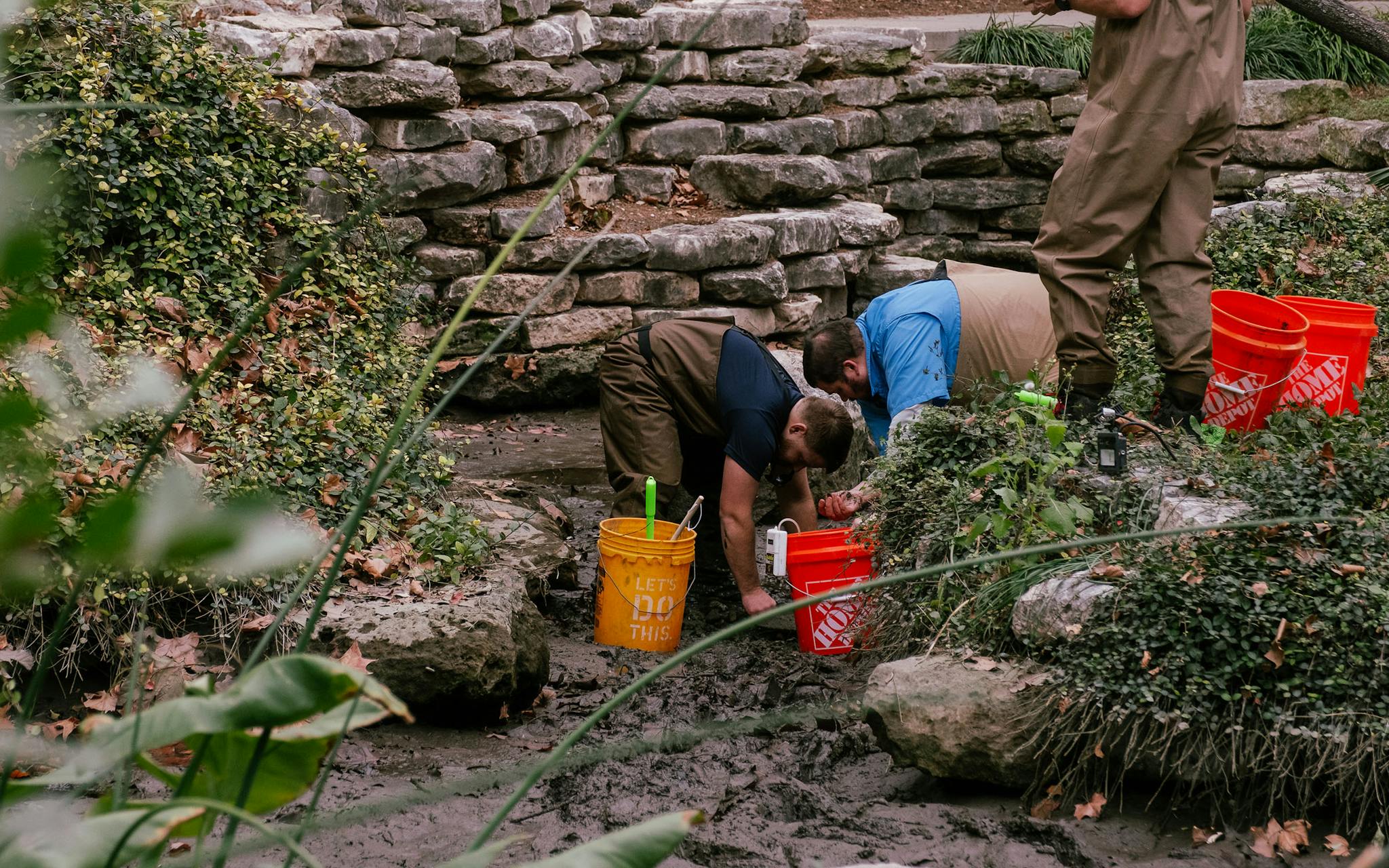
Aquatic biologists and experts from the San Antonio River Authority’s Environmental Sciences Department searching for fish stranded by the river draining. They are collected and held in aerated buckets until they can be moved to deeper waters.
Photograph by JoMando Cruz
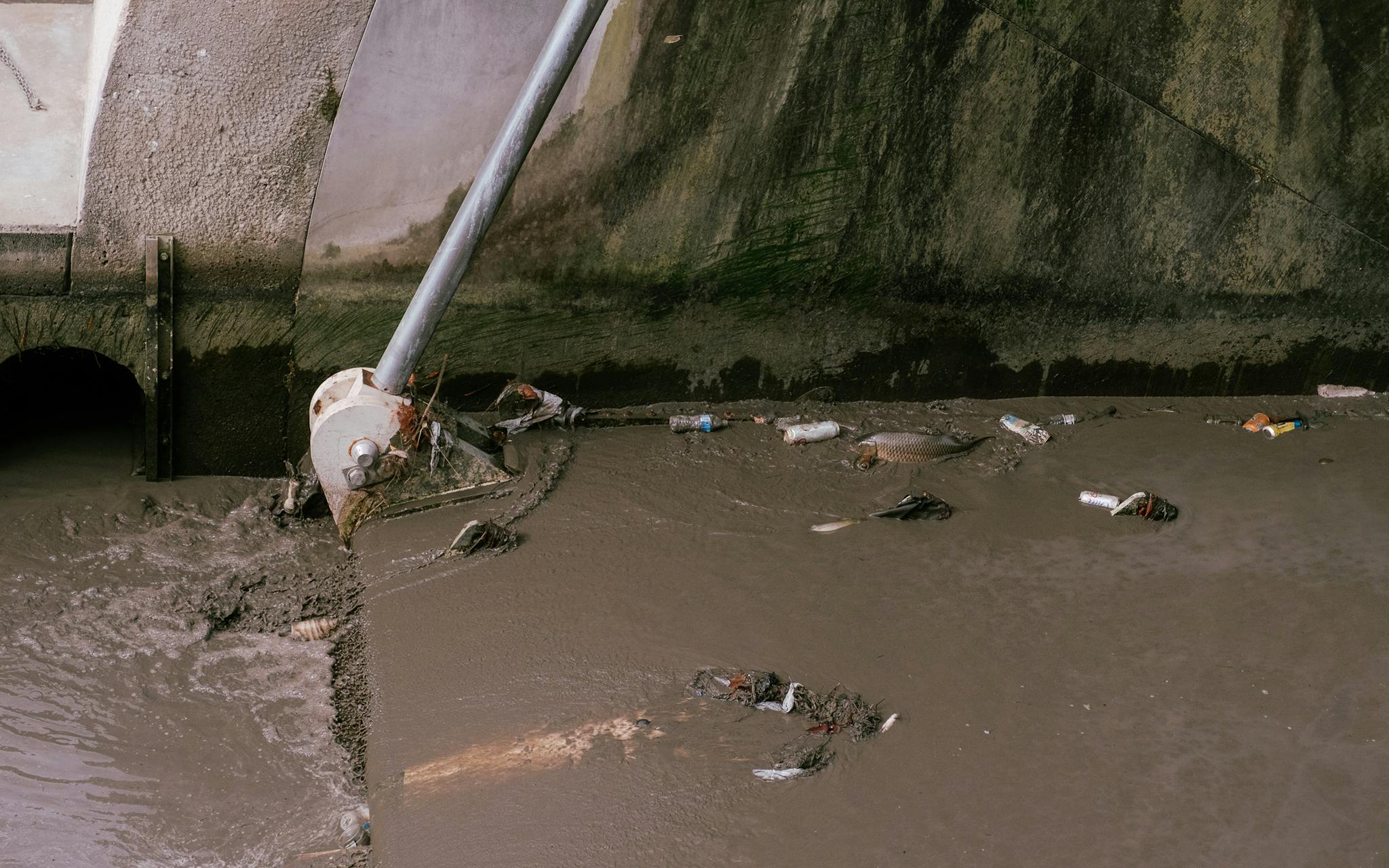
A fish stranded among the trash at the Nueva Street dam.
Photograph by JoMando Cruz
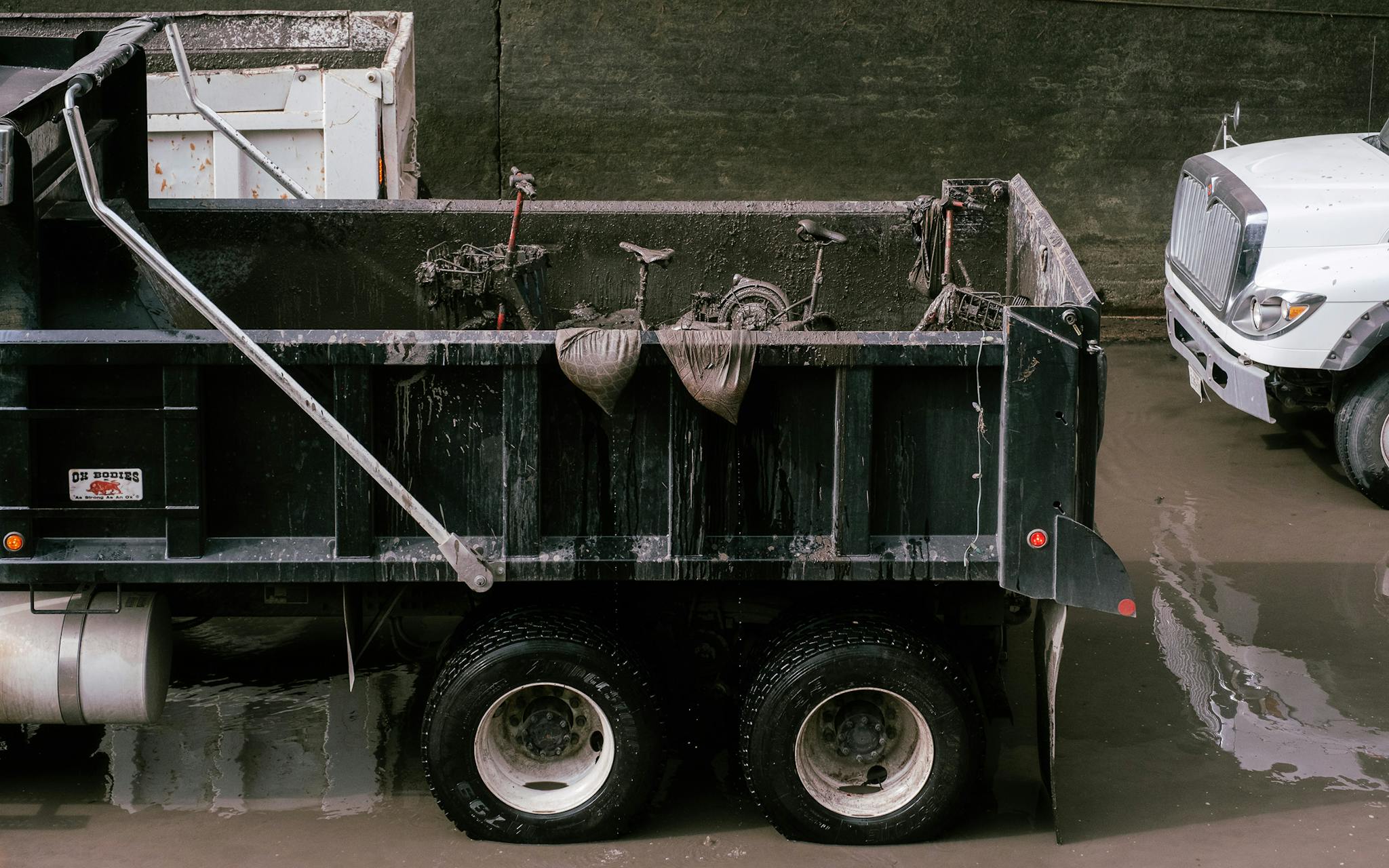
Scooters and other recovered items from the San Antonio River.
Photograph by JoMando Cruz
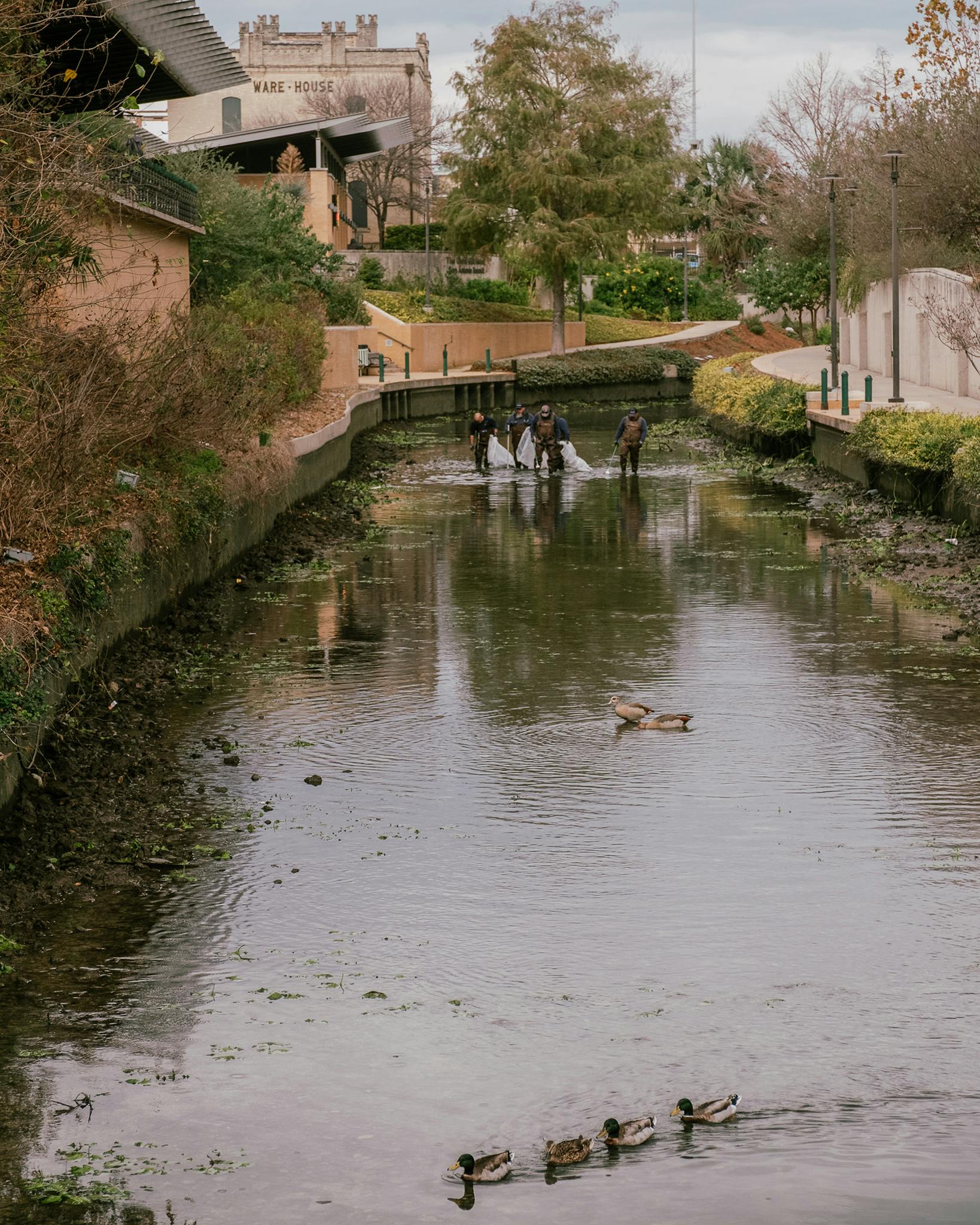
Members of the River Authority patrolling the Museum Reach area of the River Walk, collecting trash and debris while waterfowl forage in the shallow waters.
Photograph by JoMando Cruz
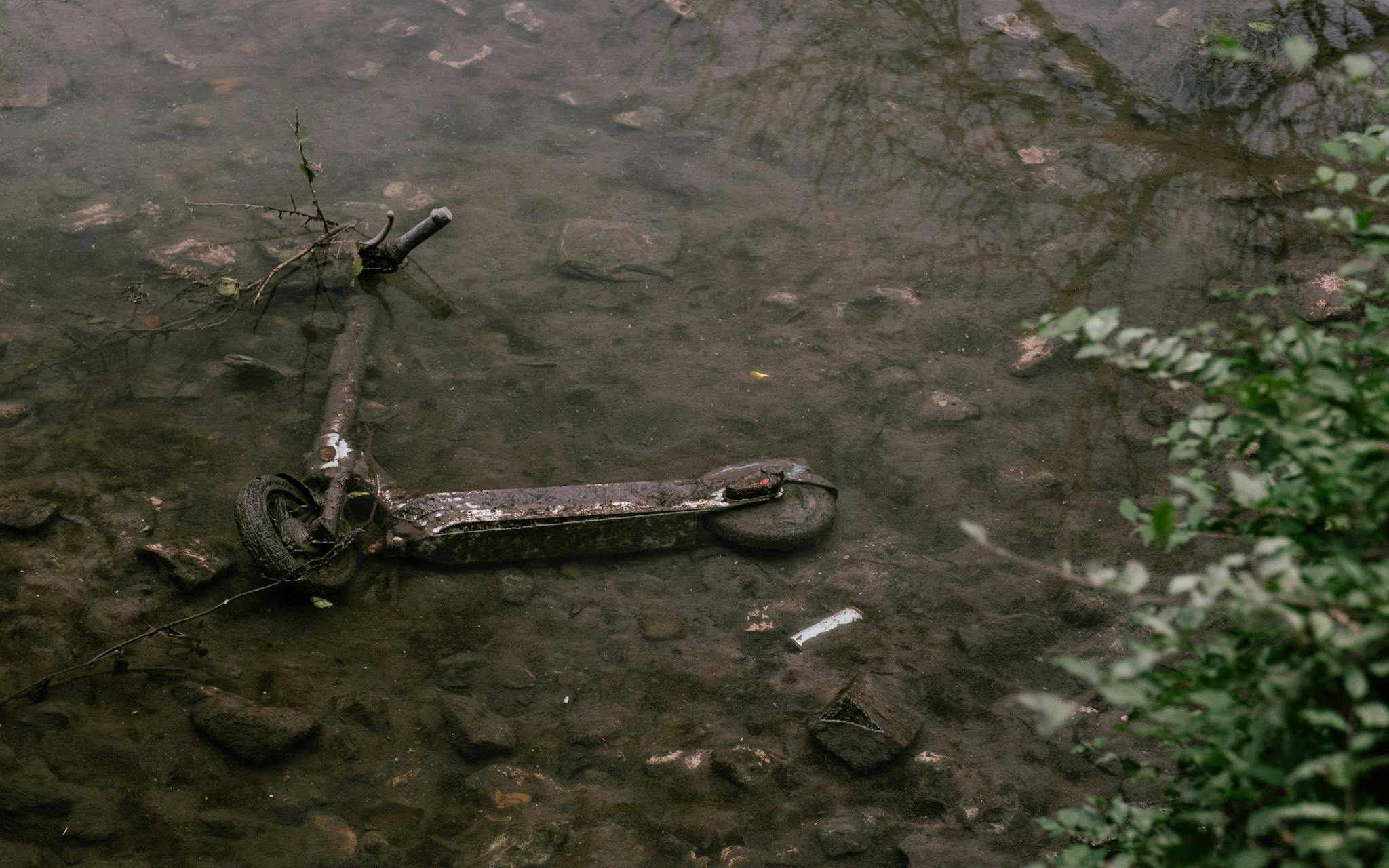
Scooters are one of the most common items retrieved from the San Antonio River during the biennial draining.
Photograph by JoMando Cruz
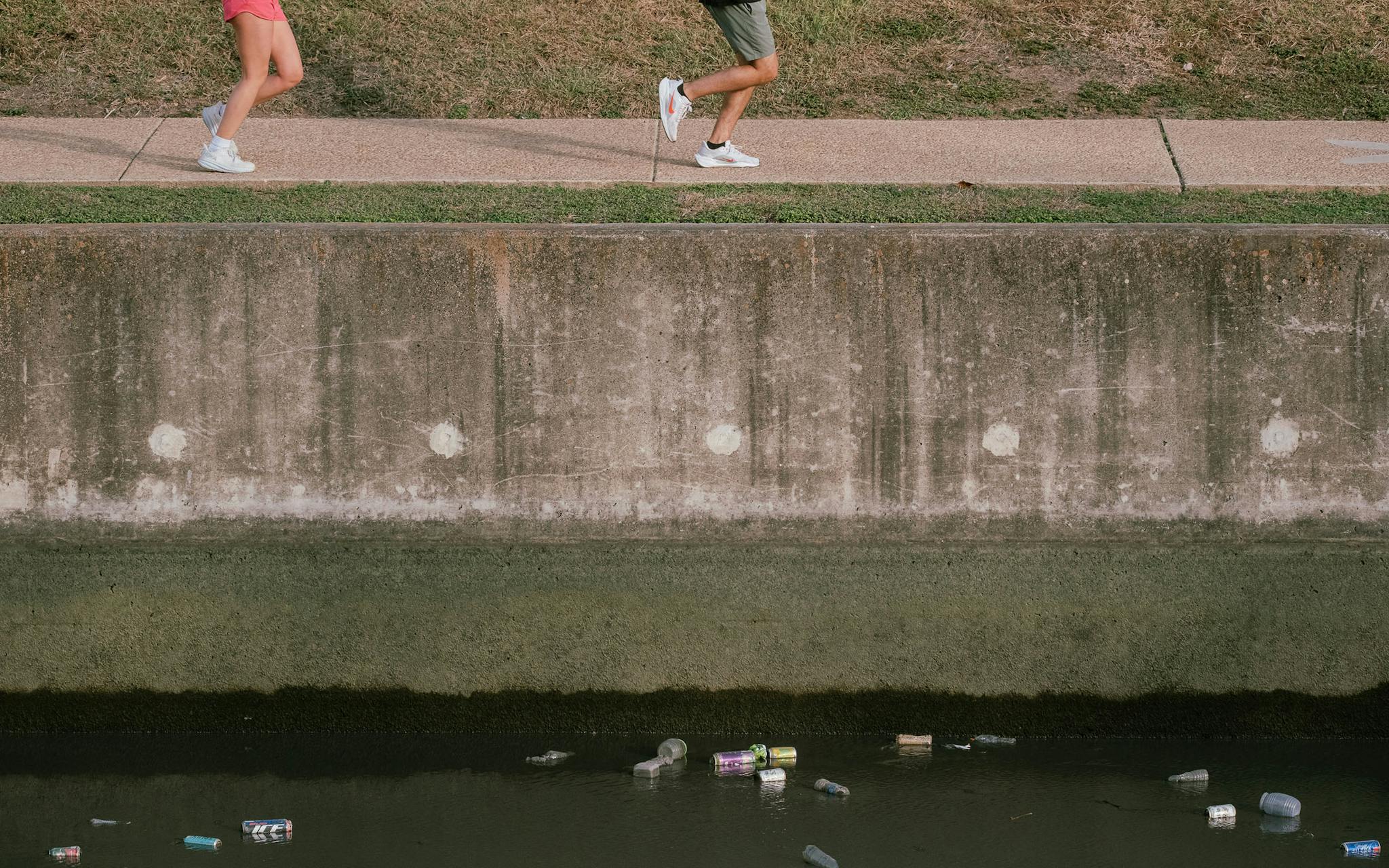
A pair of runners passing by exposed trash during the river draining.
Photograph by JoMando Cruz
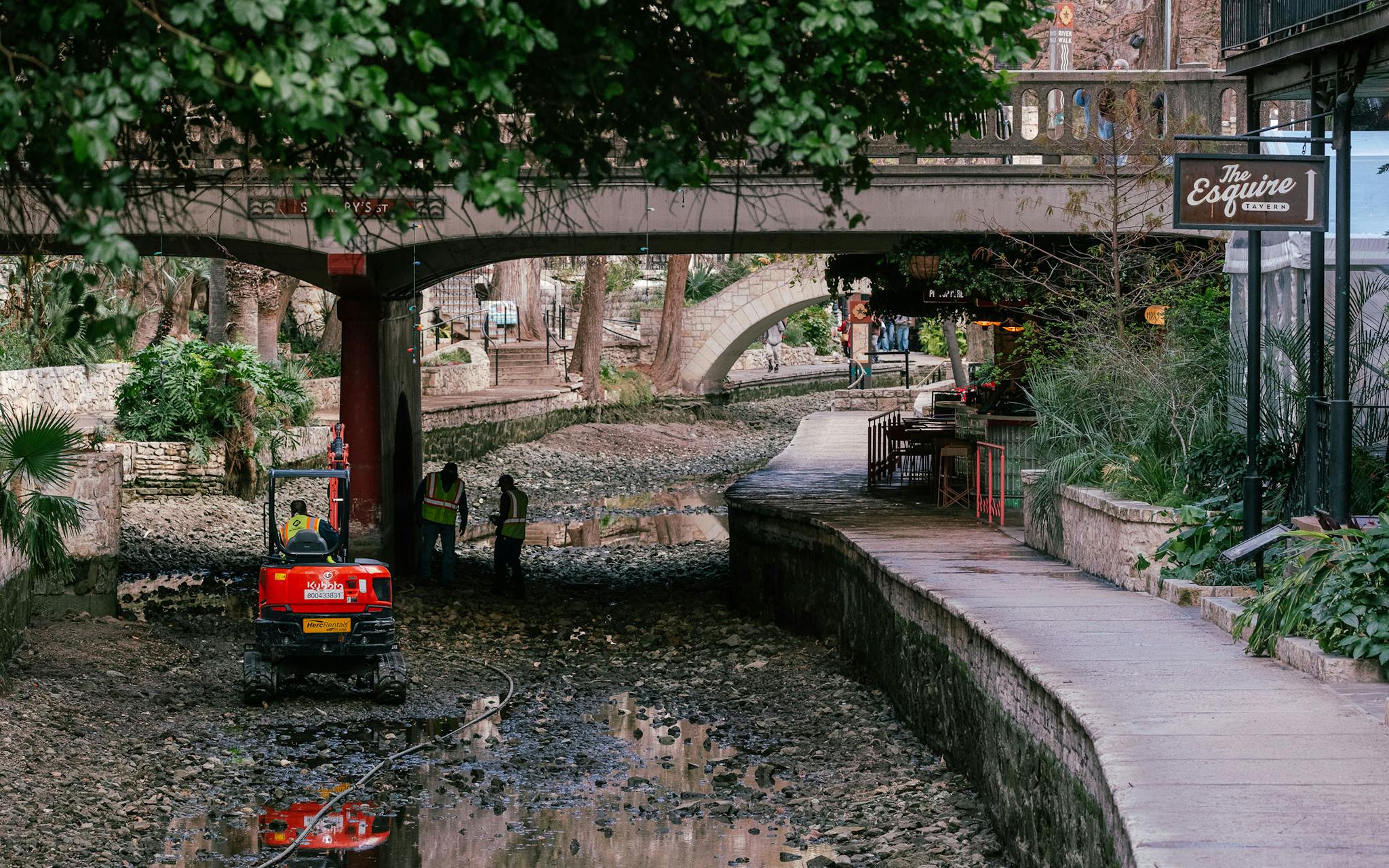
Public Works crews inspect and make repairs as necessary during the draining.
Photograph by JoMando Cruz
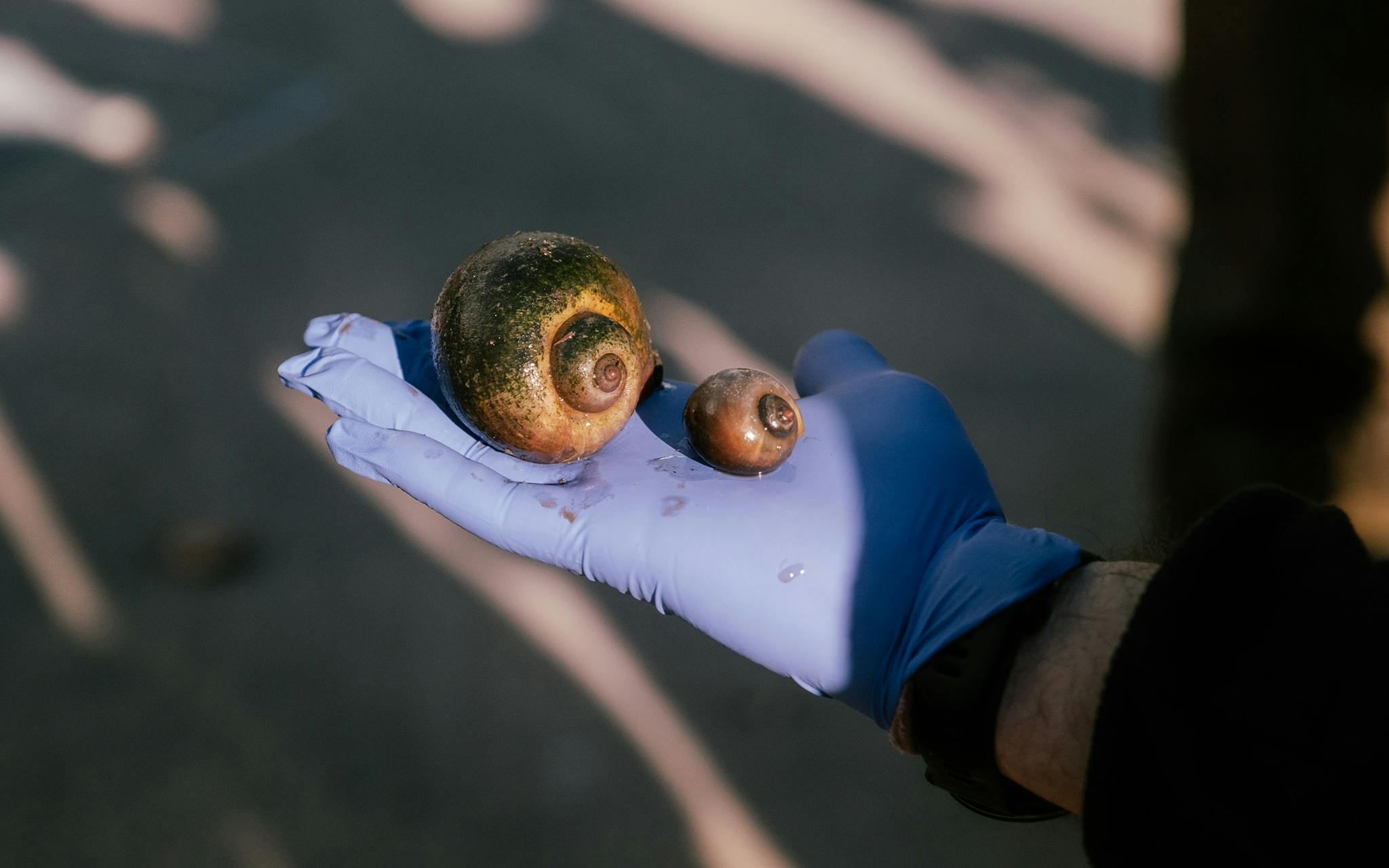
The giant apple snail is an invasive species that the River Authority is attempting to control and remove from the river.
Photograph by JoMando Cruz
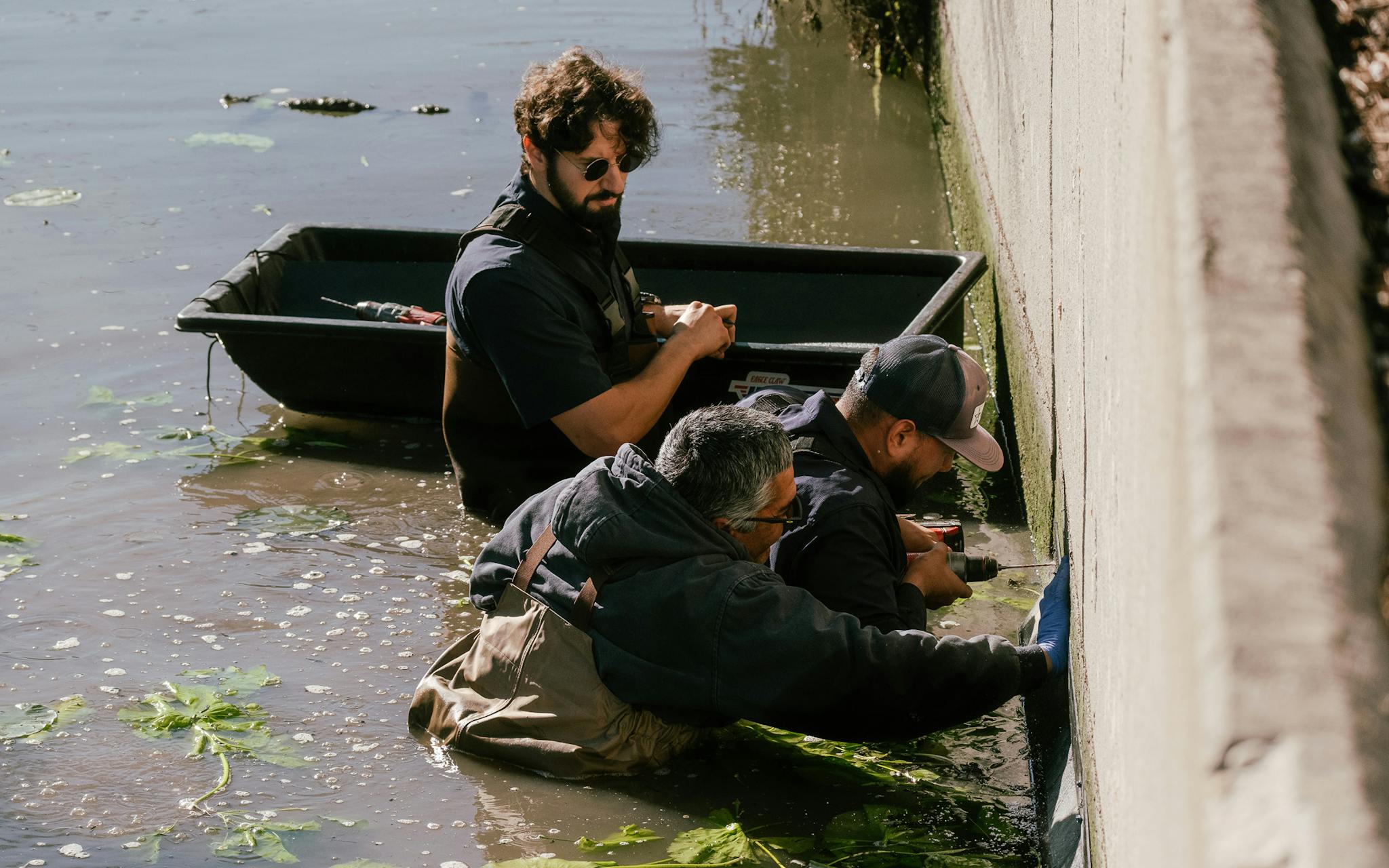
River Authority employees used the latest river draining as an opportunity to install barriers in portions of the river wall that should prevent apple snails from laying their eggs there, where they must mature before hatching.
Photograph by JoMando Cruz
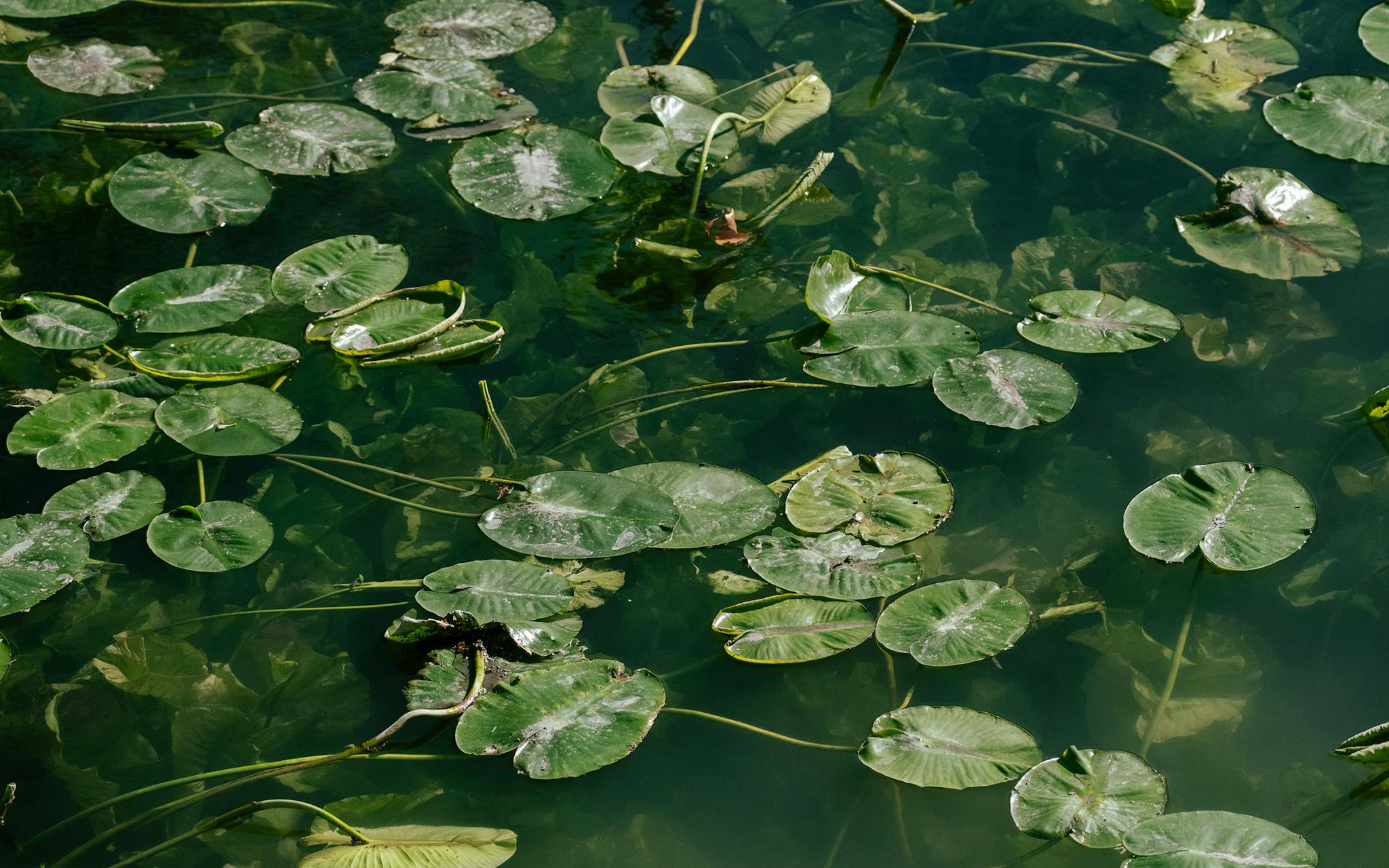
Apple snails harm vegetation that native species rely on.
Photograph by JoMando Cruz
Read Next