
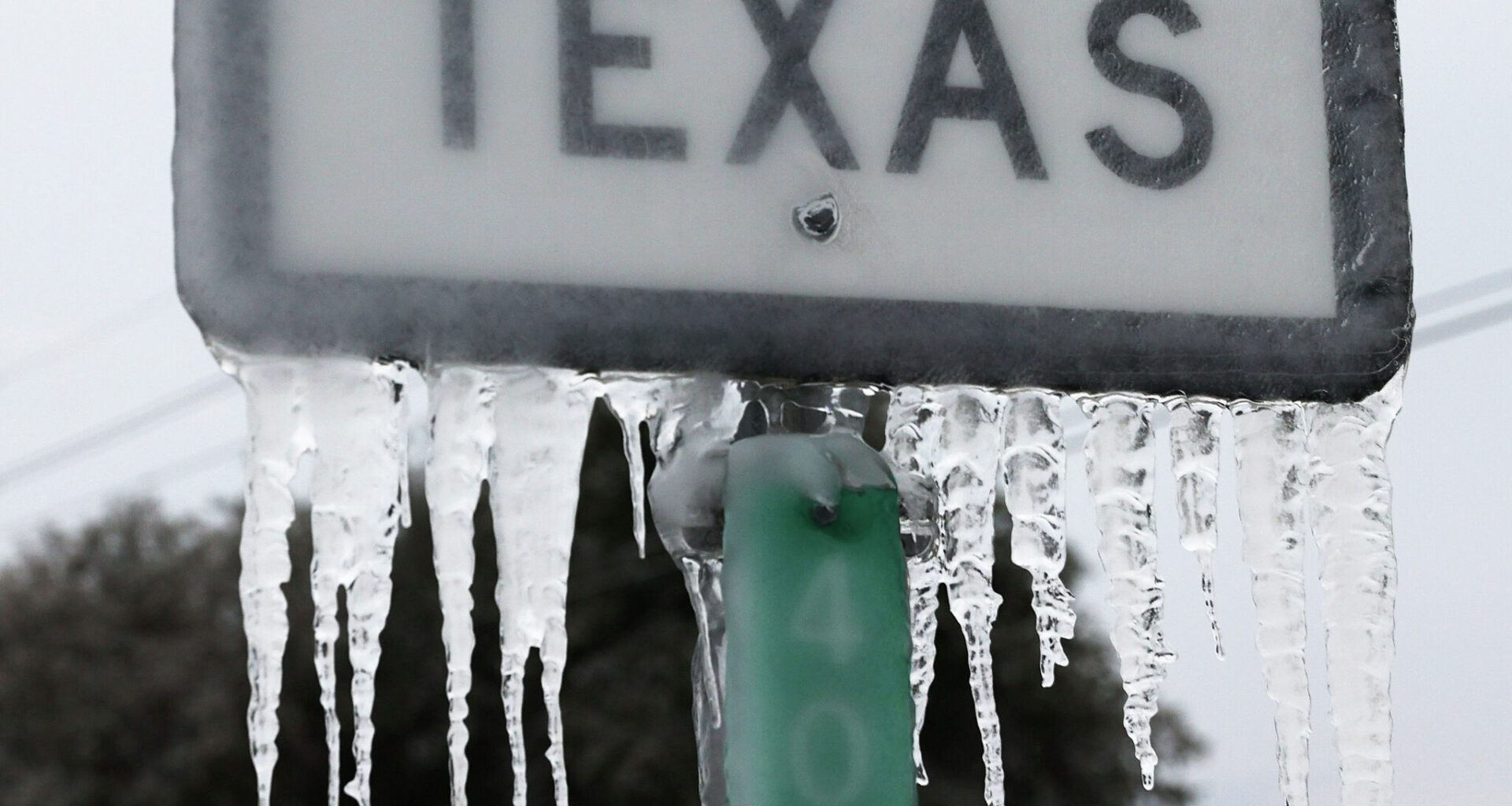
While Texas is through with wintry precipitation for now, consistently cold temperatures will continue to create hazardous road conditions.
Joe Raedle/Getty Images
While the weekend’s wintry precipitation has concluded in Texas, dangerously cold temperatures continue posing road hazards. An Extreme Cold Warning remains in effect through noon Monday for Central Texas, and through Tuesday morning for North Texas.

In addition to taking home precautions, like dripping faucets, it’s also important to evaluate roads if you must travel. As temperatures plunge, road conditions may deteriorate and become dangerous — especially with the formation of black ice.
Article continues below this ad
Here’s a look at road conditions and closures across the state.
Read more: Can you use hot water to defrost your windshield? Best way to melt ice from car
LIVE MAPS: Road closures, driving conditions in Texas cities
Austin road conditions
San Antonio road conditions
Dallas road conditions
Houston road conditions
El Paso road conditions
Winter safety tips: Driving in snow, ice
The Texas Department of Transportation offers seven tips for those considering driving on potentially hazardous roads:
Article continues below this ad
No. 1: Stay off the roads, whenever possible. Assume every road is icy.
No. 2: Drive slowly and cautiously. You would go slow if you were walking on ice, right? Then make sure you go as slow as necessary to maintain control of the car. As a guide, try driving at half the posted speed limit or lower to be safe. Speed limits are set for normal road conditions and weather — not for any kind of wintry state.
Ice and snow, take it slow.
National Weather Service/NOAA
No. 3: Don’t tailgate.Leave enough room between your car and the car ahead to allow you to stop when the tires can’t get traction. Even on dry pavement, you need more stopping distance the faster you go. Ice reduces friction on your tires, which means you will need even more stopping distance. Try to remain as many as 20 car lengths behind the car ahead. Watch out for snow removal equipment, and keep at least 200 feet behind snowplows.
Article continues below this ad
No. 4: Pump the brakes gently. Don’t stomp on the brake — that will lock the wheels and allow the car to skid.
Protect yourself from snow squalls.
National Weather Service/NOAA
No. 5: Don’t panic if you skid. You’ve probably heard the adage that advises you to turn in the direction of the skid, but you won’t remember that if you panic. Don’t forget: Ease off the gas pedal and brakes, and turn in the direction the car is skidding. Do this until you’ve regained traction, then straighten the car.
No. 6: Watch your acceleration.Avoid accelerating on bridges, icy patches or curves. Try to coast or glide over bridges and icy areas. Bridges, ramps, overpasses and shaded areas tend to freeze first. Maintain a steady speed on curves, and don’t accelerate. Get some momentum before you start up a hill, and avoid accelerating on the way up because it can cause your wheels to spin.
Article continues below this ad
No. 7: Be prepared. Keep plenty of gas in the tank, keep your cell phone charged, keep a bottle of water and carry an extra blanket in the vehicle in case you become stranded.
Vehicle emergency supply kit: What to keep in your car
Consider keeping an emergency supply kit in your car, especially if you plan to travel in winter weather.
Courtesy/National Weather Service
Before setting out for a longer drive, it’s important to ensure all fluid levels are full, including your gas tank, and that lights, heater and windshield wipers are working and in the proper condition. If you must travel alone tell someone the times you plan to arrive at each location, as well as the primary and alternative routes you intend on taking.
Article continues below this ad
Texas drivers can also call 511 or visit the DriveTexas site to get the most up-to-date road conditions and traffic information provided by the Texas Department of Transportation.
It is also good practice to keep an emergency supply kit in your vehicle at all times. Here’s what the National Weather Service recommends including in a vehicle’s winter storm survival kit:
Article continues below this ad
Mobile phone, charger, batteries
Blankets/sleeping bags
Flashlight with extra batteries
First-aid kit
Knife
High-calorie, nonperishable food
Extra clothing to keep dry
Large empty can to use as emergency toilet, tissues, toilet paper and paper towels
Small can and waterproof matches to melt snow for drinking water
Sack of sand or cat litter for traction
Shovel
Windshield scraper and brush
Tool kit
Tow rope
Battery booster cables
Water container
Candle and matches to provide light and in an emergency, lifesaving heat
Compass and road maps, don’t depend on mobile devices with limited battery life