
A plan by the city of Dallas to reshape its public library system into a regional model has prompted sharp pushback from council members and residents, forcing leaders to pause closure plans and return with revised options.
The regional model concept is part of Dallas’ effort to cope with persistent budget constraints and evolving community needs, city officials say.
Initial proposal
Under the proposal initially presented Jan. 20 to the council’s Quality of Life, Arts and Culture Committee, the library system would concentrate resources and services into fewer, larger regional libraries with expanded hours and programming, while closing several smaller neighborhood branches.
Breaking News
Related

The city staff recommended closing four neighborhood branches: Oak Lawn; Skyline, in the Buckner Terrace area; Renner Frankford, in Far North Dallas; and Arcadia Park, in West Dallas, to free up approximately $2.6 million in annual operating costs.
Library Director Manya Shorr told council members the city used data, including circulation figures, visitor counts and proximity to other branches to determine which sites to recommend for closure, and that the analysis was meant to be objective and not a final decision.
Community reactions
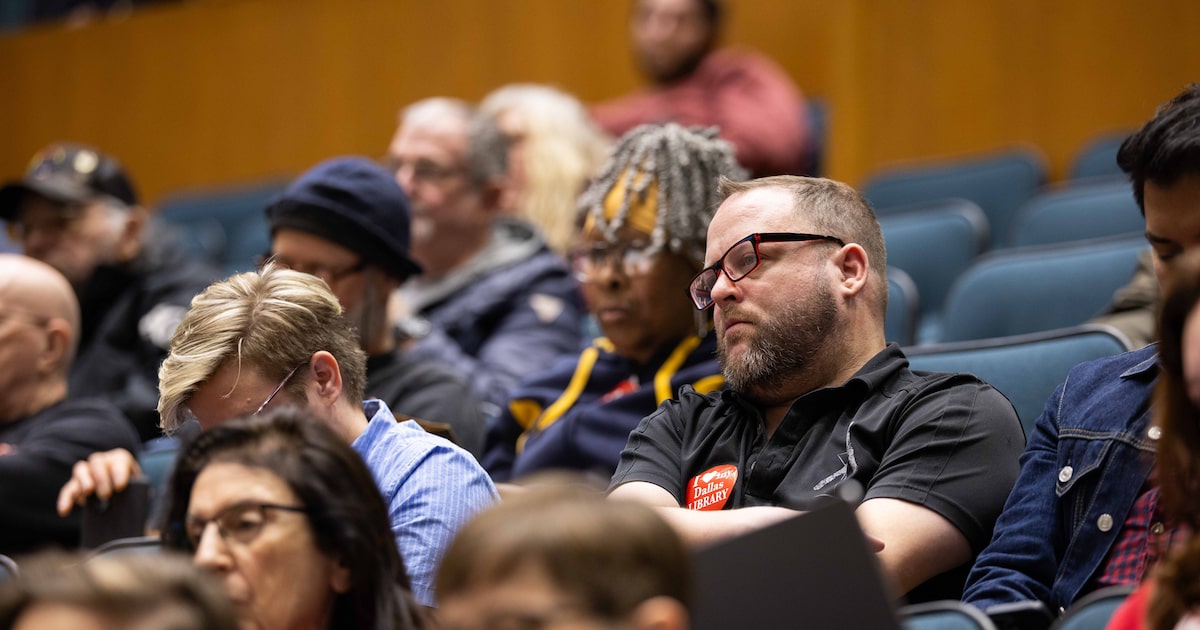
During the committee meeting, council members and residents criticized the suddenness of the recommendations and questioned whether the expected savings justified disrupting neighborhood access.
Related

Some argued the recommendations overlooked intangible community value, such as the use of libraries as voting sites and cultural gathering places.
After the committee presentation, Shorr told The Dallas Morning News, the proposal was just a “preliminary presentation and suggestion.”
“What we were hoping for was accomplished today, and we got feedback from the council members and the community through them as to what they think is missing from the presentation in the proposal,” Shorr said. “And so my plan is to take that back and to figure out how we can fill in those gaps.”
Behind the regional model
City staff say the regional model is designed to streamline operations across the Dallas Public Library system by creating a network anchored by flagship facilities that offer enhanced services and are open seven days a week.
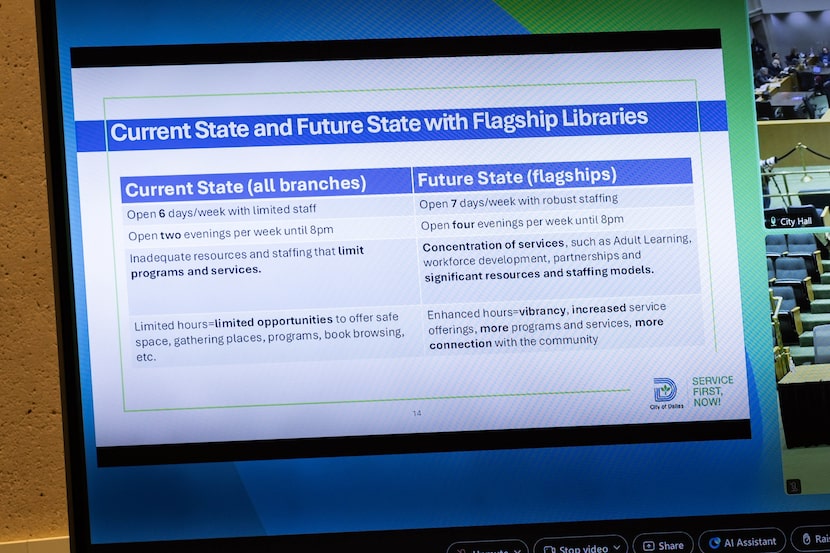
A slide titled “Current State and Future State with Flagship Libraries” is displayed as Dallas Public Library director Manya Shorr speaks at City Hall on Tuesday, Jan. 20, 2026 in Dallas, TX. The City of Dallas is proposing to close the Oak Lawn, Skyline in the Buckner Terrace neighborhood, Renner Frankford in Far North Dallas and Arcadia Park in West Dallas branches as it moves towards a regional library model.
Juan Figueroa / Staff Photographer
Here is how that regional model would work:
One central library, which would continue to serve as the system’s primary anchorFive flagship libraries in the first year, designed to operate as regional hubs with a seven-day-a-week service and open four evenings per week until 8 p.m. 24 neighborhood libraries would remain open and continue providing local servicesExpanded programming, technology access and community spacesStaff restructuring, with some employees reassigned to flagship libraries, while other positions would be eliminated as part of cost-saving measuresClosure of select neighborhood branches identified based on usage data, proximity to other libraries and operational costsLooking ahead
In a memo sent Friday to Mayor Eric Johnson and City Council members, Dallas city staff members said they will conduct a citywide survey with input from the Friends of the Dallas Public Library and include additional analysis when they return in March. That analysis is expected to look at the historical significance of locations, proximity to other civic facilities and public transit access.
City leadership also pledged to present multiple options, such as a revised regional model that maintains branch locations while creating flagship libraries, or alternatives that avoid closures by reducing service hours across the system.