
Editor’s note: To view this story as it appeared in Community Impact’s South Central and North Central Austin editions, click here.
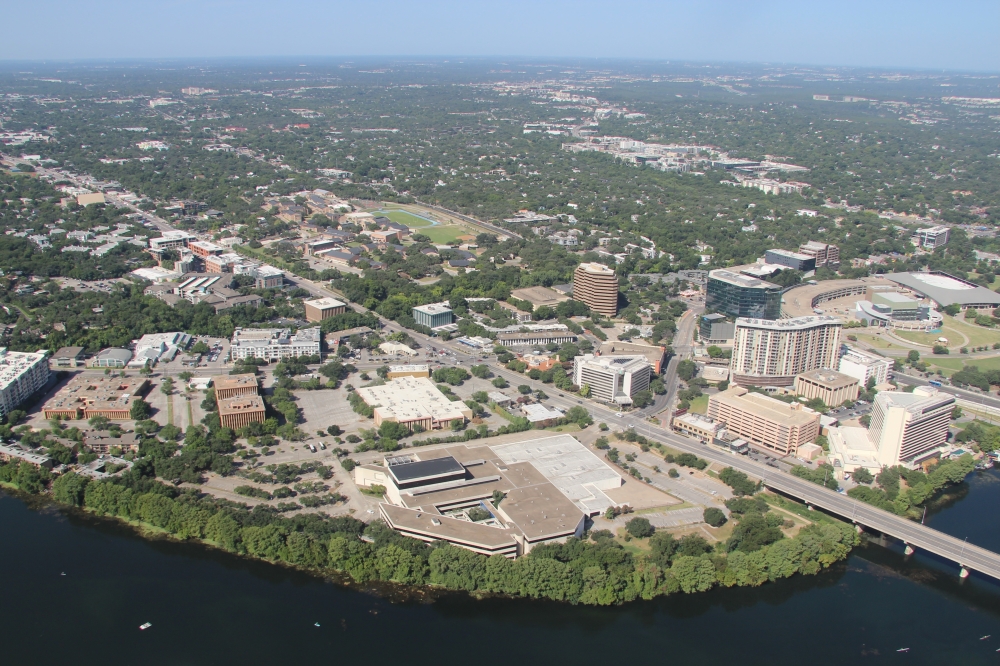
The lakeside landscape south of downtown is moving closer to long-awaited transformation with millions of square feet of mixed-use space and public areas across a series of high-rises.
The redevelopment of vacant or underused land throughout the nearly 120-acre South Central Waterfront district has been anticipated for well over a decade. Several landmark projects are planned around the area, with most yet to break ground.
The RiverSouth office tower on the district’s west side, completed in 2022, was billed as the first of many higher-profile modern developments coming to the South Central Waterfront. That wave of construction has yet to materialize but is on the way, starting with the One Lady Bird Lake residential tower that broke ground this year.
Development is taking place without formal city regulations—and requirements for community benefits—that were envisioned through a public framework for projects districtwide. While some aspirations from that process may not be realized, the city launched a broader planning effort this fall to set a 10-year blueprint for downtown that now includes the waterfront district.
Council member Zo Qadri, who represents the area, said it’s among the most important opportunities for shaping Austin’s growth in the years ahead.
“These areas sit at the heart of our city, and the planning decisions we make today will determine how accessible, connected, and welcoming they are for decades to come,” he said in a statement.
In addition to private projects, the district will also serve as the juncture of the proposed Austin Light Rail system. That would include lines running to the south, east and north connected to a new waterfront station with infrastructure on or near some redeveloping properties.
The backstory
Goals for South Central Waterfront construction were set in a formal vision framework plan adopted in 2016. That served as a roadmap for residents’ desire to bring public amenities to the area alongside expected growth, such as including hundreds of affordable housing units to ensure the district didn’t build out for luxury living only.
However, regulations intended to turn vision plan goals into firmer requirements never came together. After months of public review, zoning updates crafted for that purpose were indefinitely shelved before a City Council vote in September 2024.
A community advisory board formed to oversee the district vision plan also hasn’t convened since March, putting it at risk of being dissolved under city policy. At its last meeting of 2025, former Chair Jim Stephenson said project outlines became “wildly inconsistent” with local goals with developers “wiggling out” of affordable housing requirements.
Looking ahead, Qadri said he’s prioritizing development that improves public spaces, mobility options and local environmental goals while providing affordable housing benefits.
“Past planning efforts created a strong foundation, and the work ahead gives us a chance to build on that foundation with a more coordinated and accountable approach,” he said.
The specifics
One Lady Bird Lake, the 17-story tower from real estate firm Related Cos., will feature almost 300 units, a restaurant and retail space, and a lakeside park area. The property will also house a future boardwalk trail extension.
The largest and most prominent planned project, the waterfront “Statesman PUD,” or planned unit development, is expected to bring up to six mixed-use high-rises off Congress Avenue. While City Council passed the PUD in late 2022, construction is currently stalled due to ongoing litigation.
Down the block, Related is also adding millions of square feet of housing, hotel, office, retail and venue space at 500 S. Congress Ave. Related Texas President Mike Iannacone said the project, which could rise up to 650 feet, will serve as the heart of the waterfront district—an area he called a “mixed-use city of the future.”
Other towers are expected to replace a local auto shop and salon, a vacant office building and Cidercade. The city’s 4.6-acre One Texas Center property may also be redeveloped.
“>
A closer look
Since regulatory plans for the area fell through last year, projects in the South Central Waterfront have been handled on a case-by-case basis. The area is now unlikely to see the benefits outlined by residents and other stakeholders amid market conditions that differ from those a decade ago. Some community members have also contended that planned construction conflicts with civic protections for the waterfront area and isn’t aligned with past desires for the area.
Private development is also taking place without millions of public dollars anticipated under the vision plan. In late 2022, officials created a district-wide funding mechanism for new infrastructure as the area built out. It would’ve reserved a share of rising property tax collections there to fund upgrades such as roadways and parkland.
That tax reinvestment zone was shut down before funds were used. Some Austin residents sued over the plan, claiming the zone was improperly created and unnecessary for the district’s growth. A district court judge agreed last year, ending the financing strategy.
Efforts to guide the area’s future still remain in progress, as the waterfront area is now part of Austin’s renewed “Central City” plans running from north to south of downtown.
Get involved
Last summer, officials also asked to update the city’s existing downtown-area blueprint. That process kicked off this fall, and residents can weigh in on what they want to see around Austin’s core.
That new Central City District Plan extended downtown’s traditional boundaries to add the South Central Waterfront and West Campus to the north. The process is meant to support public spaces, retain and attract businesses and cultural institutions, improve public safety and mobility options, and ensure access and affordability.
Further engagement will take place ahead of the plan’s adoption later in 2026.
 The Central City District Plan builds on years of other planning efforts around downtown. (Courtesy city of Austin)