

Monday morning I stepped onto the Northaven Trail, a block from my house, headed west. Young couples with little kids were walking their dogs. Teenage boys in hoodies sped past on mountain bikes. By then the clouds had cleared. The easement, a seemingly endless vista of frosted glass, was blindingly bright.
Late Sunday night, Garrett Boone emailed that he hadn’t been able to convince a couple to leave their home in the storm tunnels beneath Harry Hines Boulevard. Boone, the Container Store co-founder who hires homeless people to clean the creeks feeding into the Elm Fork of the Trinity River, said he left Lucky Brown and his girl Chocolate making a fire in the tunnels as temperatures began dropping Friday night.
I’d gotten to know the couple in recent weeks – Lucky’s a piano player, homeless for eight years, he told me, because of “music, legal trouble and a bad marriage.” I told Boone I’d check on them in the morning. That’s how I was raised, by a woman who resettled Laotian immigrants in East Dallas after the Vietnam War, who served countless meals at the Stewpot, who will still sign up to volunteer for any good cause. Dad taught me to love the city; Mom, the people who live here.
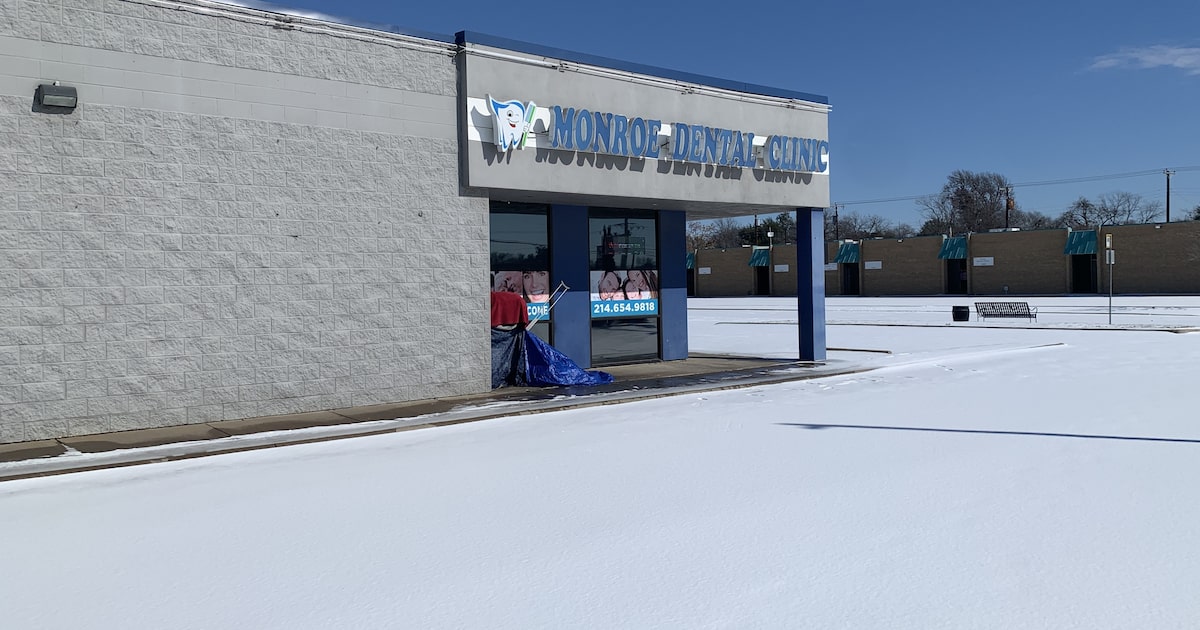
The trail dead-ends at Monroe Drive. I took a left toward Walnut Hill Lane, where, beneath the awning of a dental clinic, there was a man in a sleeping bag, moving but not awake. Next to him was a shopping cart covered in a blue tarp and red blanket with a single crutch sticking out.
I left him alone for the moment and walked toward the tunnels in search of Lucky and Chocolate. I shouted their names into the canal, where water was streaming through three of the six tunnels, but there was no response. Either they didn’t want to come out or they’d decamped for some place warmer. Boone hoped it was the latter.
Opinion
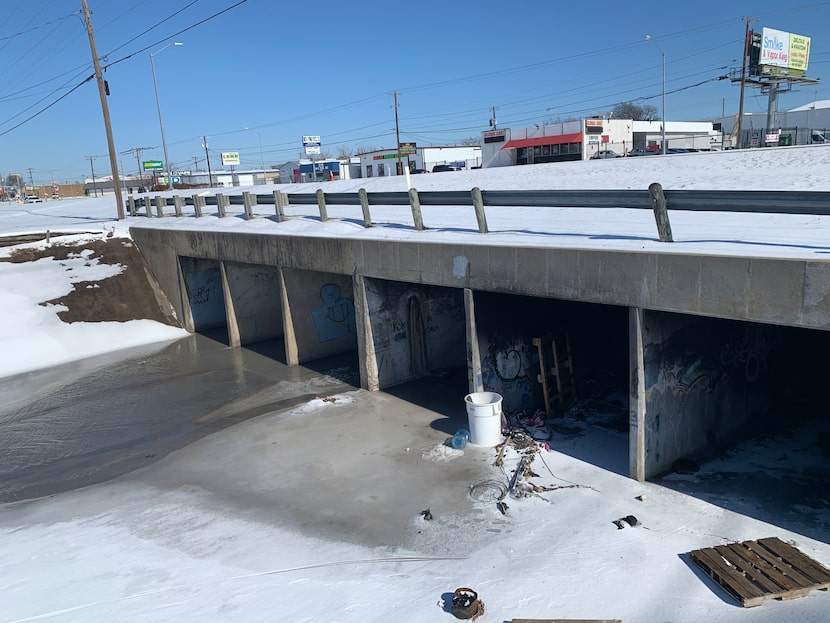
Water was streaming through the Harry Hines Boulevard storm-drainage tunnels Monday morning. Lucky Brown and a woman named Chocolate have lived in these tunnels for eight years.
Robert Wilonsky
Sarah Kahn, president and CEO of Housing Forward, told me Monday most people who’d refused shelter before the ice storm, because they didn’t want to abandon their tents and belongings or the small spaces they’d carved out for themselves, ultimately decided to take refuge at the city’s temporary shelter at Fair Park over the weekend. Some had their tents collapsed by the ice; most decided it wasn’t worth sleeping in the sleet and snow. Maybe 5% of the city’s homeless refused shelter, she said, “a small but significant number of people trapped in the cycle between street, hospital and jail.”
On the walk back, I saw another man sleeping on the sidewalk in front of a laundromat. He was tucked into his blue-and-yellow sleeping bag, awake.
The man said he’d been on the street “for a while.” He had long brown hair and a beard, matted and unwashed; he could have been 25 or 50. His nails were long, his hands covered in gray. He said he didn’t need anything. “I have food,” he said, digging into a small bag of chips; “I have a drink,” he said, nodding toward a large plastic cup full of ice.
He said he wasn’t concerned about nights below freezing and days barely above it. “Sun’s out now,” he said, squinting at the bright sky. “It’s warm.”
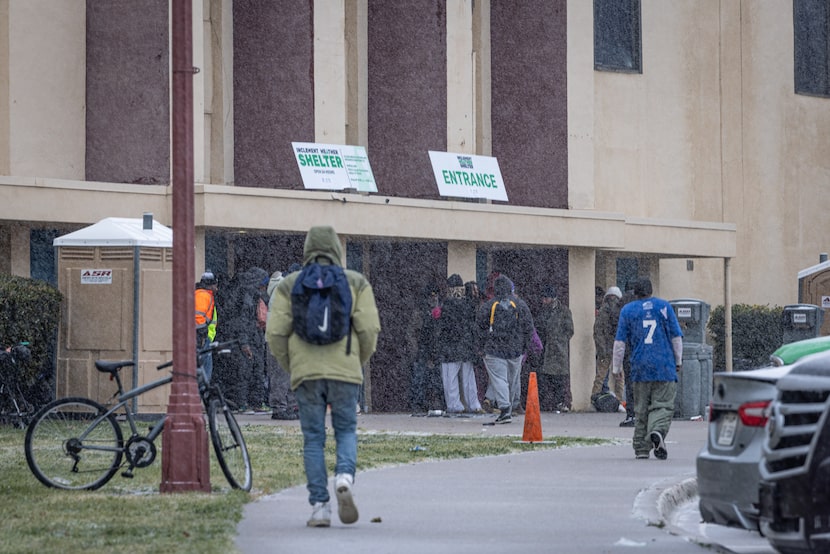
People seek shelter from sleet at the inclement weather shelter at Fair Park on Saturday, Jan. 24, 2026, in Dallas.
Angela Piazza / Staff Photographer
He said he’d think about going to a shelter, because he could use a shower, but didn’t like the idea of being around other homeless people. I told him I would make a call if he wanted. He said he would consider it, but he had to go to the bathroom. He continued our conversation long after we parted ways, talking to himself as he headed to a dumpster behind a nearby restaurant.
The man I’d seen earlier in front of the dental clinic was awake, upright in his sleeping bag, smoking a cigarette next to an open can of tuna. He wore four jackets and a knit cap. In a lilting accent – he said he was from Zaire – he said he’d been in Dallas for seven years, but that he didn’t need anything more than a phone so he could contact someone who promised to bring him money for an Air France ticket home. I had a hard time following the circuitous conversation about his long journey to this sidewalk.
I couldn’t just shrug it off so I called Kahn, who’d spent all weekend working with city officials and homeless services providers to shelter the more than 1,100 homeless men and women who’d taken refuge at Fair Park. Kahn said she would call a volunteer from the Stewpot to swing by and check on them.
The bearded man wasn’t there when the volunteer arrived later, but his stuff was, so she left him a blanket and food. The man from Zaire was there but waved off the woman from the Stewpot, insisting he was just waiting for his ticket home.
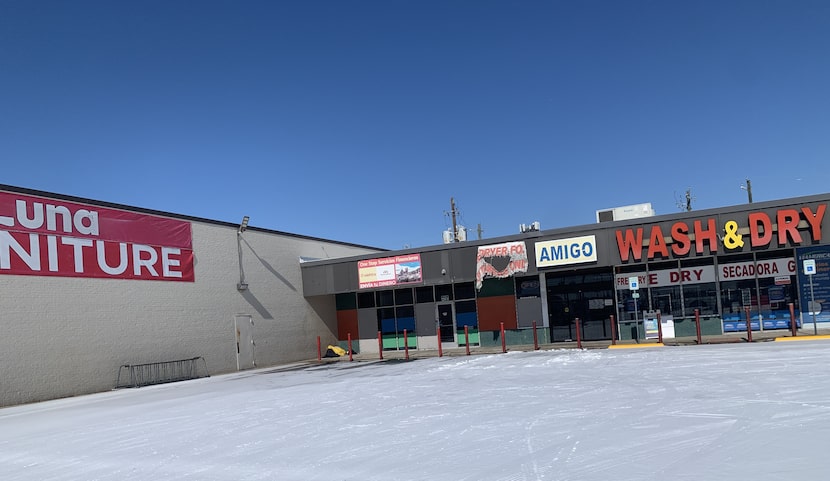
If I hadn’t been on foot, I never would have seen the man sleeping in front of the washateria off Walnut Hill Lane in Northwest Dallas.
Robert Wilonsky
“Maybe it’s not why he’s out there,” the woman from the Stewpot told me later. “But it’s what keeps him going.”
Neither man wound up sheltered Monday night. Nor did the man who spends all day outside First Presbyterian Church downtown. Nor did others who live in the corners and along the fringes of downtown, The Cedars and South Dallas, who waved off vans offering rides to Fair Park and other warming centers around the city.
“When it’s this cold, almost everyone accepts shelter,” said Hannah Sims, who oversees Housing Forward’s outreach response team. She’s worked in this world for eight years, and has convened what she calls a complex needs work group consisting of health workers and Dallas police officials trying to find ways to break that cycle of which Kahn spoke.
“Those folks with behavioral or physical health issues are often the most visible,” Sims said, meaning they hide in plain sight, not in the encampments along the creeks. “Behind every ‘no’ you get, there are lots of layers of trauma. It’s a small number, but it’s hard to watch them say no. So how do you deliver complex answers to them in a simple way that meets their needs and those of a community that wants to see them in safe, healthy spaces?
“That’s a hard balance. It’s slow work. But you have to keep in mind that most no’s mean ‘not yet.’”