
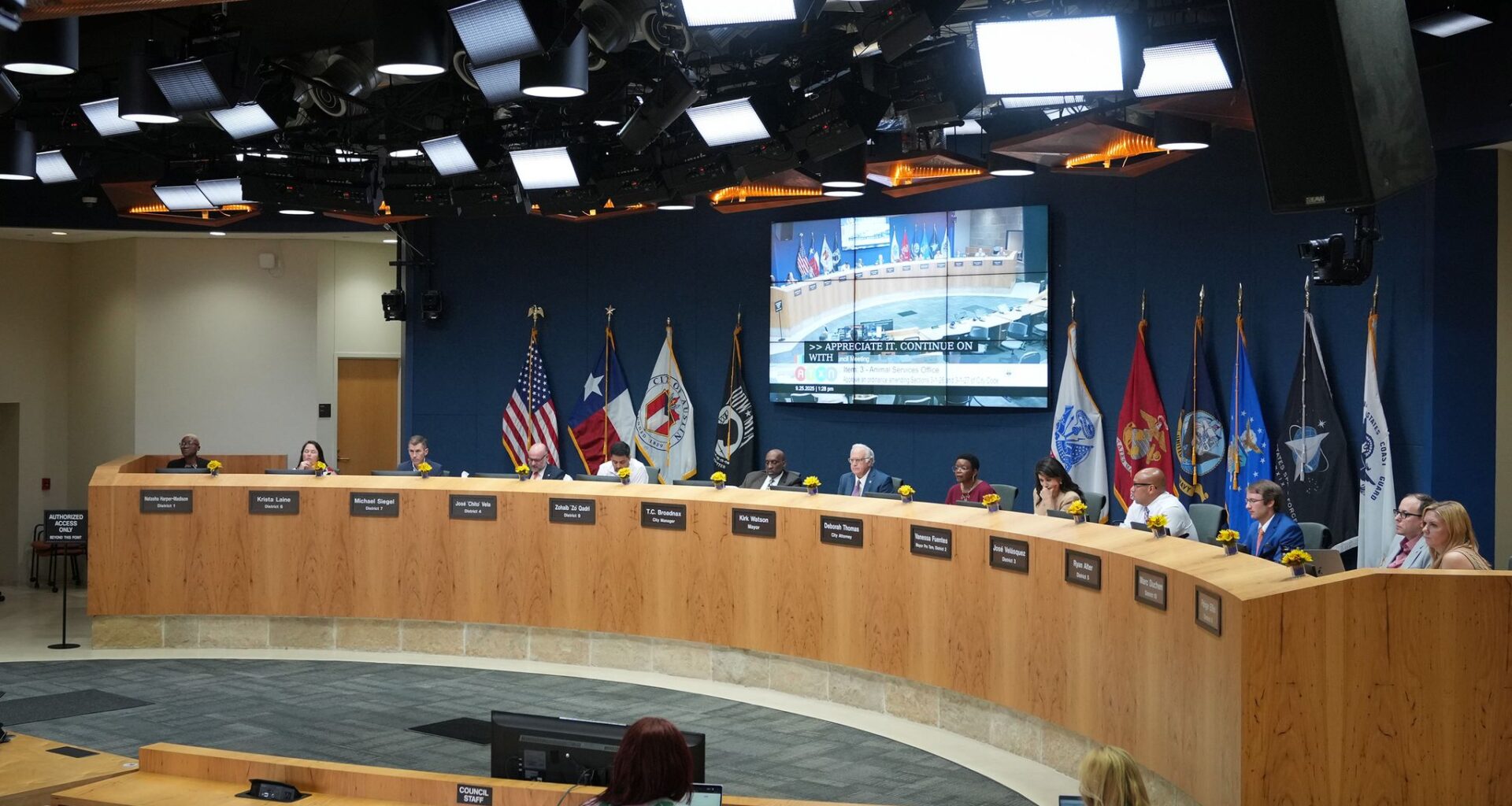
Council Members Krista Laine and Vanessa Fuentes announced plans during a council work session last week to revive the Regional Affordability Committee, a group formed more than a decade ago to coordinate across city, county and institutional lines. Authorized in February 2015, the committee – made up of leaders from Austin, surrounding counties and school districts, Capital Metro and Central Health – has largely sat idle in the years since.
For Fuentes, the effort marks a second attempt. The District 2 representative tried to revive the panel after taking office in 2021 to no avail. But she said the political environment is different now, citing Austin voters’ rejection last November of a city-proposed property tax increase known as Proposition Q.
“On the heels of the failure of Prop Q, affordability is the number one issue for not only Austinites, but for people who live in our region, in the Greater Austin area,” Fuentes said. Restarting the committee, Fuentes said, “sends a clear message that we are serious about doubling down on our efforts to address affordability.”
Laine, who is leading the effort, said she hopes to focus the committee on housing, child care and transportation. Those costs — along with health care — have continued to outpace wages in the area, forcing many workers to live farther from jobs and services — and driving up commute times and household expenses.
As a council member whose District 6 spans multiple jurisdictions — Travis and Williamson counties, and the Austin and Round Rock school districts — Laine said she hopes the panel will give leaders a chance to coordinate on a regional scale to address what she described as a regional problem.
“What we’ve got is a situation where we don’t have all the people coming to the table with a good relationship that we’d need to in order to solve for this,” Laine said. “What this regional affordability committee opens up the possibility of, is having a discussion of the factors at play in a public setting that the public can access if they want to understand it or give input.”
Fuentes hopes the panel will resume regular meetings by the end of March. Meanwhile, Laine said she plans to spend the next six months to a year reworking the 2015 ordinance that established the committee to help ensure it does not fizzle out again.