

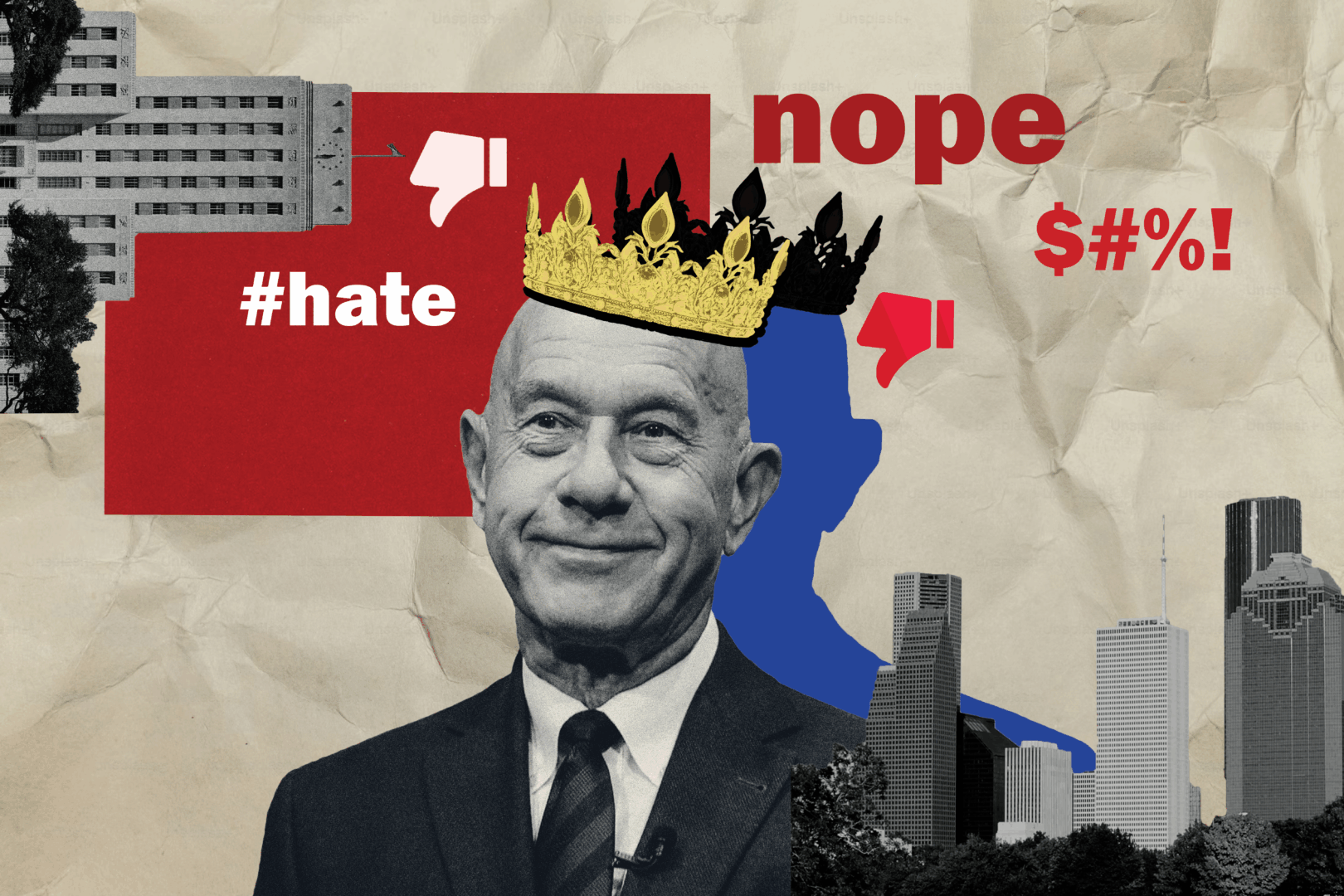
Nina To/ The Cougar
“Everyone should be smiling this morning because the people of Houston are smiling, because they’ve elected a mayor who is going to listen to them, a mayor who is known for solving problems.”
Two years have passed since John Whitmire made this triumphant statement during his inauguration as mayor. Looking back at this, once a hopeful moment in Houston history has led many Houstonians, including me, to crease our mouths into a frown.
Whitmire’s tenure following his inauguration has been riddled with controversy, backlash and even expulsion by his own political party.
His term of office has been encompassed by an attitude of dismissiveness, bureaucratic inadequacy and regressive policies. This leaves many Whitmire voters, such as myself, regretting their voting decision.
Disappointment
Whitmire was supposed to be a hopeful page-turning moment in Houston’s history, a candidate who, on paper, seemed worthy to lead the fourth-largest city in America. He represented Houston in the Texas legislature for 50 years, was the longest-serving member of the Texas Senate and served on many important Senate committees.
During Whitmire’s campaign, he emphasized that his mix of experience, pragmatism and efficiency was the right approach for Houston. He also argued that his background and connections in the Texas legislature could bring real change.
This resonated with me and many other voters who felt the Sylvester Turner administration was passive in enacting meaningful change in the city. As a result, Houston seemed to decline in the wider American sphere.
Whitmire ultimately succeeded in his mayoral bid, garnering 64.4% of Houston’s total votes and endorsements across the political spectrum, from the Houston Chronicle to Tillman Fertitta. The city was behind him.
Two years later, the bright, vivid picture of Houston that many voters had envisioned had faded, painted over by the gray reality of Whitmire’s time in office.
Whitmire’s actions and behavior over the past two years have contradicted much of the agenda he outlined in his speech and campaign. Instead of being understanding and attentive, he has been disengaged and dismissive; his pragmatism has disappeared and the transparent, honest administration he promised has been discredited by evasion and lies.
For instance, Whitmire has struggled to take a practical approach to raising taxes amid Houston’s $227 million budget deficit. As tough a decision as it might be, his cuts to METRO funding and reduction of city administration leave him very short-handed on other options to reduce the deficit.
Sylvester Turner’s candidacy was marked by a lack of transparency and honesty, something Whitmire vowed to undo in his administration.
Leadership failures
Unfortunately, Whitmire has rolled back on his promise not to divert drainage funds, investing in the demolition of buildings. This is a problem for many Houstonians, and a survey of voter priorities for the mayor ranked infrastructure in the top 3 at 73%, with drainage and water supply included.
In addition, Whitmire has been evasive about ICE’s involvement in Houston, tiptoeing around the issue and leaving Houston residents uninformed. A well-explained statement from Whitmire can clarify what powers his administration has in the matter, but he has been too weak-willed to be honest.
Most importantly, Whitmire does not possess the qualities that a public servant, much less a mayor, should have: understanding and adequately articulating his actions.
When faced with the question of efforts to recall him, he described the efforts as “silly,” dismissing the recall as petty rather than addressing the concerns of his constituents.
Furthermore, when he canceled the METRONext initiative, he did little to involve Houstonians or explain his actions thoroughly, even though they had democratically voted for the expansion.
Voters regret
When I cast my mayoral runoff vote on that early November day for Whitmire, I did not foresee myself making a mistake. Whitmire convincingly argued that pragmatism and progress could coexist, that his reputation showed he could bring real change to the city. Sadly, he was just that, convincing.
Whitmire was not as outspokenly progressive as I would hope a candidate would be, but I was willing to overlook my qualms, given the limited change that previous progressive administrations produced and the unimpressive lineup of opposing candidates.
The problem is that Whitmire’s whole schtick was his competency and sensibility; when he fails to be those qualities, it leaves little to make him an appealing mayor. He is neither a problem-solver nor an idealist, so as I look back at my decision, I wince in regret.
Why did I and other voters make the sacrifice of a more centrist-oriented mayor if he has failed to bring any of the supposed benefits that entail?
Whitmire’s mayoral term teaches a valuable lesson in politics: ideas of realism sound good when faced with the opposing option of strict idealism, but they can lead to the worst of both.
Houston deserves both, and citizens should be unrelenting in their quest to seek candidates who are more than one-trick ponies.
Opinion@thedailycougar.com