
As the state of Texas seeks to tighten water use efficiency in the face of worsening drought, the city of Austin and Austin Water are planning to expand the city’s own water conservation and reuse projects in 2026. One major way to save water is to replace old and leaky pipes, and according to Austin Water, Austin has plenty of those.
“We’re constantly rehabilitating aging infrastructure. You know, we’ve been here for 100 years, so things are getting old,” said Charles Celauro, the assistant director of engineering and technical services at Austin Water.
Back in December, Austin Water received a $55 million commitment in low-interest funding from the State Water Implementation Fund for Texas to work on Capital Improvement Projects around Austin, a group of initiatives aimed at expanding the city’s water capacity to match its growth.
Those projects are also linked to the city’s larger effort, Water Forward, as adopted by City Council in 2018 and revised in 2024, geared toward making our water supply more climate resilient. On Dec. 9, the city released an update on Water Forward, reporting hundreds of leaky pipe repairs and resident rebate programs to encourage water conservation.
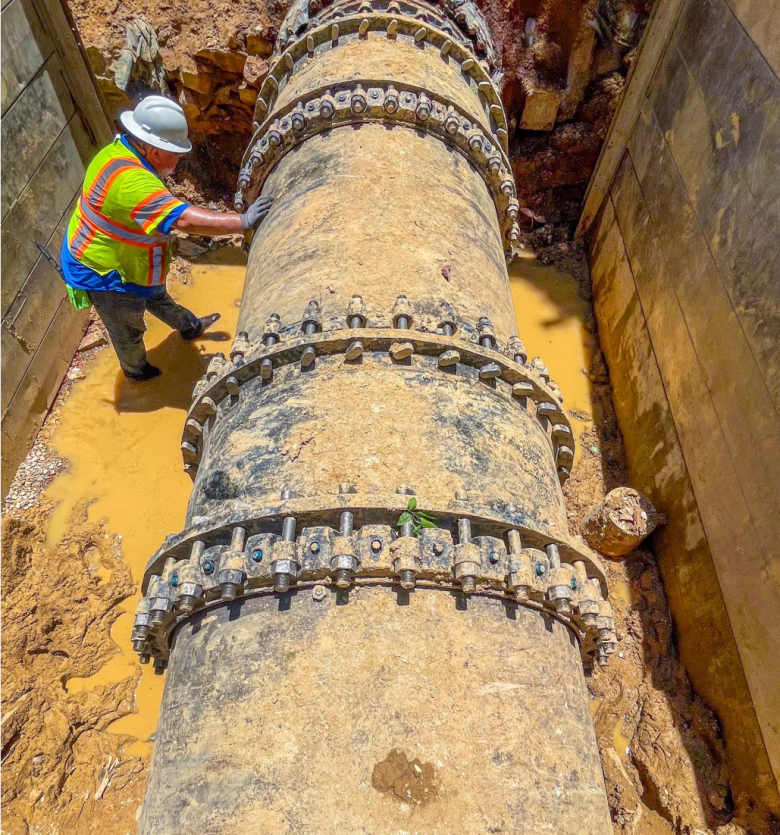
The bulk of the funding, $45 million, will go toward replacing and upgrading Austin’s polybutylene pipes over the next three years, starting in 2026. “Those are these plastic service lines that were put in Austin back before the Eighties, and they just became brittle, and we are now starting to see significant [water] line breakage,” Celauro said.
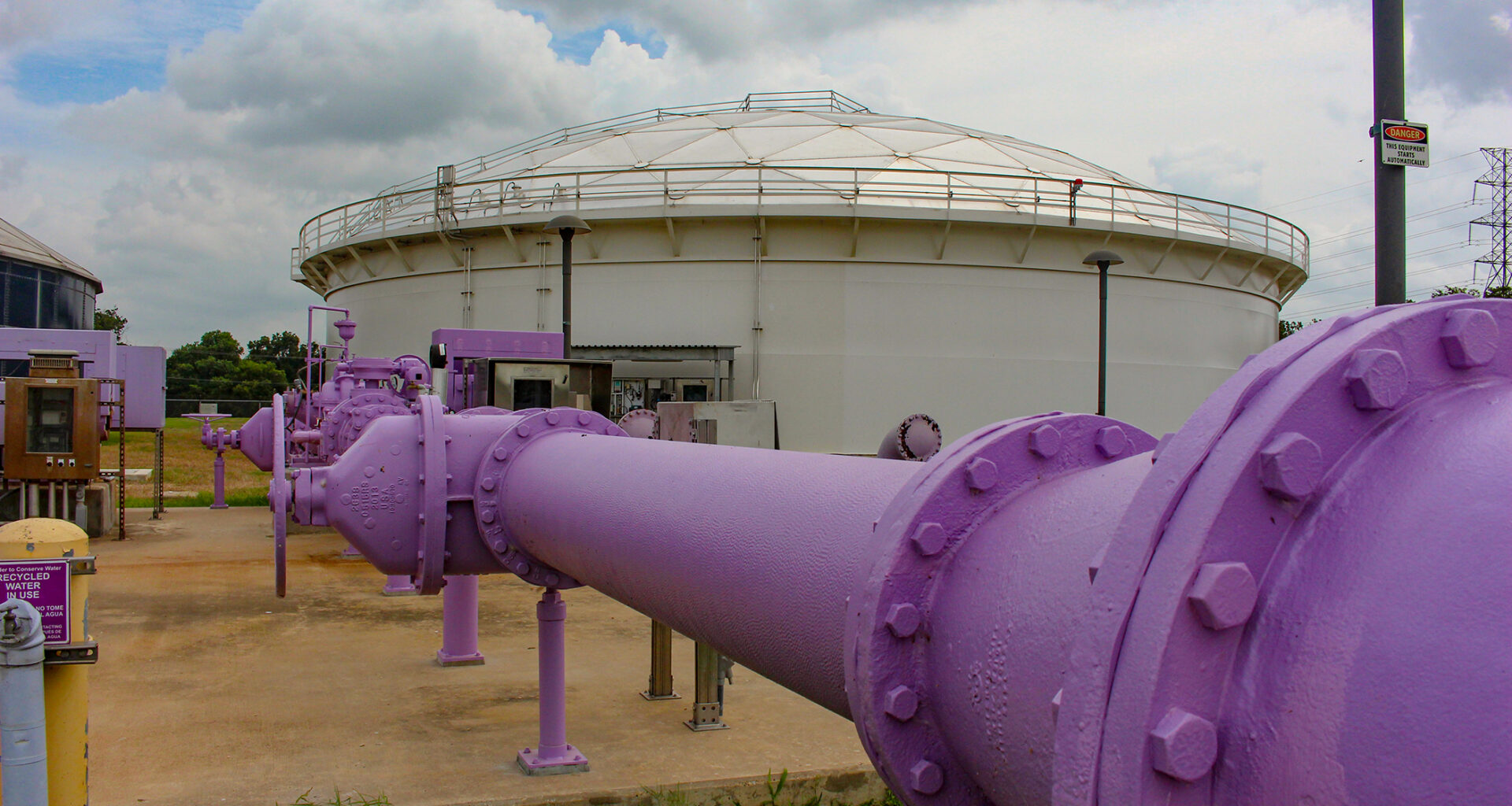
$10 million of the funding will go toward expanding Austin Water’s GoPurple piping to reclaim used water for non-drinking purposes, such as watering lawns and flushing toilets. The loan will allow two separate service areas in the Travis Heights area to connect, expanding the reclaimed water distribution system, according to Austin Water.
 Credit: city of Austin
Moreover, the next decade of I-35 construction through the middle of Austin, under the Capital Express Central Project, will also affect ongoing water and wastewater projects. This year, Austin Water engineers will be moving and rerouting their water and wastewater lines away from the planned expansion, specifically on the stretch of I-35 between 290 and Lady Bird Lake, Celauro said.
“We’re having to go a block away and reroute our utilities there. So even though we may be on Red River, it’s for the I-35 expansion,” Celauro continued.
Beyond I-35, Austinites will be seeing Austin Water working in a couple of neighborhoods this year to replace water lines and infrastructure. Construction of a 72-inch water pipe along McNeil Drive, a $54.7 million project, will continue this year and should increase water flow into North and Northwest Austin.
Moreover, on Jan. 22, City Council approved a $20.6 million wastewater interceptor in the Harris Branch neighborhood in Northeast Austin, while a $133.4 million proposal to fix the old wastewater line at Williamson Creek in South Austin was withdrawn for revision. Williamson Creek’s existing pipes are in poor condition and at risk of a sanitary sewer overflow, according to Austin Water.
Celauro also noted that as developers flock to the Dessau corridor east of I-35, more pressure is placed on the water and wastewater infrastructure. “So that’s not only improving aging infrastructure, but also maintaining the growth that we’ve had in that area,” he continued.
Apart from fixing water infrastructure, Austin Water will also work to reduce its environmental impact on the Colorado River this year by changing how they deal with wastewater at the Walnut Creek Wastewater Treatment Plant. The plant, which treats about 50% of Austin’s sanitary sewer water, is the city’s “largest” Capital Improvement Project for 2026, with its capacity increasing from 75 million gallons to 100 million gallons a day, according to Austin Water.
Right now, Austin Water is using chlorine to disinfect the water at the facility, Celauro said. This year, they’ll start disinfecting the majority of the wastewater using ultraviolet light disinfection instead, in an effort to reduce chemical exposure for workers and the community. Reclaimed, used water will still need to be chlorinated for non-drinking uses, “but the stuff that we are discharging into the Colorado River will all be done by the UV disinfection,” Celauro clarified.
As Central Texas anticipates more severe climate events in the coming decades, Austin Water is also in the process of applying for loans, like the Water Infrastructure Finance and Innovation Act program, to pay for flood mitigation and water and wastewater upgrades in places like Walnut Creek.
“By helping our community use water more efficiently and expanding recycled water infrastructure, we can work collectively to protect Austin’s water supply while supporting our community’s continued growth into the future,” Austin Water said in a statement.
Projects that have recently started construction or are scheduled to begin in 2026 include:
Colony Park Water Pipeline Renewal will replace approximately 13,000 linear feet of existing water line within Colony Park neighborhood with a new 12-inch water line in East Austin, bounded by Loyola Lane to the south, Johnny Morris Road to the west, and Colony Loop Road to the east.
Cameron Road Wastewater Improvements will replace and upsize approximately 5,500 linear feet of existing wastewater line with new 18-inch and 24-inch wastewater lines, bounded by Cameron Road to the east and south, I-35 to the west, and U.S. 290 to the north in Central Austin.
Astor Place Water and Wastewater Pipeline Rehabilitation will replace approximately 6,300 linear feet of existing water line and 5,700 linear feet of existing wastewater line within the Grant Park neighborhood in East Austin, bounded by East Martin Luther King Jr. Boulevard to the north, Deloney Street to the west, Springdale Road to the east, and East 12th Street to the south.
Old Enfield Water & Wastewater Pipeline Renewal will replace approximately 3,640 linear feet of water lines and 6,690 linear feet of wastewater, bound by Windsor Road to the north, Pease Road to the east, Enfield Road to the south, and MoPac to the west in Central Austin.
East Allandale White Rock Neighborhood System Water and Wastewater Renewal will replace 4,360 linear feet of water lines and 1,810 linear feet of wastewater lines within the Allandale Oaks neighborhood in Central Austin, bound by Shoal Creek to the west, White Horse Trail to the north, Shoalwood Avenue to the east, and Allandale Road to the south.
Concordia Neighborhood Water and Wastewater Pipeline Renewal will replace approximately 5,440 linear feet of water and 2,519 linear feet of wastewater lines within the Concordia neighborhood, bound by I-35 to the west, East 32nd Street to the north, French Place to the east, and Dean Keeton to the south in Central Austin.
Elmhurst Drive Wastewater Pipe Renewal will replace approximately 8,600 linear feet of wastewater lines in the Bellevue Park and River Oaks neighborhood, bound by I-35 to the west, Riverside Drive to the north, Parker Lane to the east, and Taylor Gaines Street to the south in Central Austin.
This article appears in January 30 • 2026.
A note to readers: Bold and uncensored, The Austin Chronicle has been Austin’s independent news source for over 40 years, expressing the community’s political and environmental concerns and supporting its active cultural scene. Now more than ever, we need your support to continue supplying Austin with independent, free press. If real news is important to you, please consider making a donation of $5, $10 or whatever you can afford, to help keep our journalism on stands.