
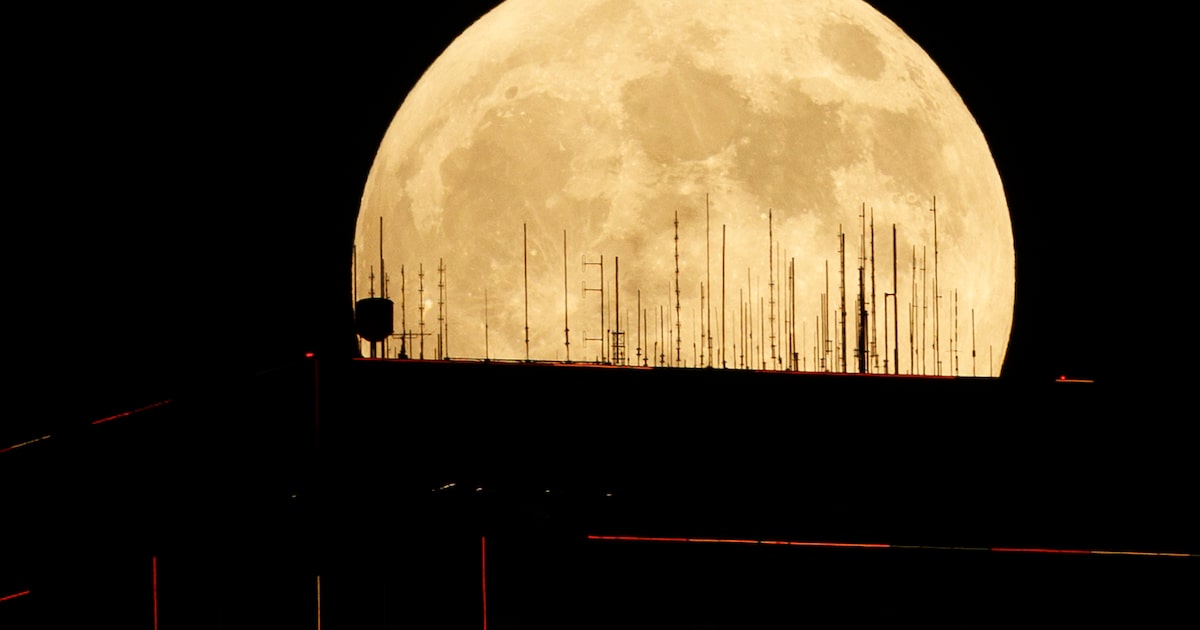
In April 2024, Dallasites watched the moon blot out the sun, casting a shadow that turned afternoon into twilight for nearly four minutes. The surreal experience has probably left many wondering: When’s the next eclipse?
While Dallas won’t experience another full solar eclipse until 2317, the good news is that several eclipses are happening this year — including some visible in Texas. Here’s when and where to see them.
Feb. 17: An annular solar eclipse
An annular solar eclipse occurs when the moon is near its farthest point from Earth and passes between it and the sun, making it appear slightly smaller than the sun, according to NASA. This results in the moon not fully covering the sun, leaving a bright “ring of fire” around the moon’s dark disk.
News Roundups
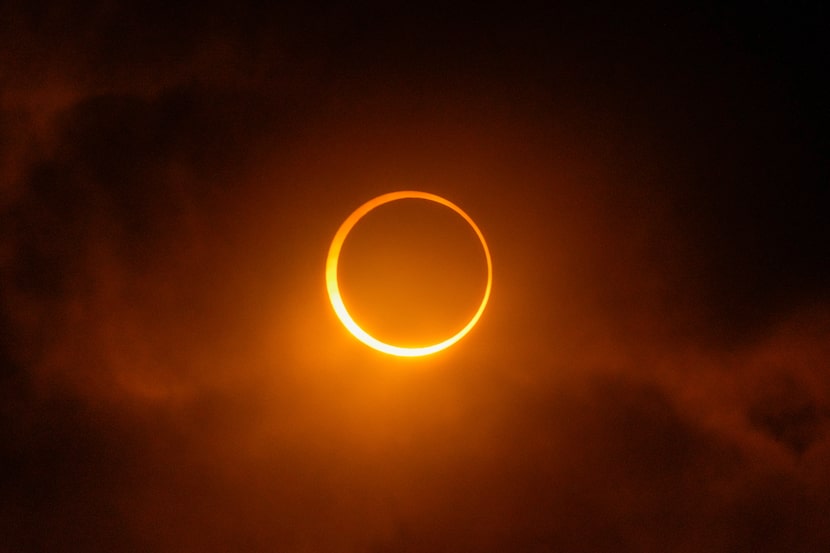
The moon moves past the sun during an annular solar eclipse in Puerto San Julian, Argentina, Wednesday, Oct. 2, 2024.
Natacha Pisarenko / AP
On Feb. 17, the eclipse’s path of annularity will stretch about 2,661 miles across Earth. The ring of fire will last up to 2 minutes and 20 seconds at its peak over Antarctica, according to Forbes. This event will appear as a partial eclipse elsewhere, such as in Africa and South America and over the Pacific, Atlantic and Indian oceans.
March 3: A total lunar eclipse
When Earth is positioned between the moon and the sun, and the moon is in its full phase, circumstances are ripe for a lunar eclipse. During this celestial event, Earth’s shadow falls on the moon’s surface, dimming its pearly brightness and sometimes turning it a striking red, according to NASA.
The agency said a total lunar eclipse on March 3 will be visible from start to finish across Western North America, Eastern Australia, New Zealand and Northern Japan.
The eclipse will be visible before dawn across the United States, with the Far West in the sweet spot for best views. It will also be visible in Texas but not as apparent, according to a map from Sky and Telescope, an astronomy publication.
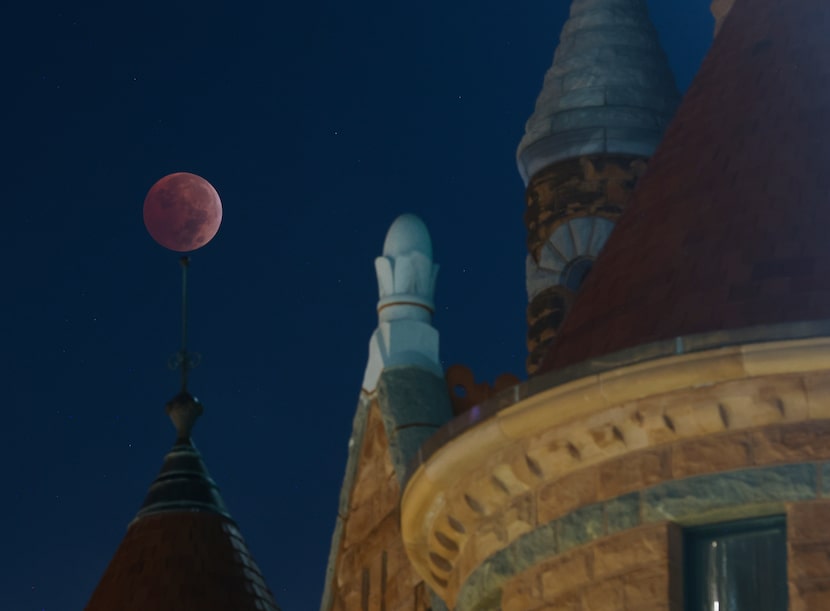
The blood moon lunar eclipse is seen by the Old Red Museum of Dallas County History and Culture on Tuesday, Nov. 8, 2022 in Downtown Dallas.
Shafkat Anowar / Staff Photographer
As the moon slides into Earth’s shadow, it will take on a reddish cast. The peak of totality, or total coverage, will be about 58 minutes. It’s the only total lunar eclipse of 2026. The next one won’t take place anywhere on Earth until Dec. 31, 2028, according to Forbes.
Aug. 12: A total solar eclipse
This total eclipse will be visible in Greenland, Iceland, Spain, Russia and a small area of Portugal, according to EarthSky, an astronomy website. The longest duration of complete darkness will be around two minutes. The eclipse will appear as a partial one in Europe, Africa and North America and over the Atlantic, Arctic and Pacific oceans.
It doesn’t seem that this eclipse will be visible in Texas, based on the map from Sky and Telescope.
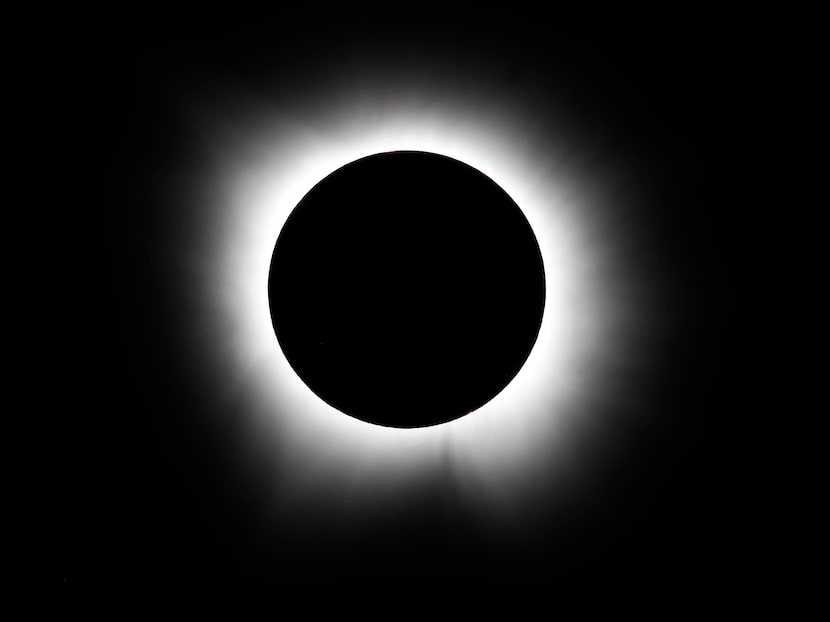
Solar flares from the sun radiate out from behind the moon during a total solar eclipse in Dallas, April 8, 2024.
Tom Fox / Staff Photographer
Aug. 27-28: A partial lunar eclipse
This eclipse will be visible in Africa, Europe, Scandinavia, Iceland, parts of Greenland, Antarctica, most of the Americas (including in Texas, according to Sky and Telescope’s map) and the eastern Pacific Ocean.
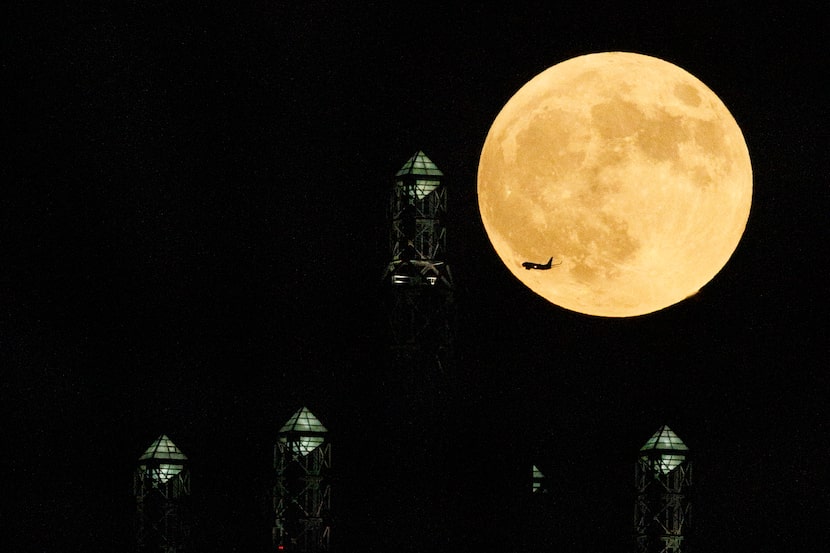
A partial lunar eclipse and supermoon is seen over downtown Dallas, Tuesday, Sept. 17, 2024.
Elías Valverde II / Staff Photographer
Beginning a little after 9:30 p.m. on Aug. 27, the eclipse will reach its peak at 11:12 p.m., when the greatest portion of the moon will be inside Earth’s darkest shadow. The partial eclipse ends at 12:51 a.m. the next day, and the event lasts about 5 hours and 38 minutes, according to Space.com.
Miriam Fauzia is a science reporting fellow at The Dallas Morning News. Her fellowship is supported by the University of Texas at Dallas. The News makes all editorial decisions.